Skip to content
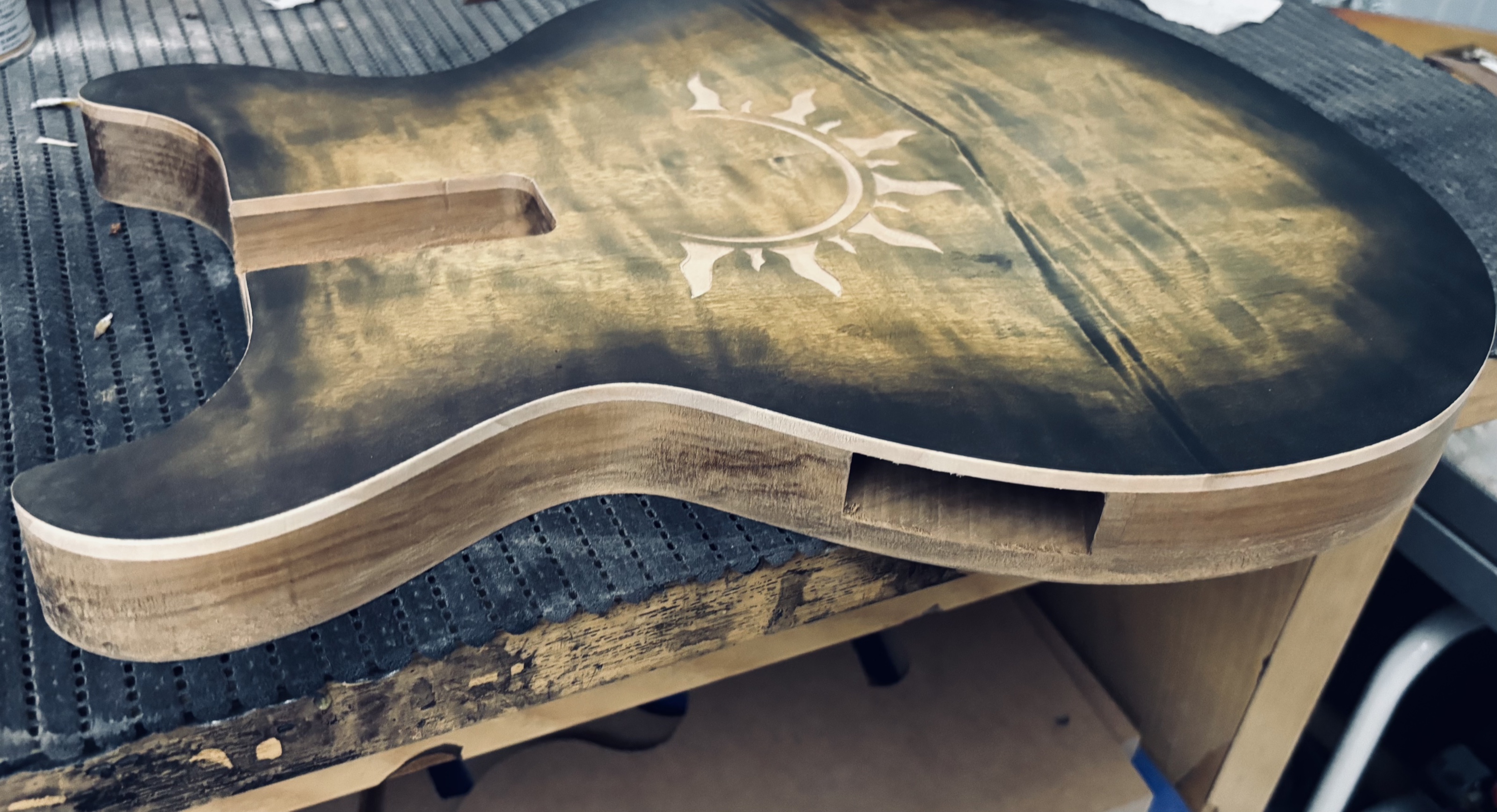
A semi-hollow body with a sun inlaid into the top, still being worked on

Making Of

The work, as it happens

Photographs taken in the workshop while the work was going on. Nothing here was staged.
01The wood

Before it is an instrument it is a board

Boards are chosen one at a time and left to season. The grain never repeats itself, and it decides the instrument before the shape and the colour do.

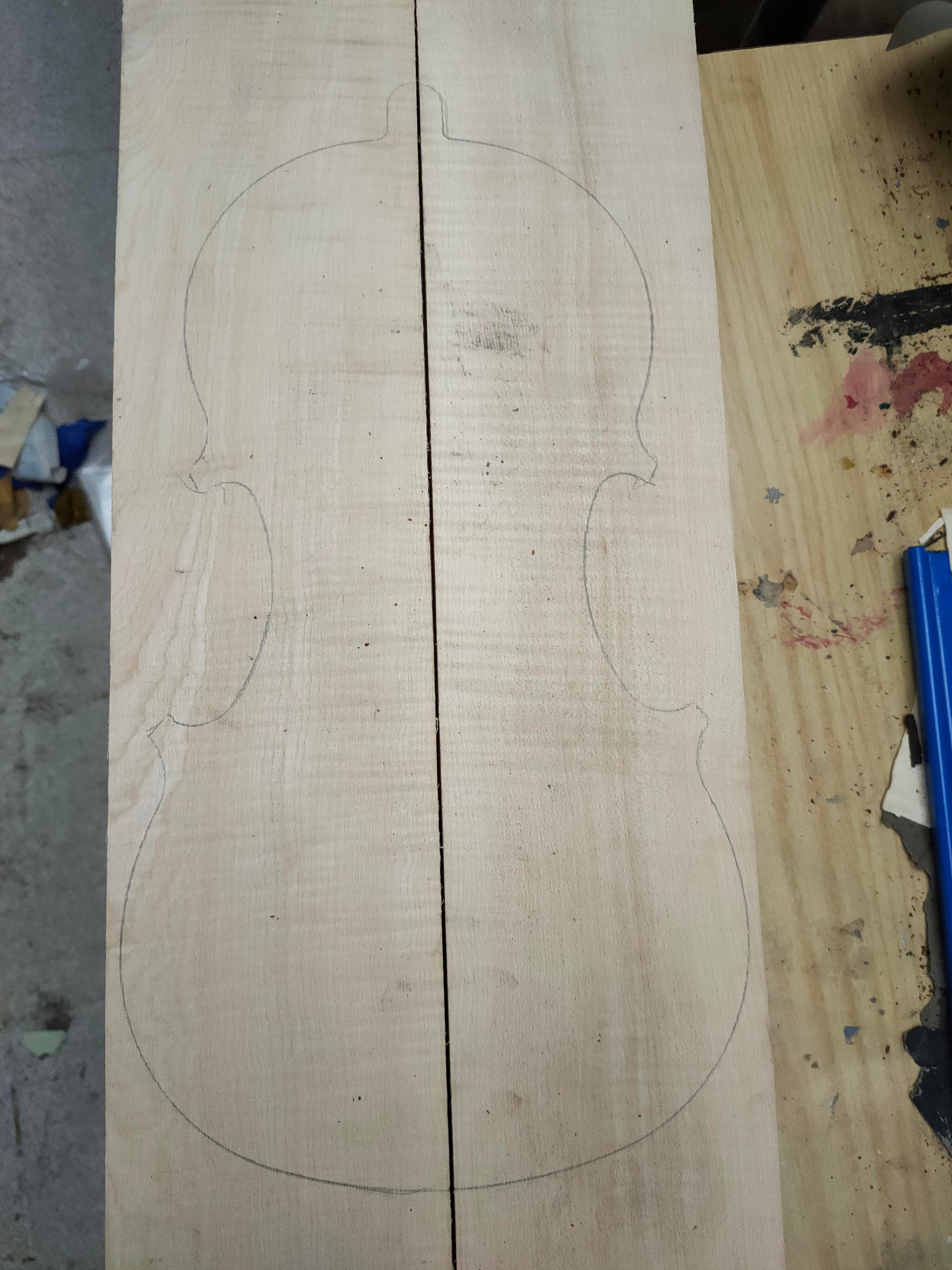
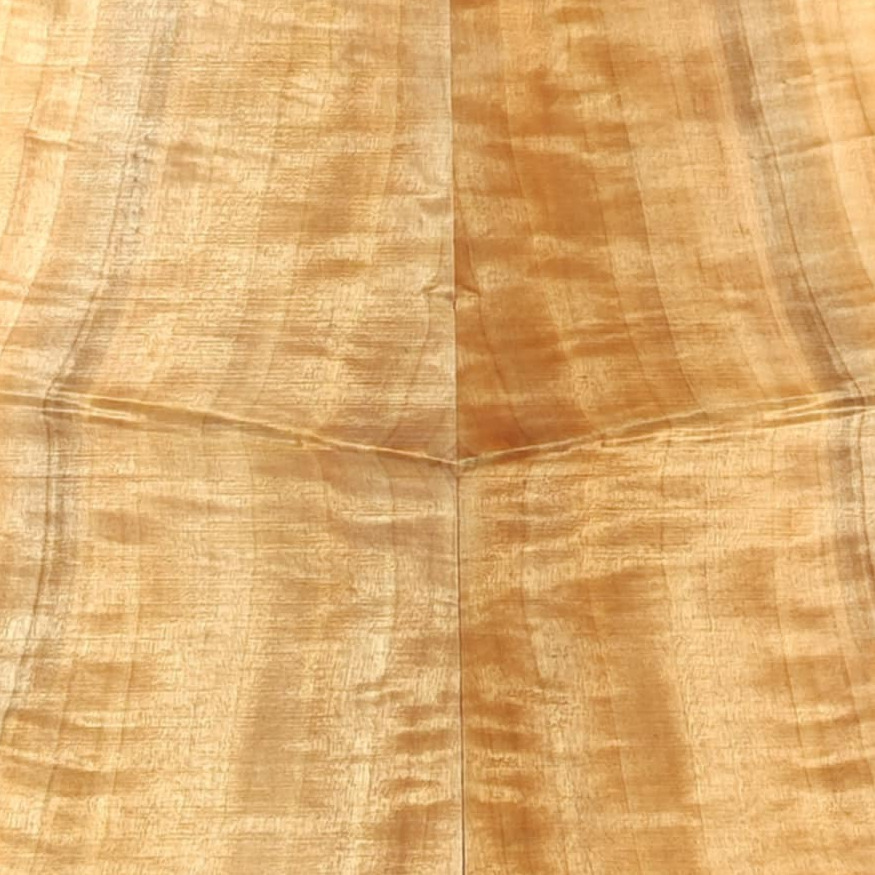
A top in two book-matched halves, the grain figure mirrored across the joint
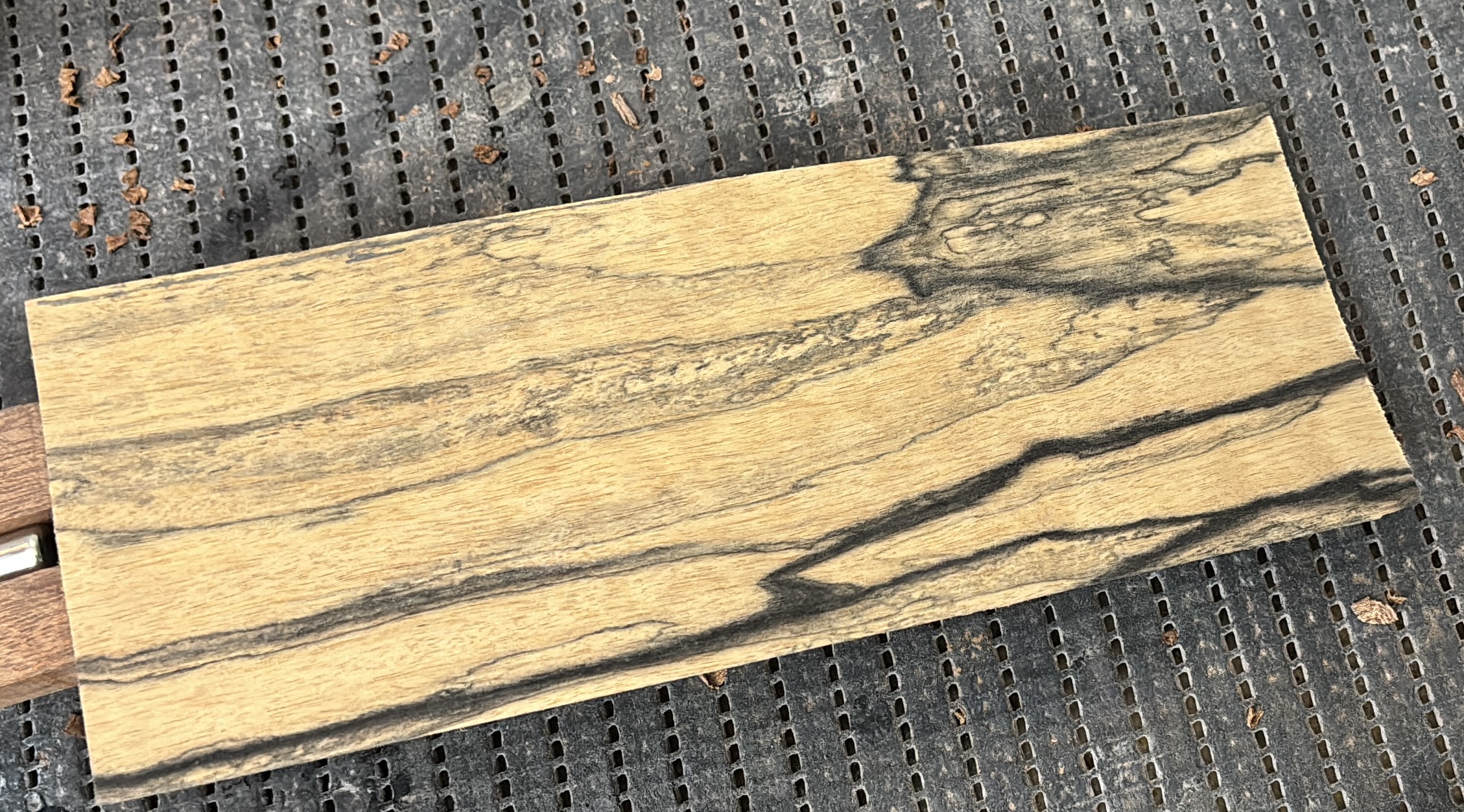
A board of Pale Moon ebony, with its black and cream streaks, on the bench grid
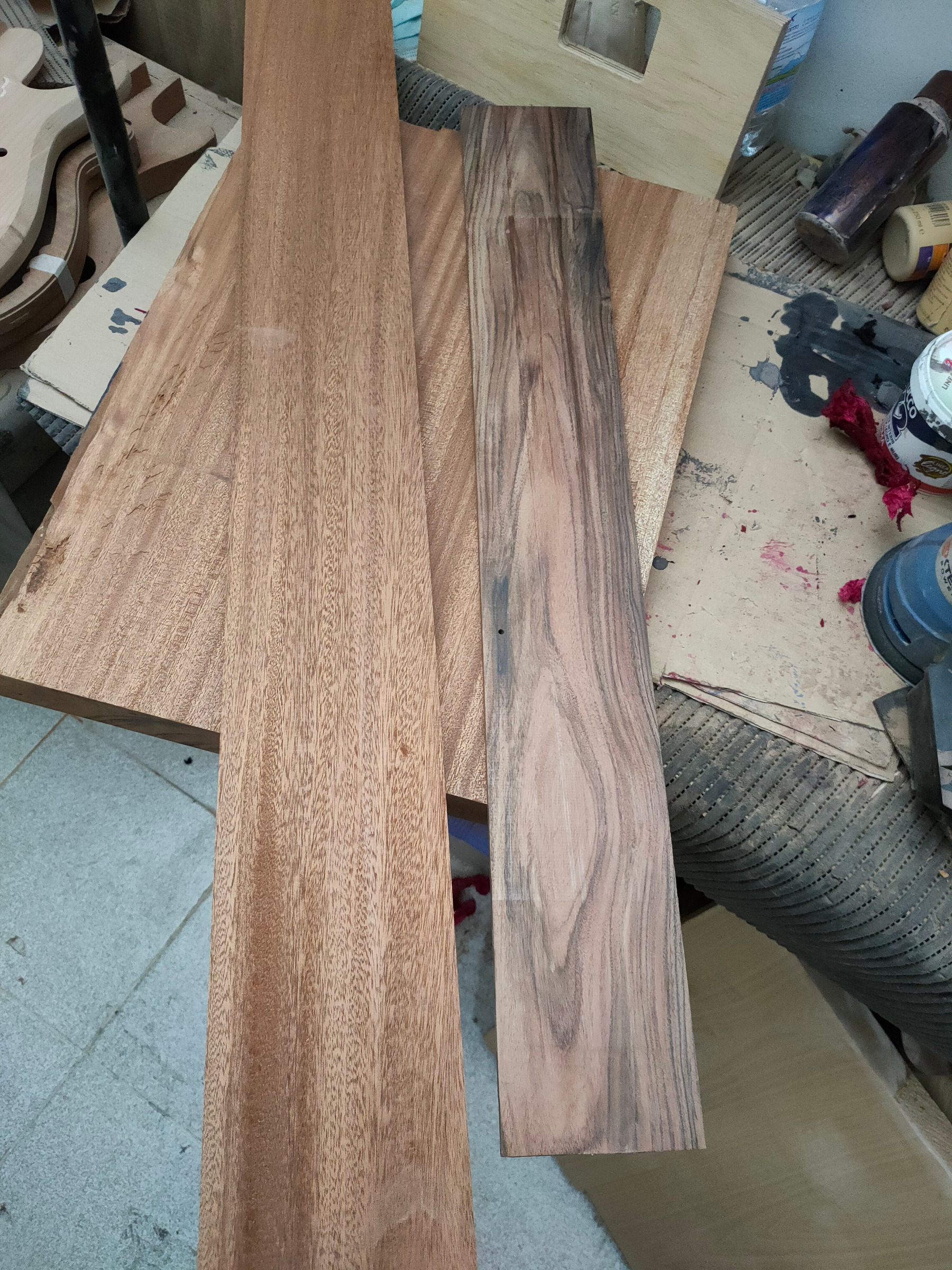
Two long boards of different woods, side by side on the bench

Two halves of the same board, book-matched: the figure mirrors itself.

01 / 03
02The drawing

It gets drawn in pencil, on the wood

Outlines, necks and inlays start in pencil, before anything is cut. If the drawing doesn't hold up on the wood, it won't hold up later.

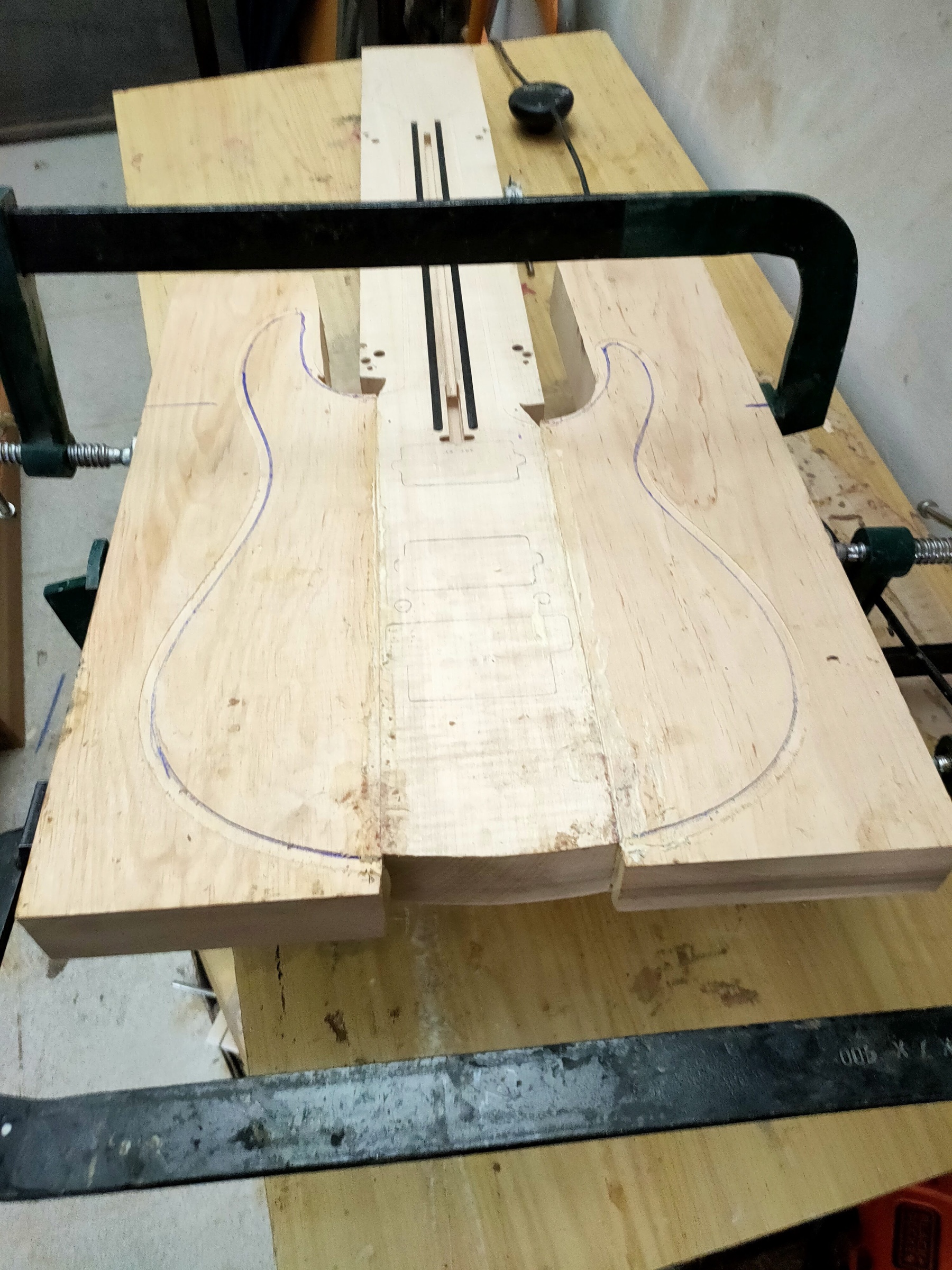
The outline of a body traced on the wood, the blank still held in clamps
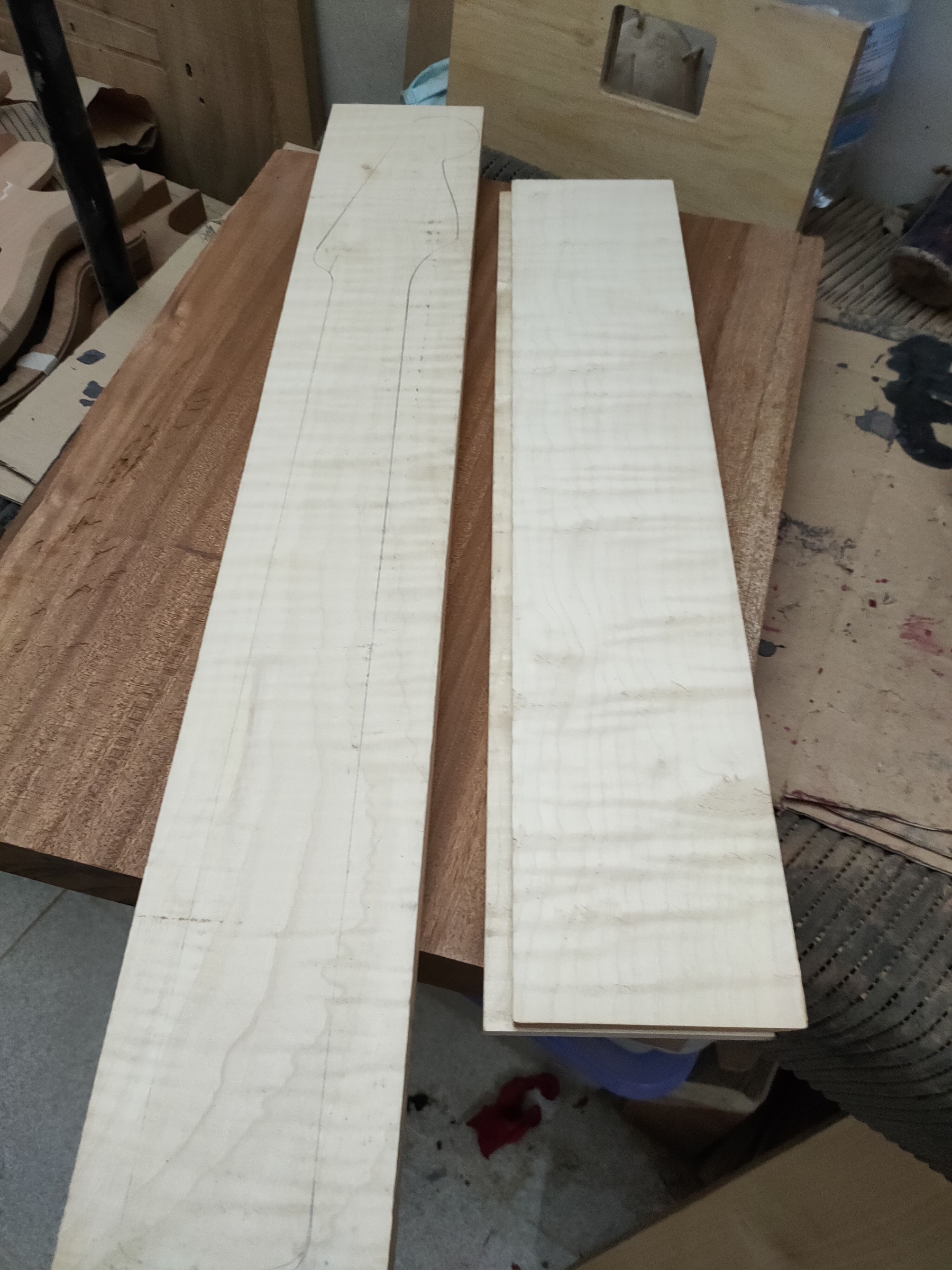
Two flamed maple boards, one with the neck already traced in pencil
The outline of a violin traced in pencil on raw wood

First the outline on the wood, then the cut.

01 / 03
03The neck

The part you never see again

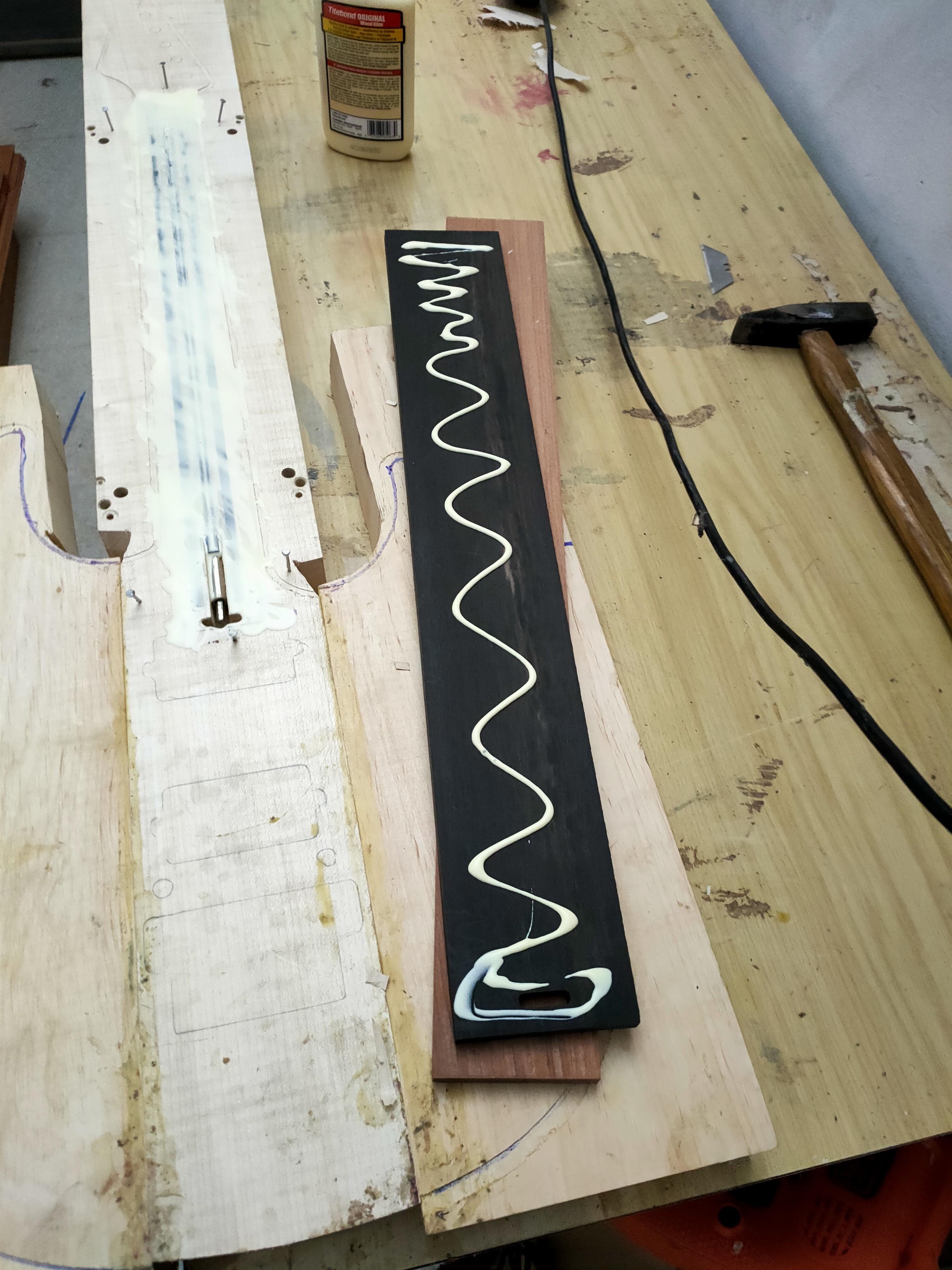
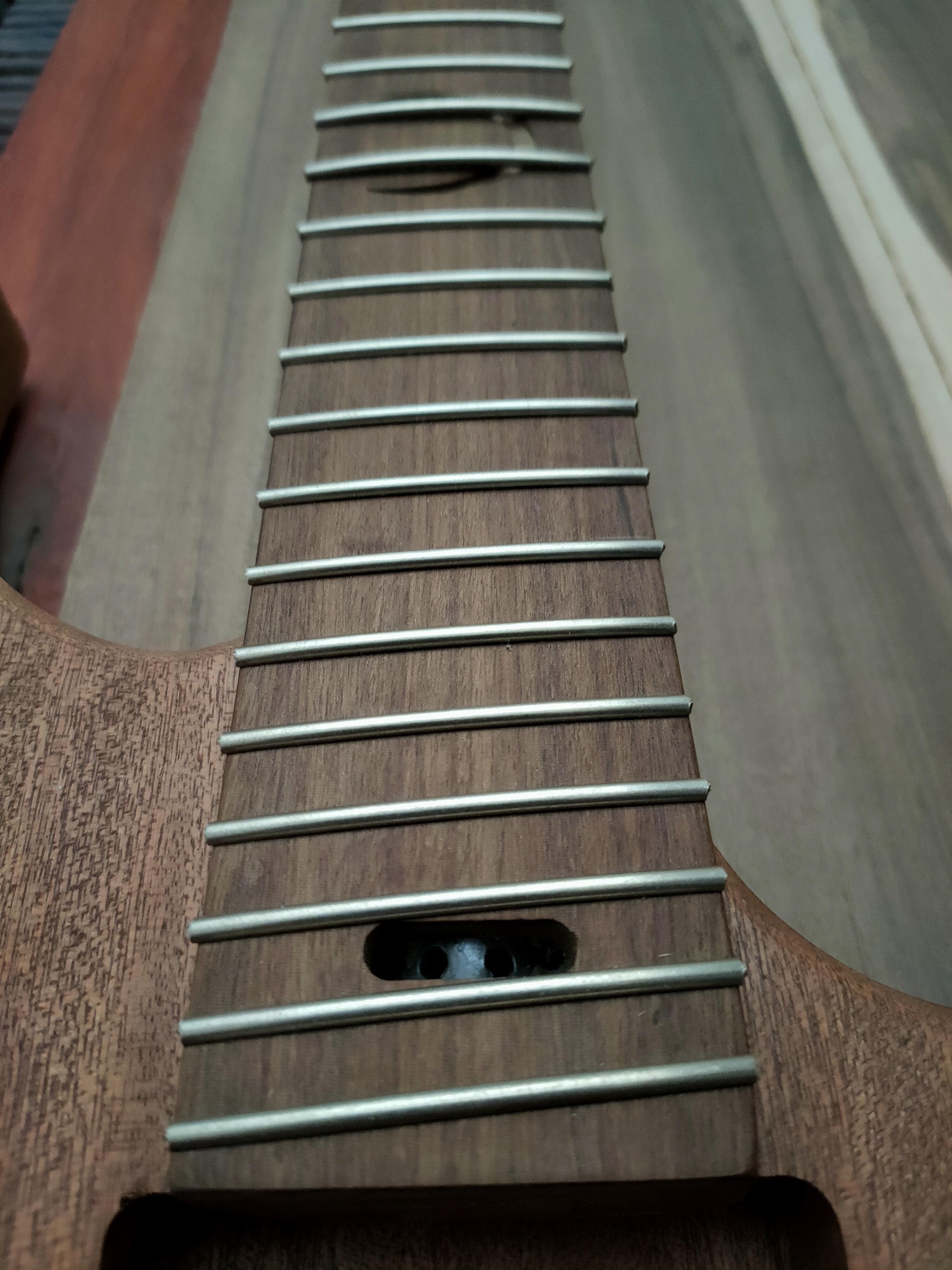
Inside the neck go the truss rod and two carbon rods, standard on every model. Then the fingerboard, the frets pressed in one by one, and the side dots.

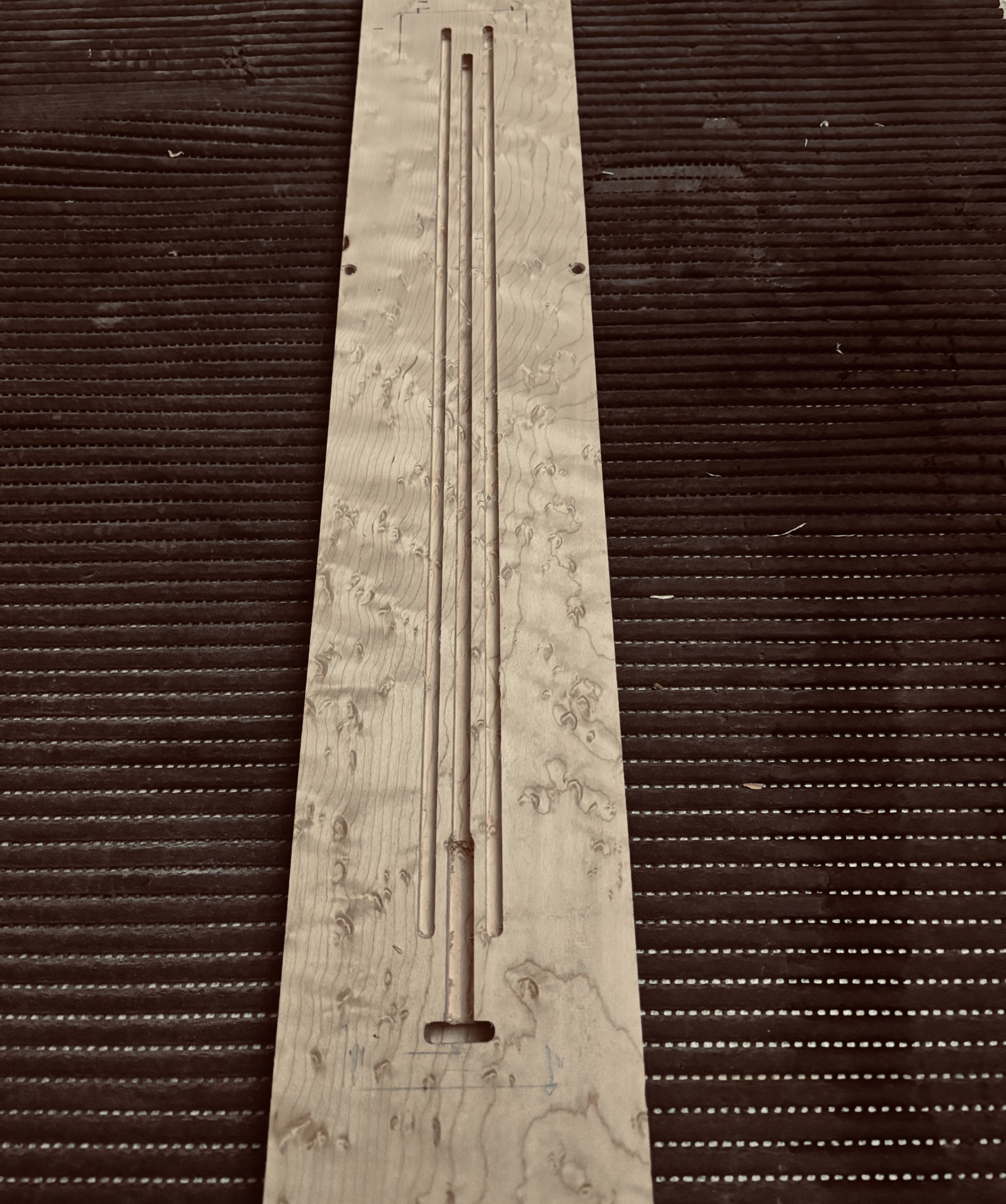
A bird's-eye maple neck with its three channels cut: one for the truss rod, two for the carbon rods
Glue laid down in a serpentine line on an ebony fingerboard
A fingerboard with its frets just fitted, seen along the neck

The channels for the truss rod and the two carbon rods, before they go in.

01 / 03
04The inlay

The mother-of-pearl is cut by hand

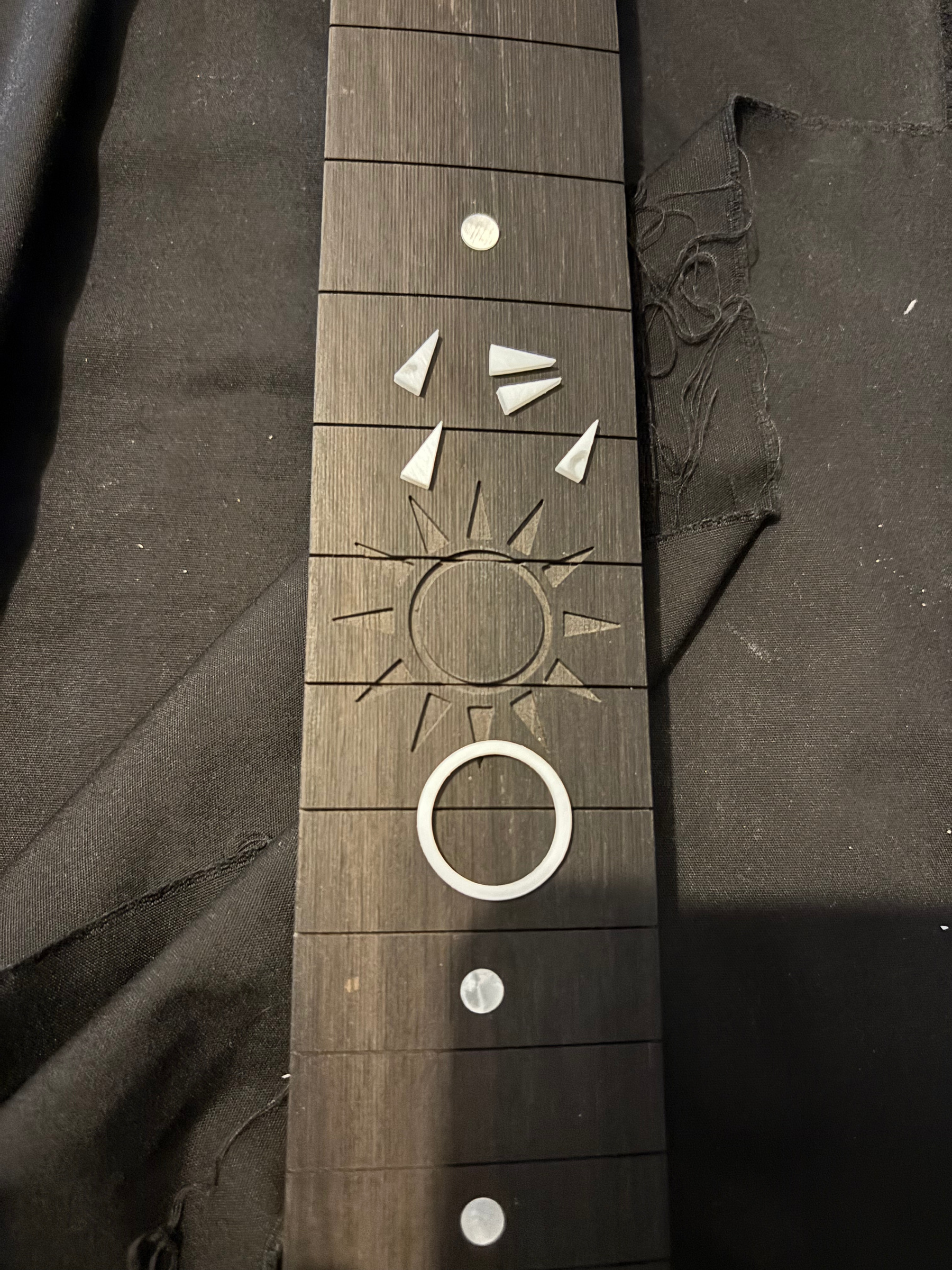
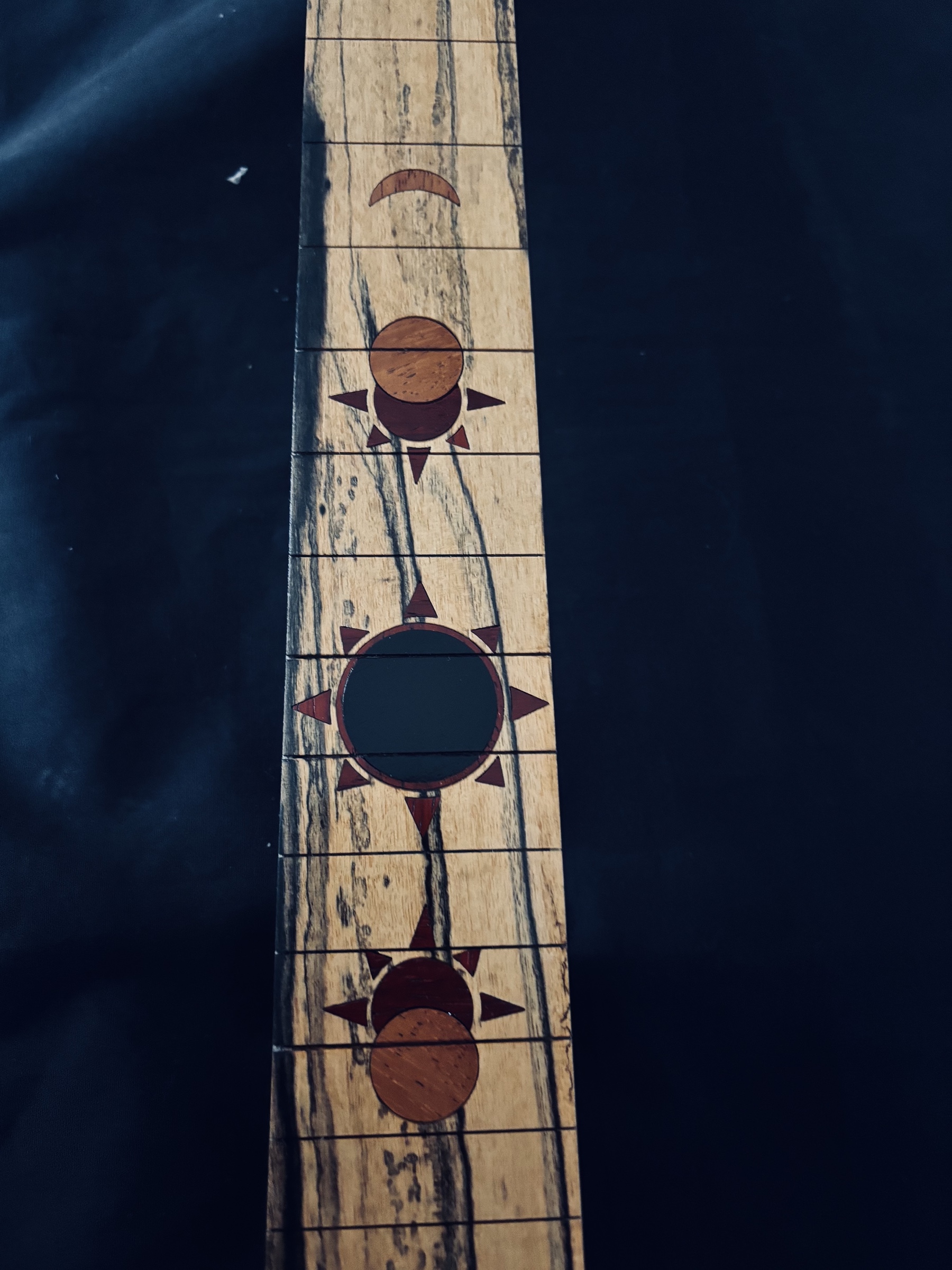
The recess is cut into the wood, the mother-of-pearl is cut and filed until it sits with no play. A sun with twelve rays is twelve pieces.

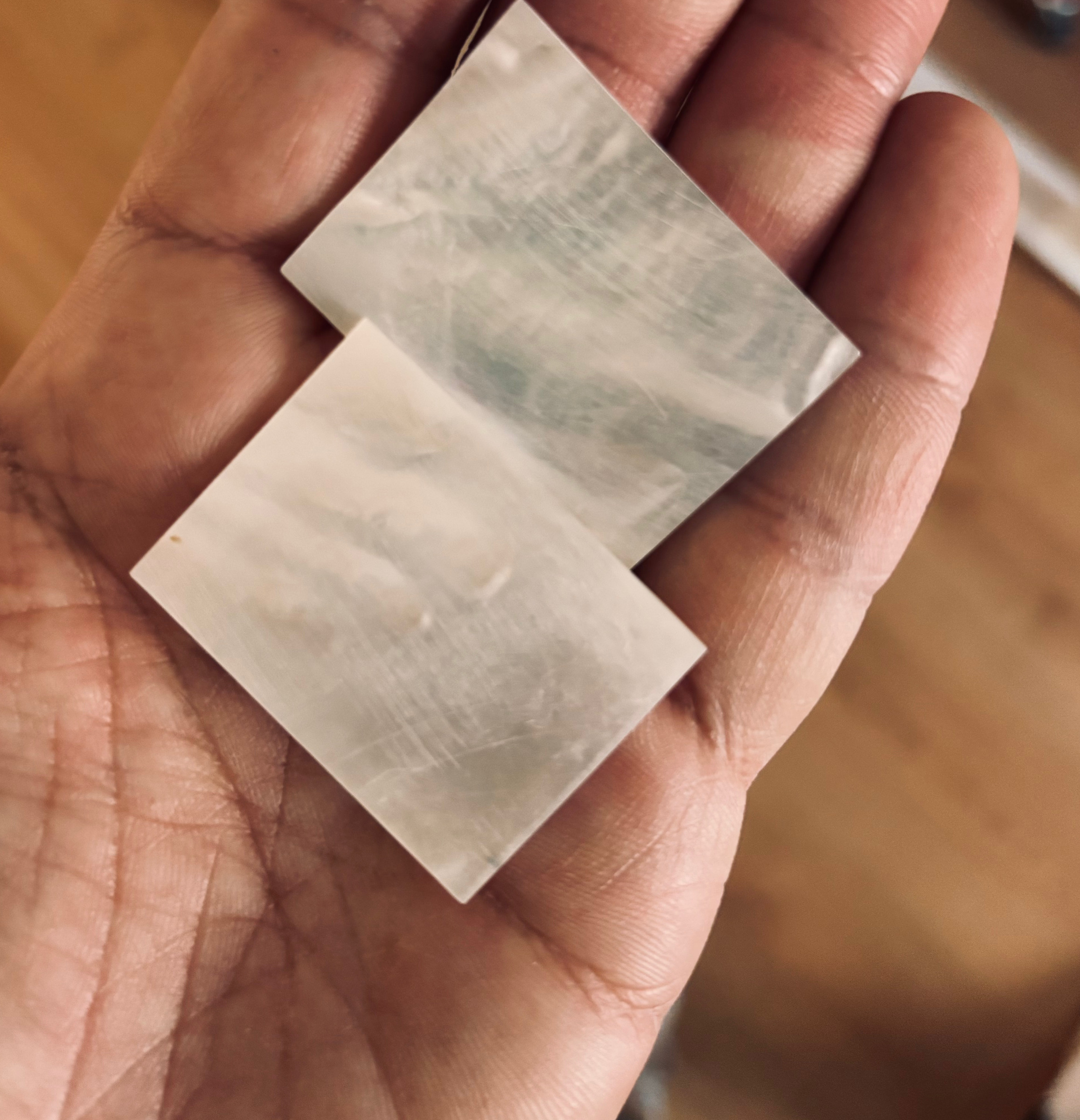
Two small sheets of mother-of-pearl in the luthier's hand
A sun cut into an ebony fingerboard, with the mother-of-pearl rays already cut beside it
Finished sun and moon inlays on a Pale Moon ebony fingerboard

The sheet the inlays are cut from.

01 / 03
05The body

Hollowed and finished by hand

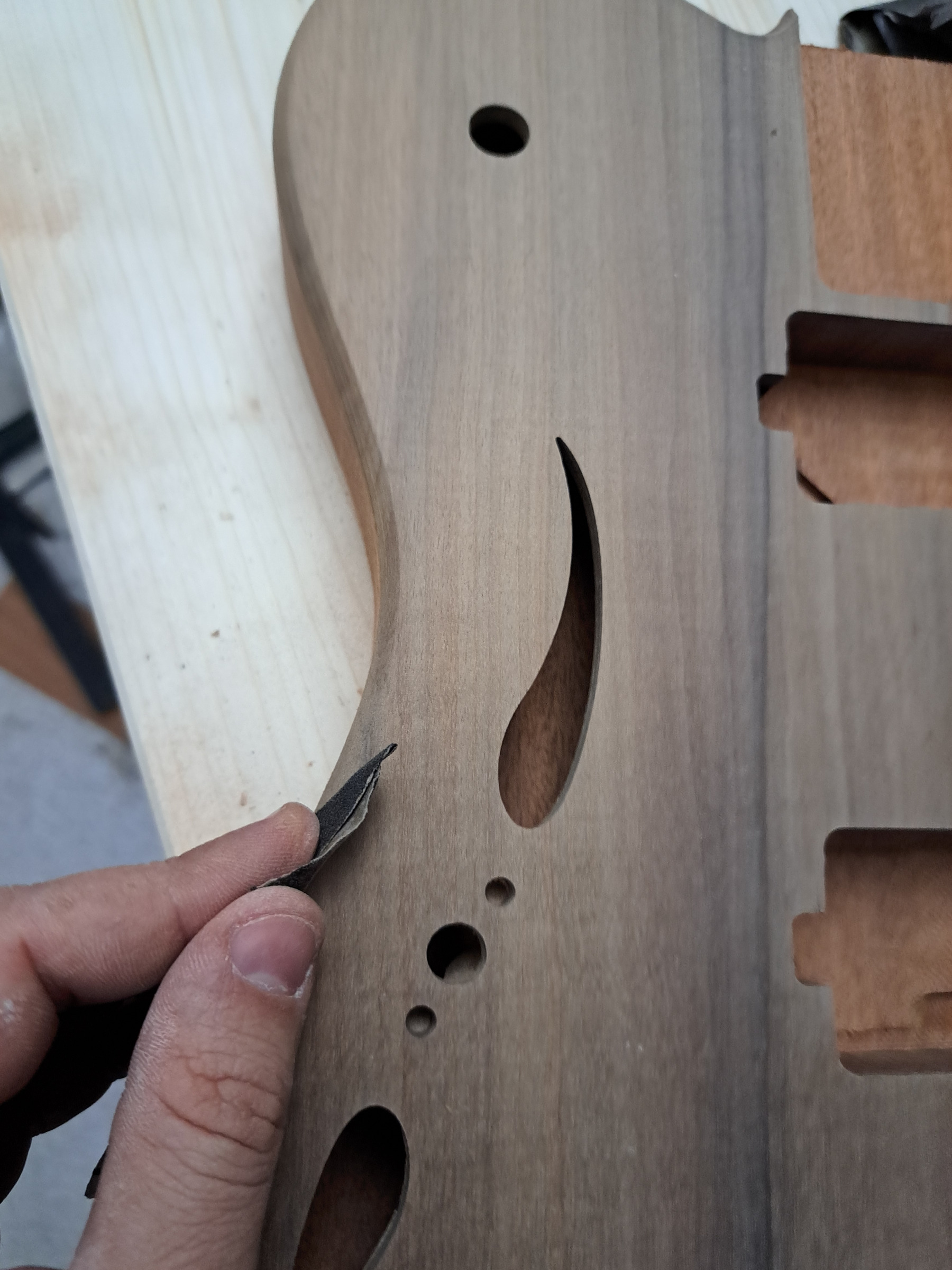
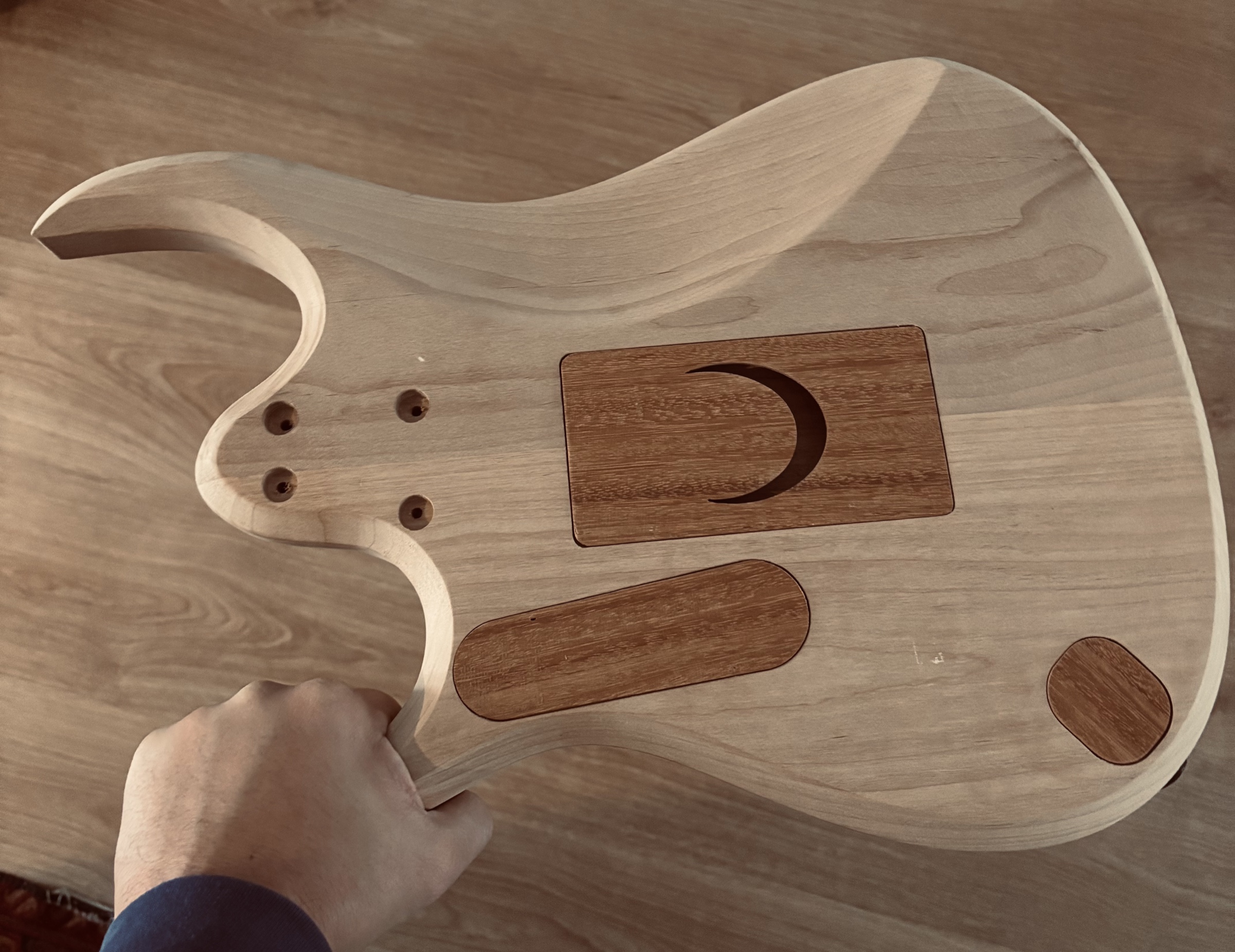
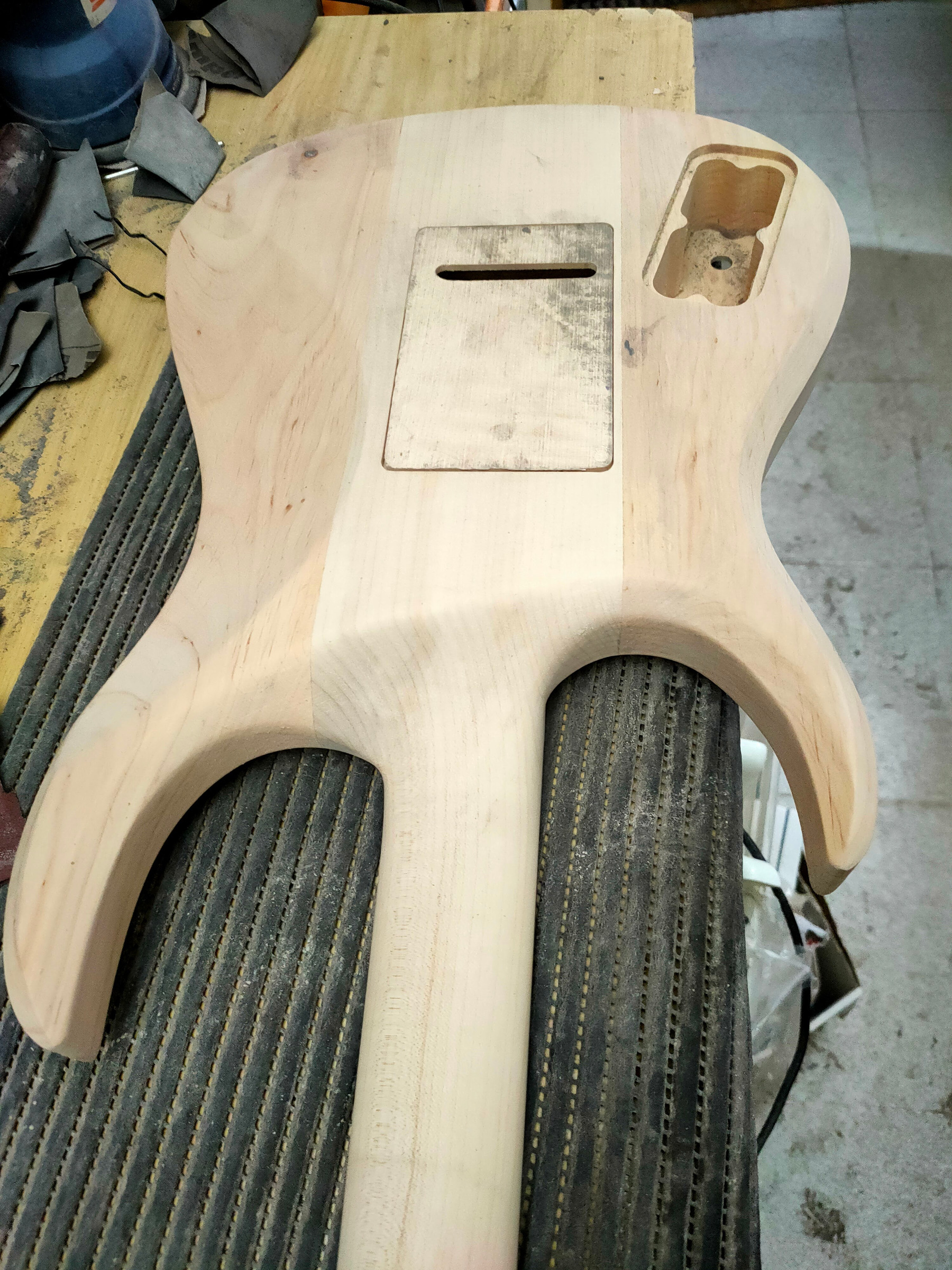
The pickup and electronics cavities follow the drawing to the hundredth. Edges, curves and f-holes are finished by hand, with rasp and scraper.

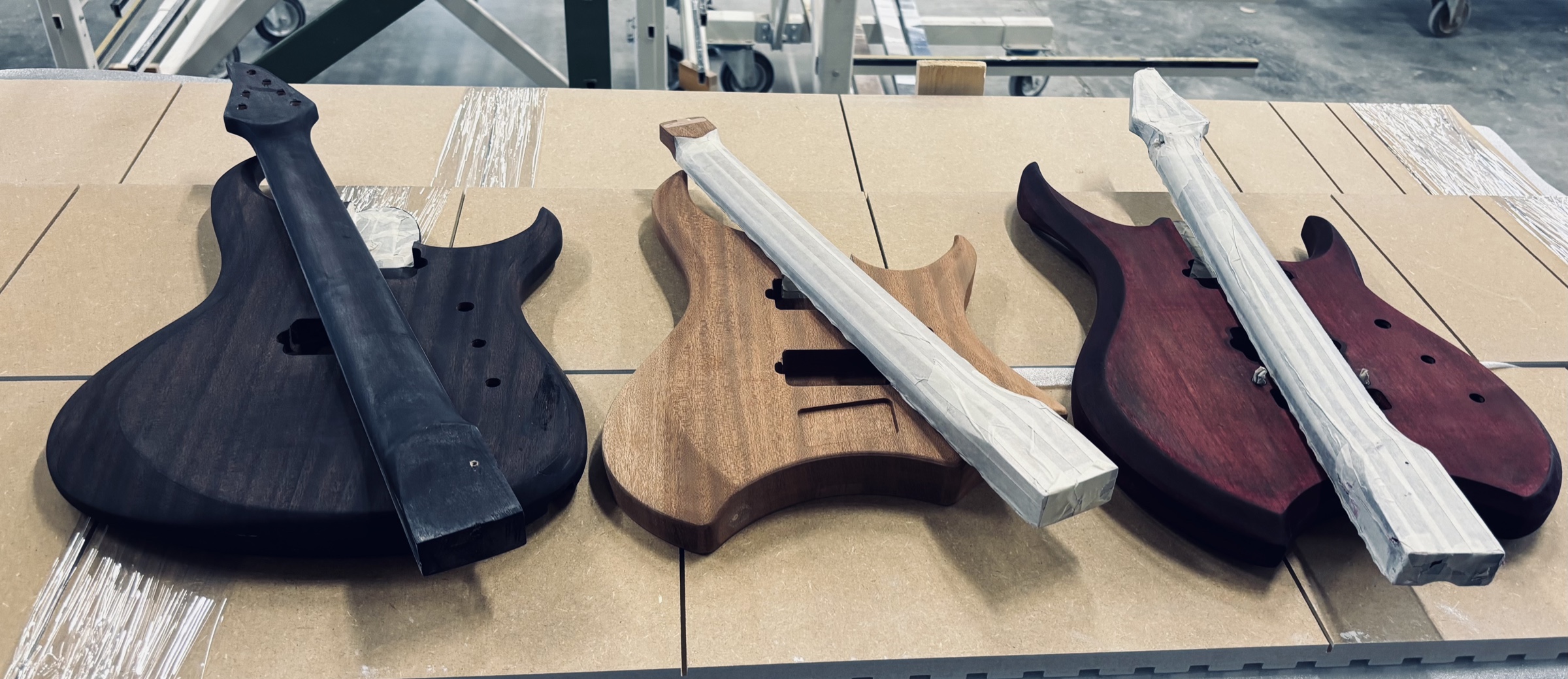
Three guitar bodies in different woods, resting on the bench
An f-hole being finished with a scraper on a semi-hollow walnut body
The back of a raw body held in one hand, with wooden cavity covers and a carved moon
The back of a sanded raw body, on the bench grid

Three guitar bodies, three different woods, three different outlines.

01 / 04
06The finish

One coat at a time, and sanding in between

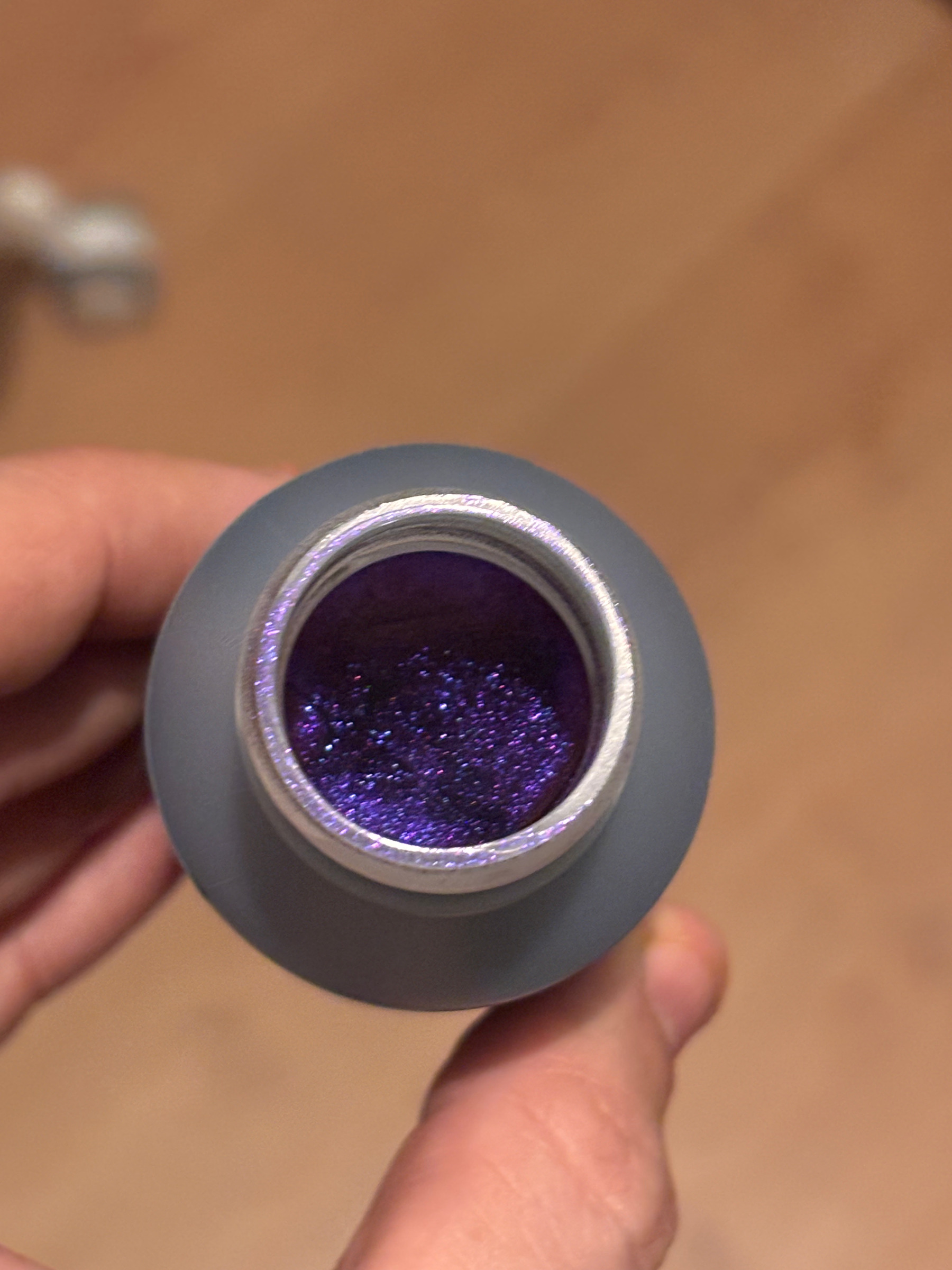
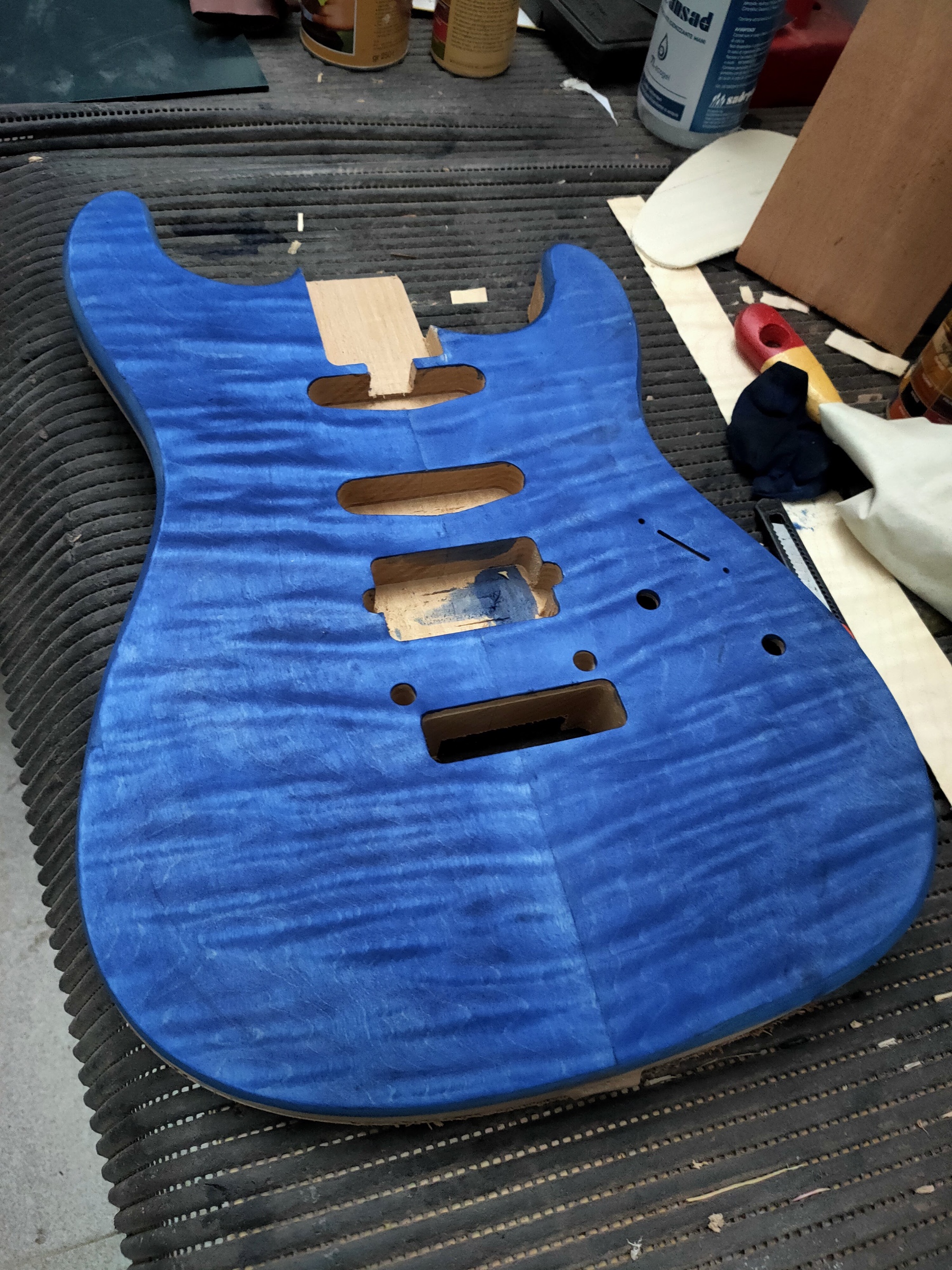
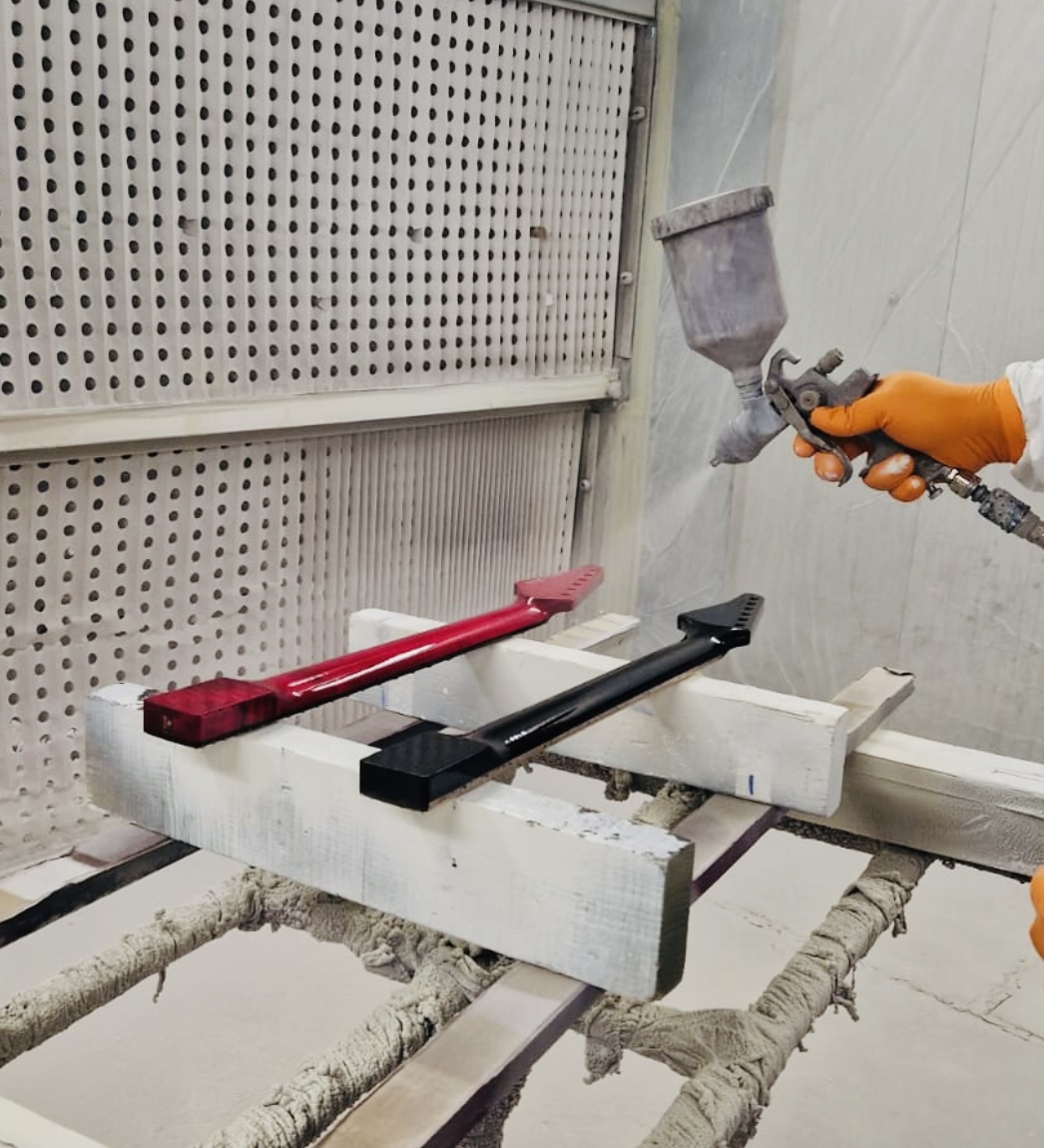
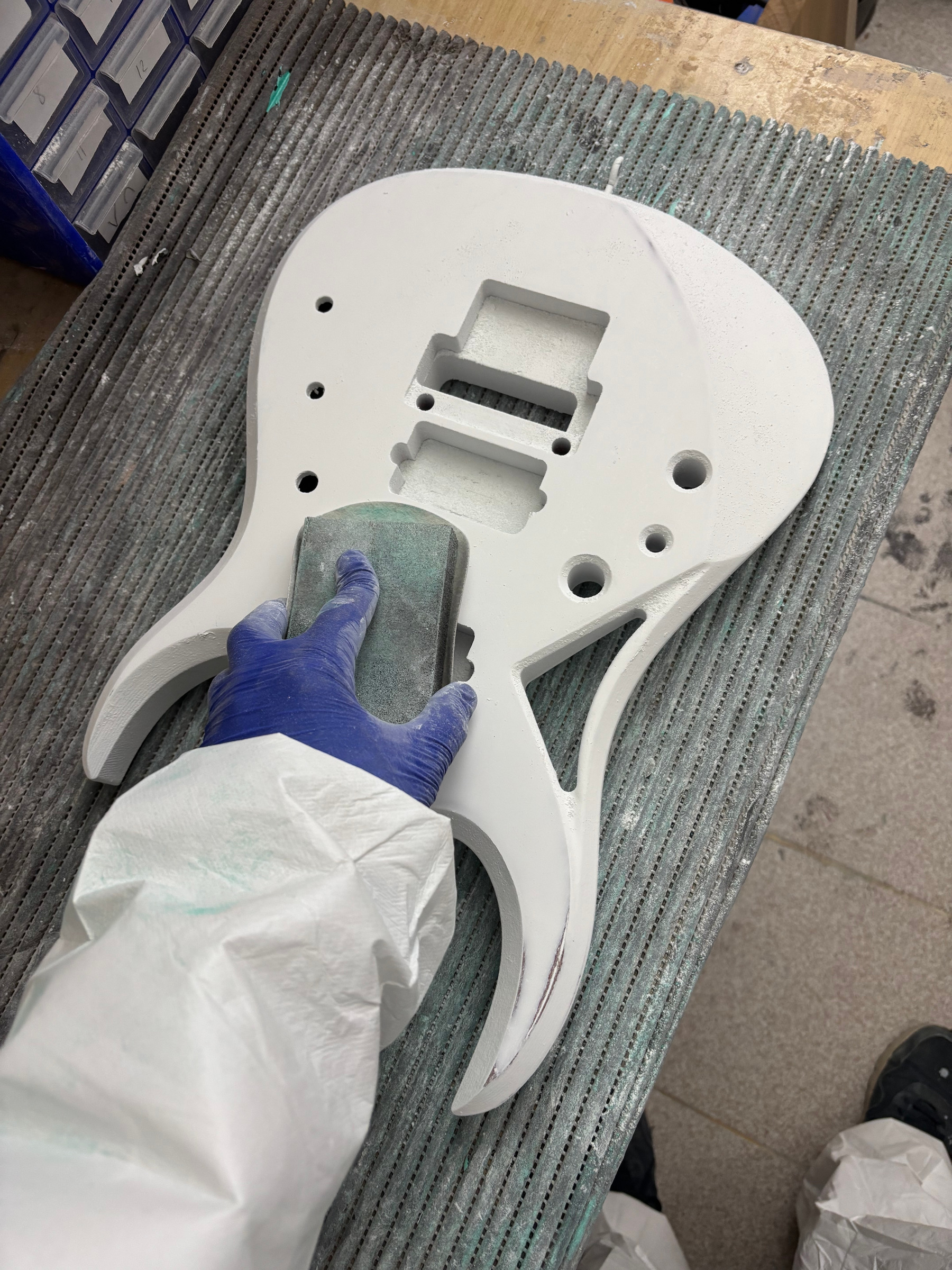
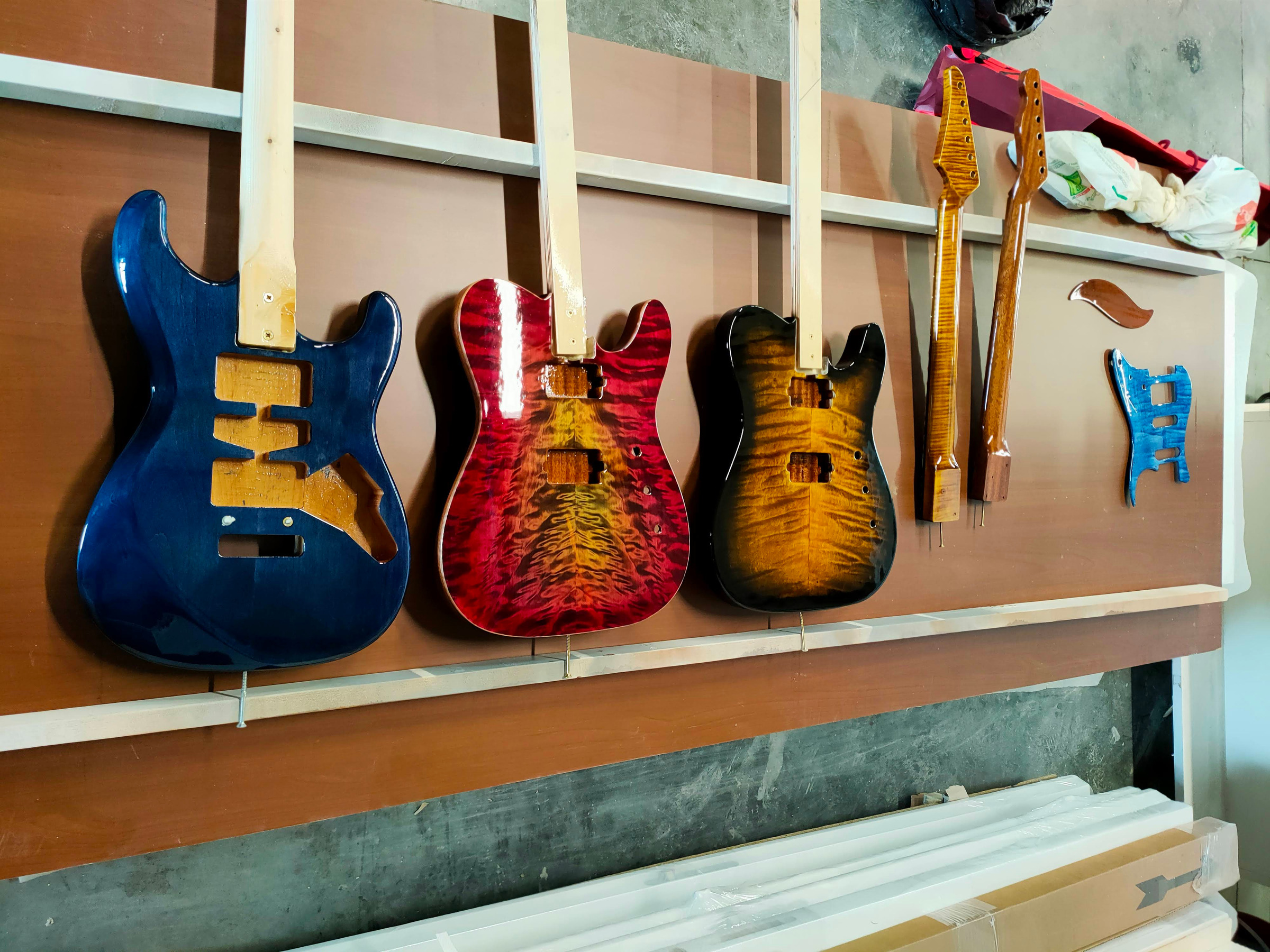
The colours are mixed in the workshop, tested on the actual wood. Then the polyurethane goes on, one coat at a time, sanded in between: drying times can't be shortened.

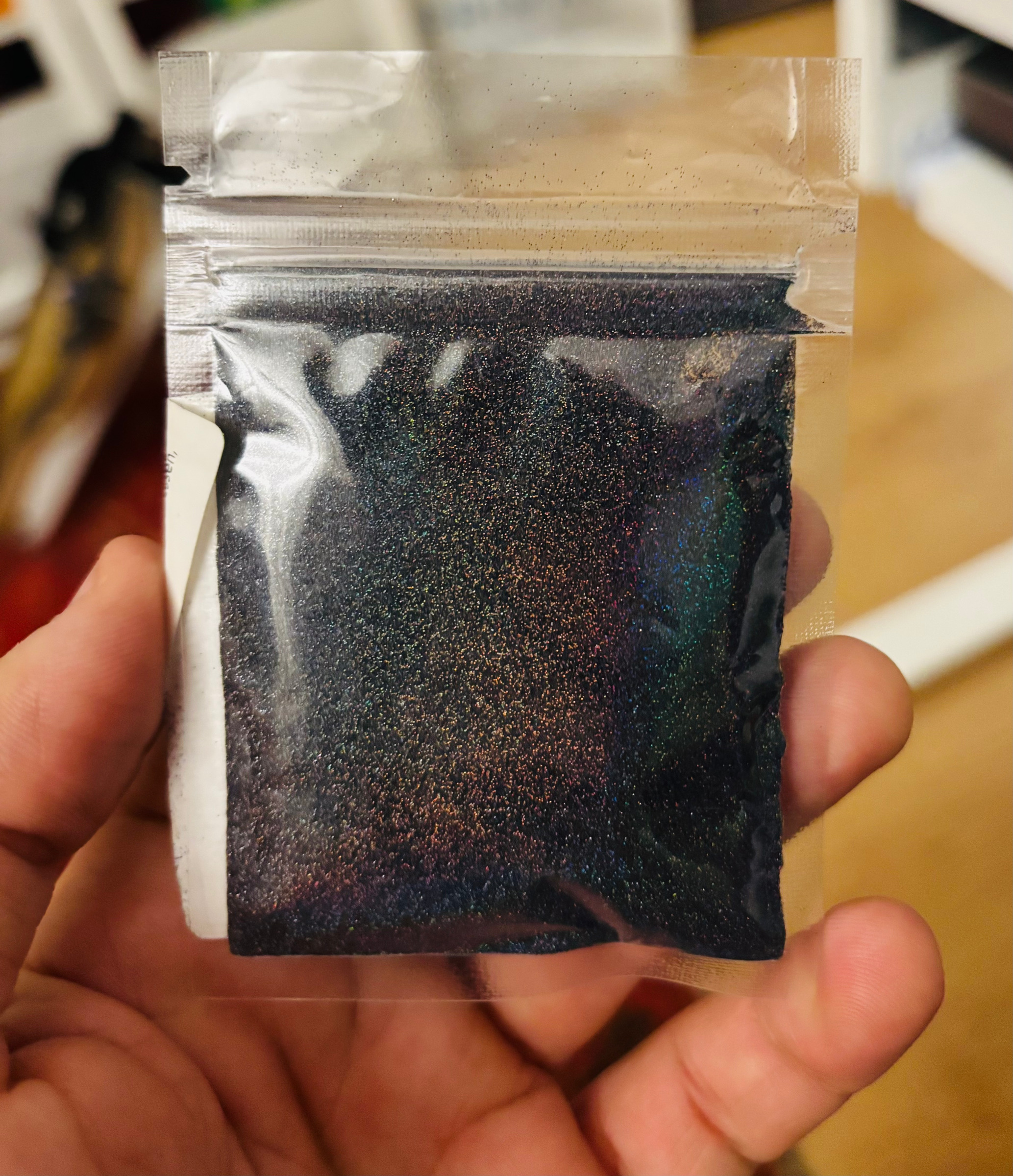
A small bag of dark pigment with iridescent glints, held in one hand
A small jar of metallic violet pigment, held in one hand
A body with a flamed top stained blue, on the bench grid
A gloved hand spray-finishing two necks, one red and one black, in the booth
A gloved hand sanding a white body on the bench grid
Three guitar bodies hanging to dry on a rack, along with two necks

Seven seconds in the booth, filmed while the work was going on.

01 / 07
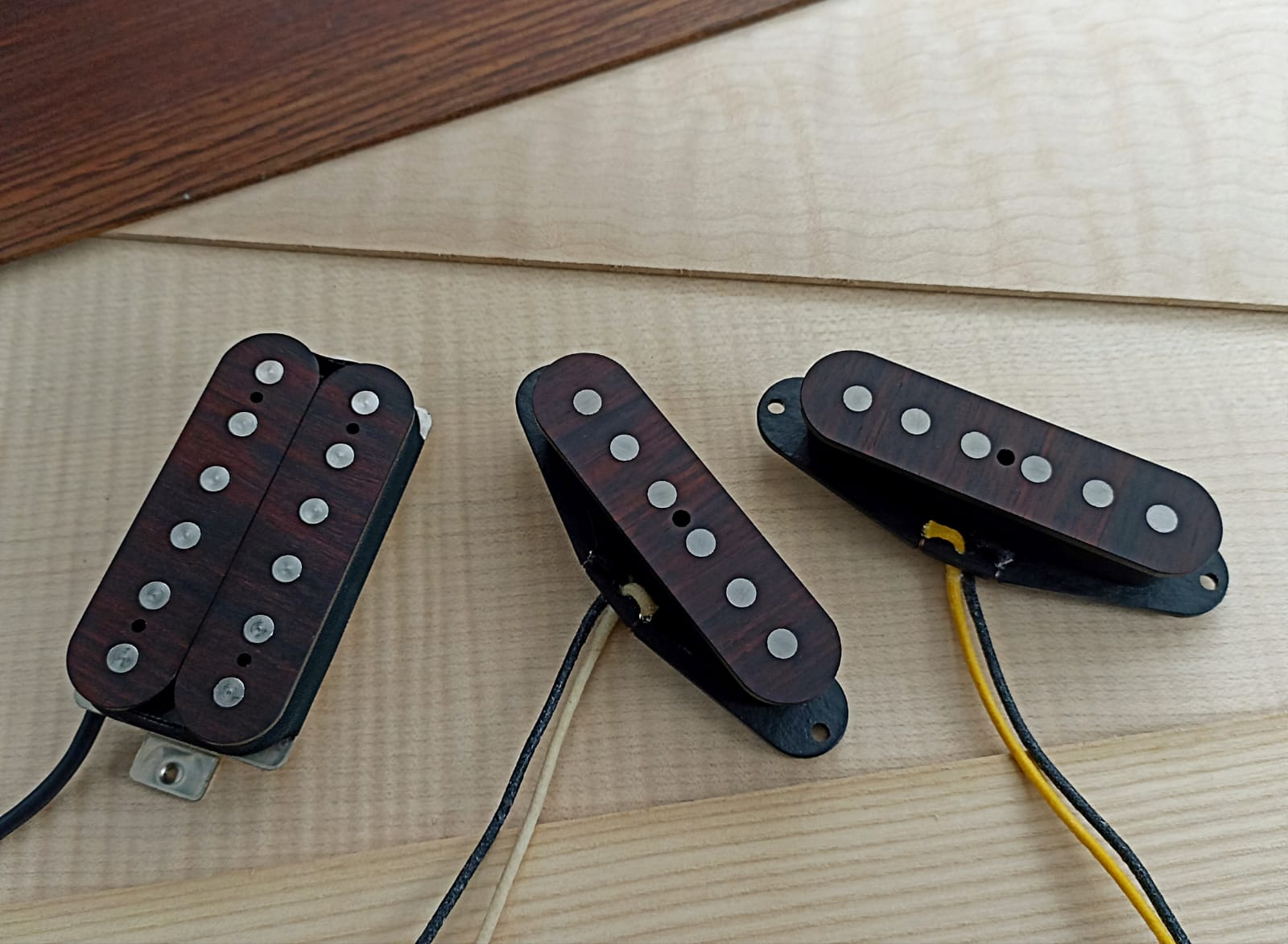
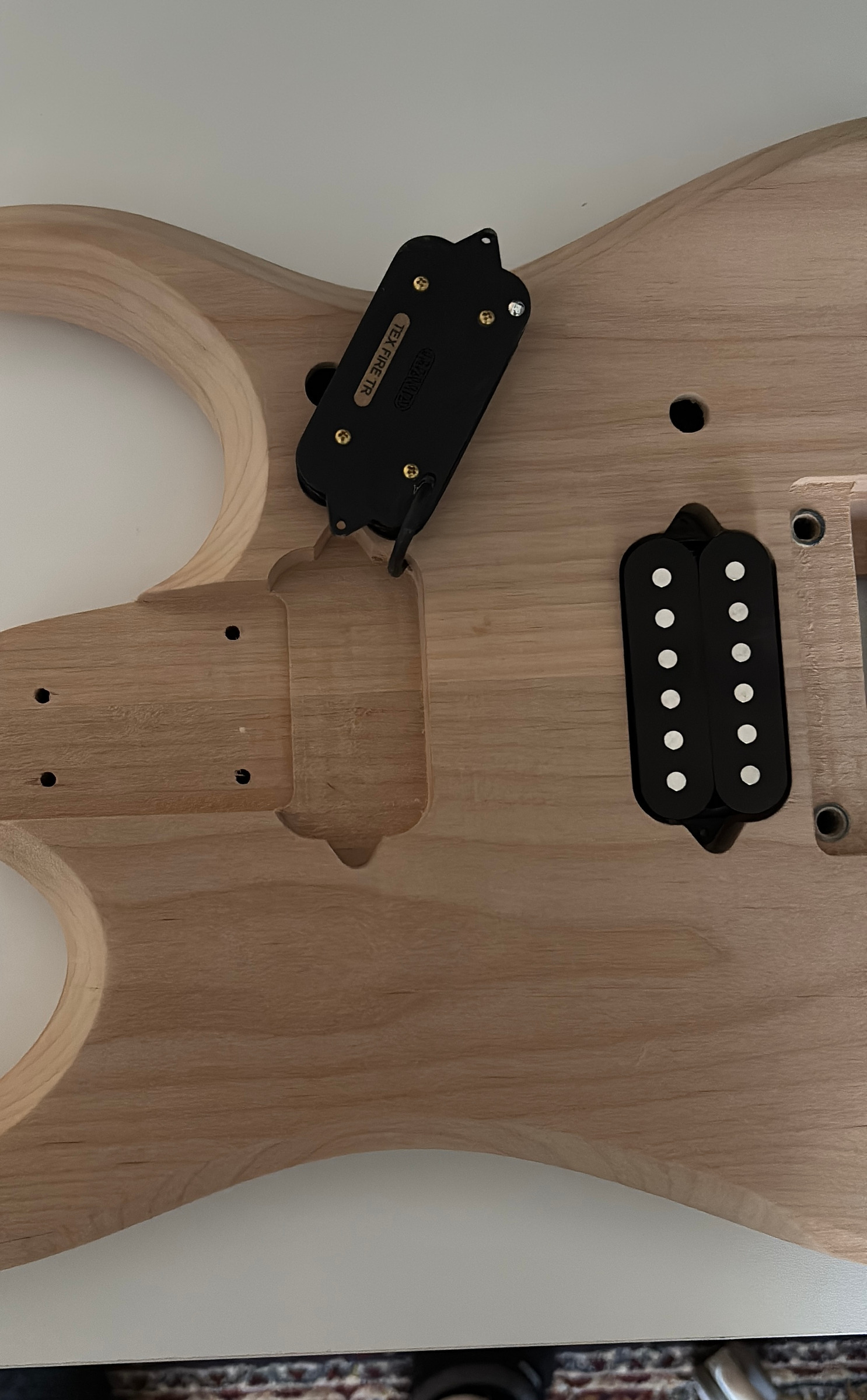
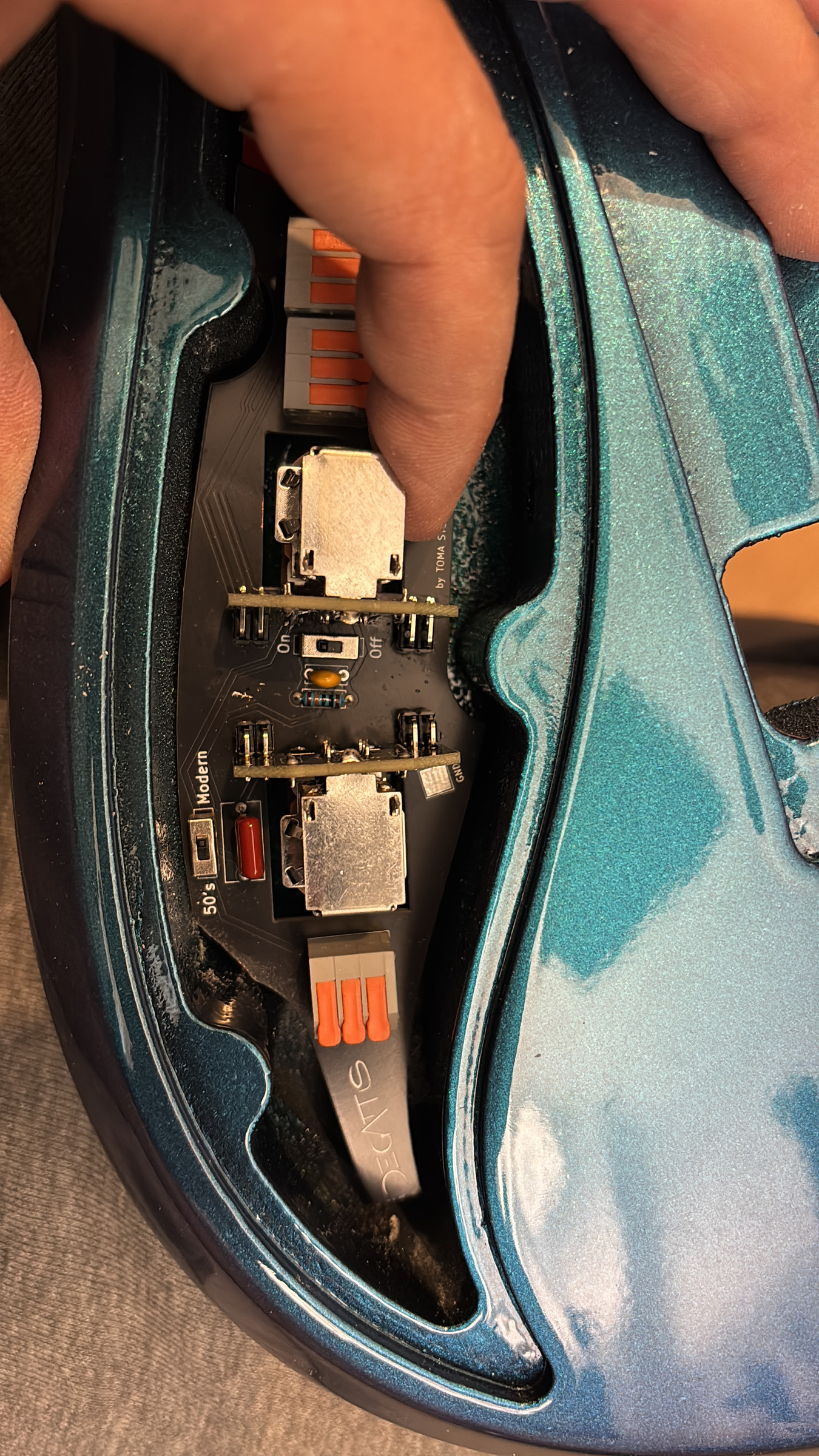
07The assembly

The electronics, to a De Gattis design

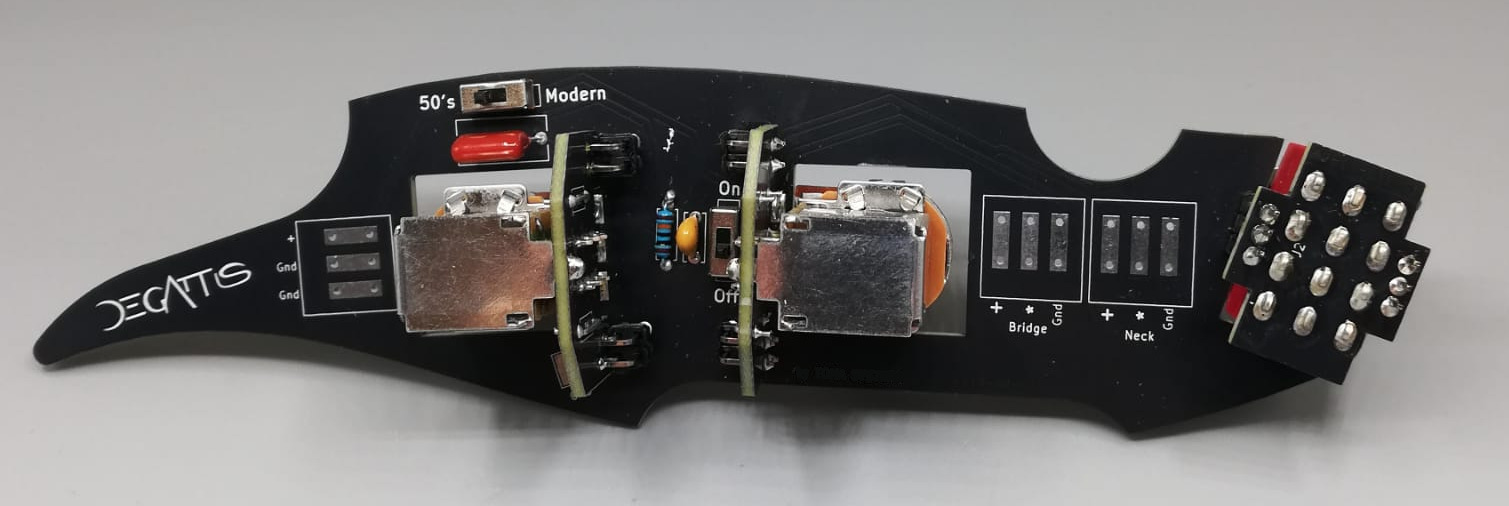
The circuit is called De Gattis Custom Circuitry: a single board, built to a De Gattis design, with the 50's/Modern switch and the pickup controls. It is tested before it goes into the body.

The De Gattis Custom Circuitry board, with the mark engraved on it and the pickup controls
Three pickups with wooden covers, resting on pale wooden boards
Two black pickups resting in their cavities, on a raw body
The circuit board fitted in the cavity of a teal body

The board, built and tested, before it goes into the body.

01 / 04
08The final check

Before it leaves, it gets tested

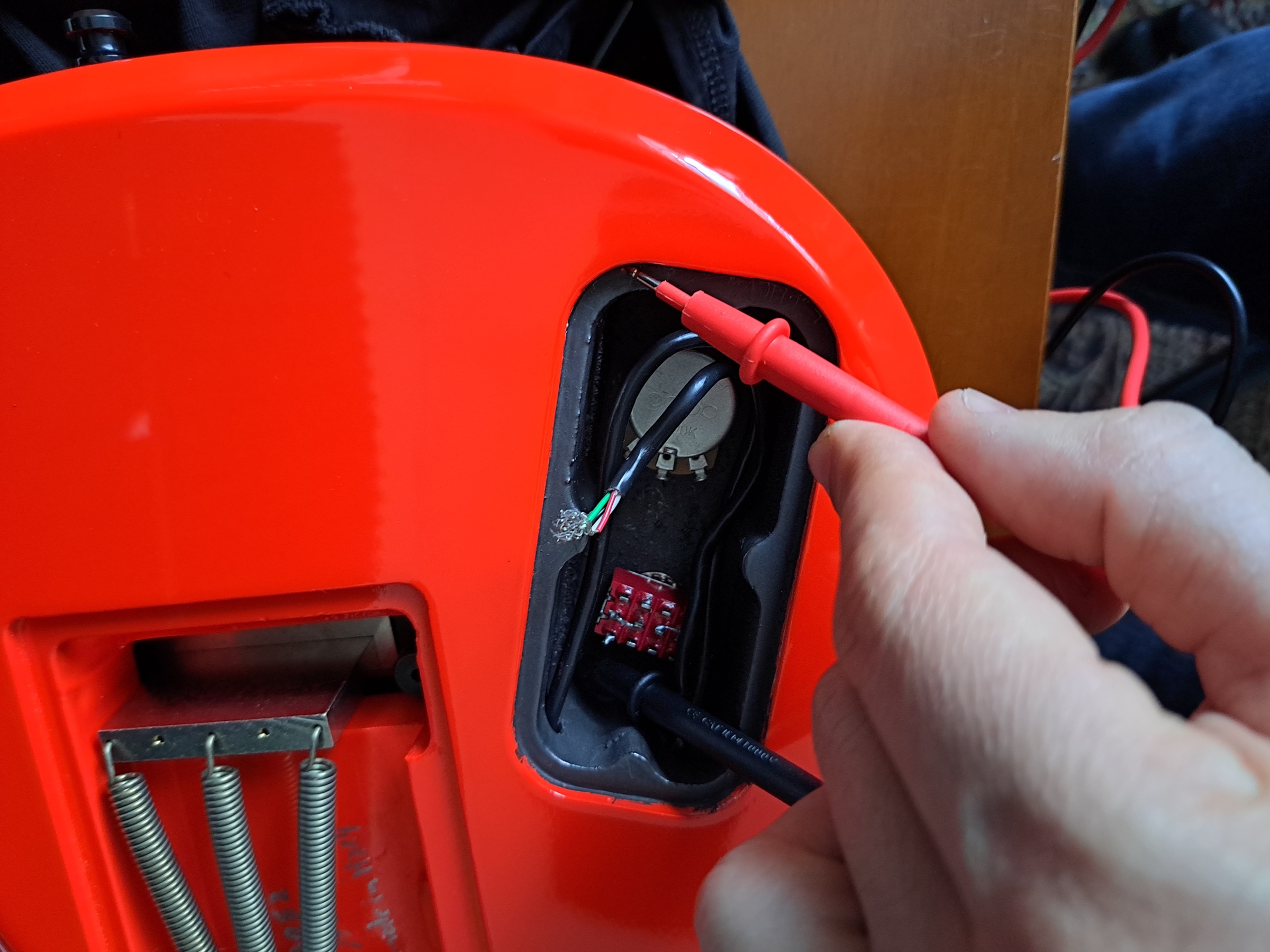
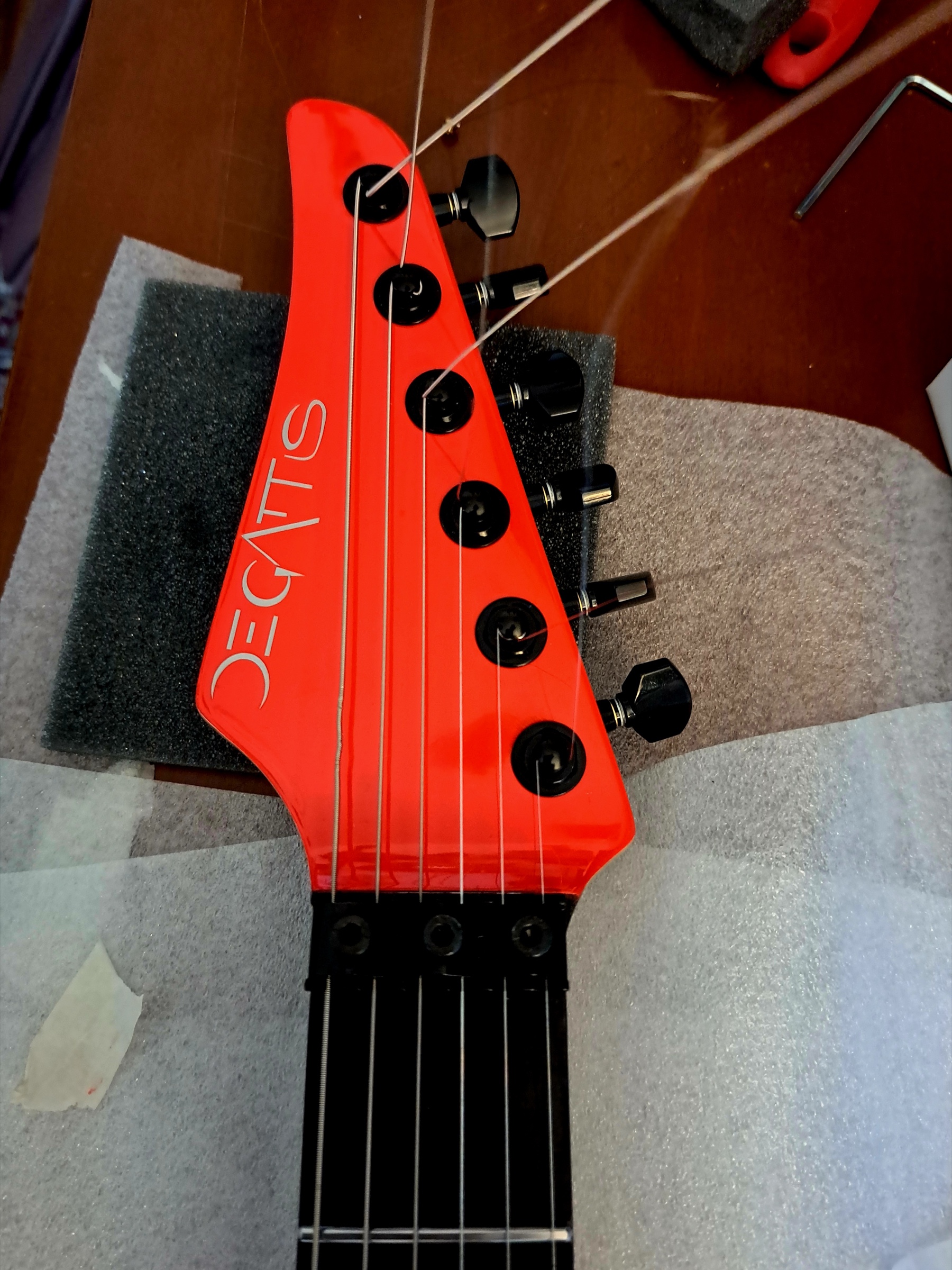
Strings, tuners, the circuit checked with a tester, the setup. Then the instrument goes into the workshop register, which follows it over the years.

A red headstock with the De Gattis mark, strings and tuners just fitted
A hand checking the circuit with a tester, inside the cavity of a red body
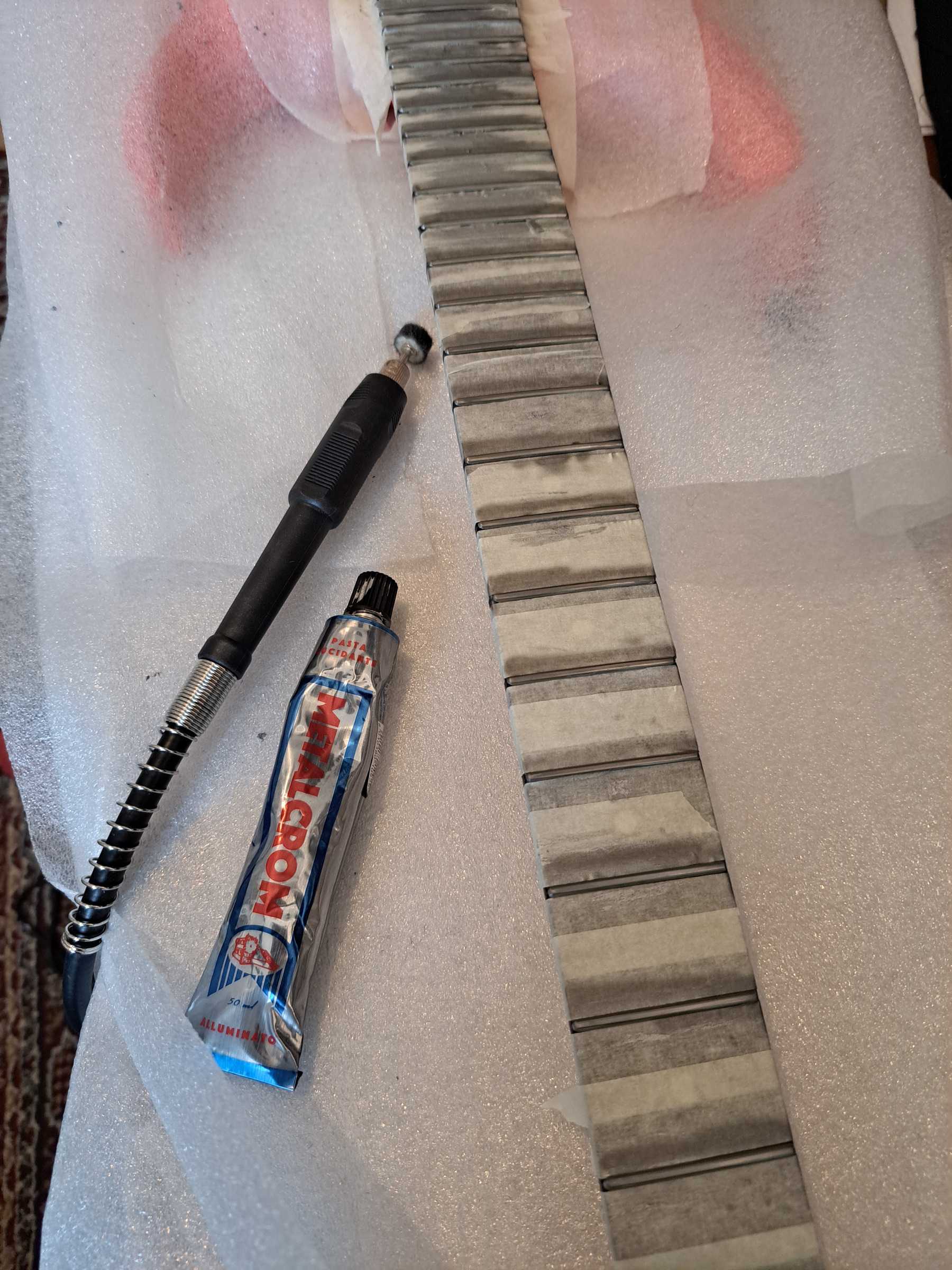
A fingerboard with masked frets, a rotary tool and a tube of polishing paste

Strings and tuners fitted, before the setup.

01 / 03
09The signature

The name goes on the headstock, last

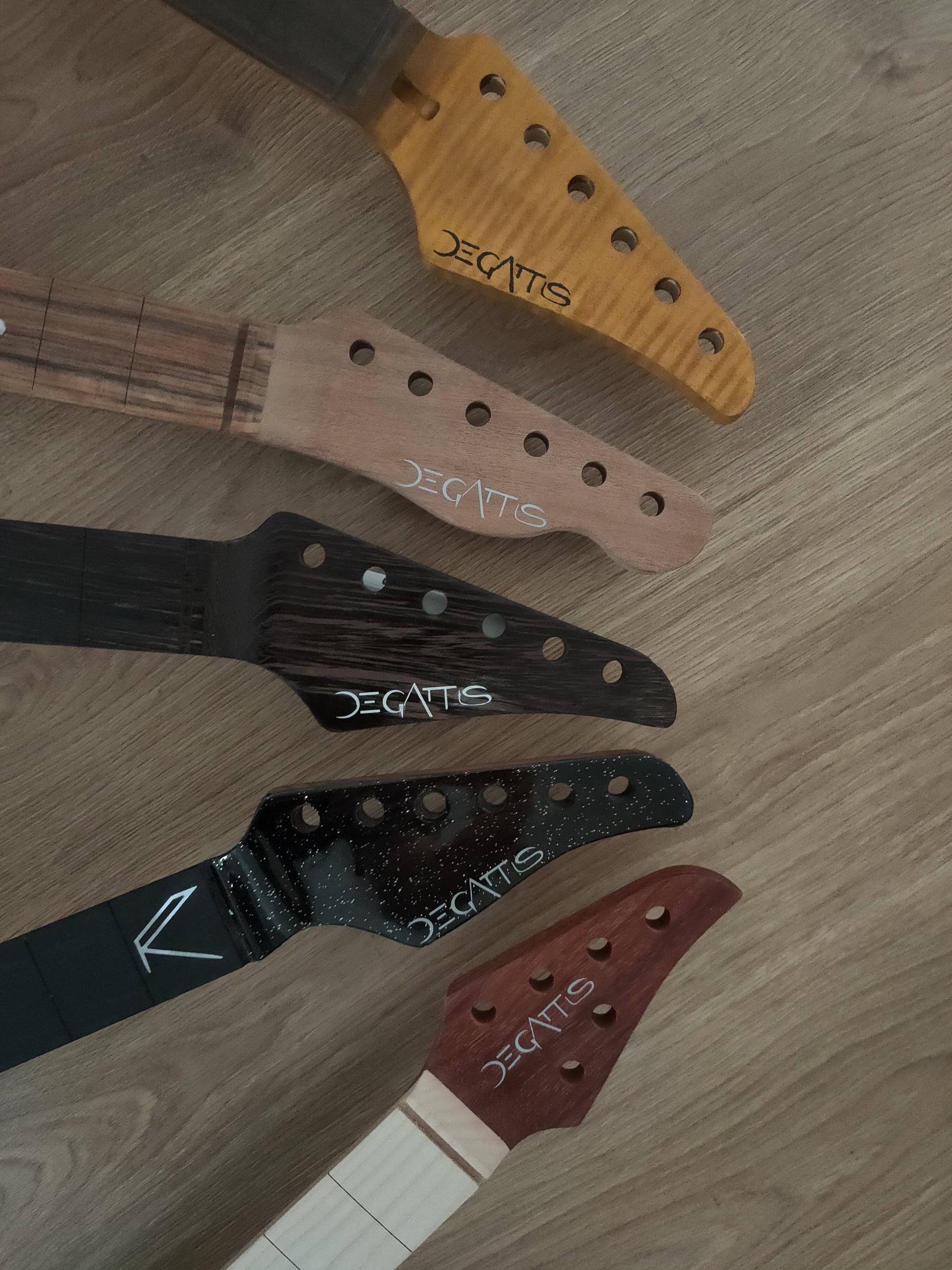
The mark is inlaid or engraved on the headstock, last of all. That is where two instruments from the same workshop tell themselves apart at a glance.

Five guitar headstocks in different woods, all carrying the De Gattis mark

Five headstocks, five woods, the same name.
10Who builds them

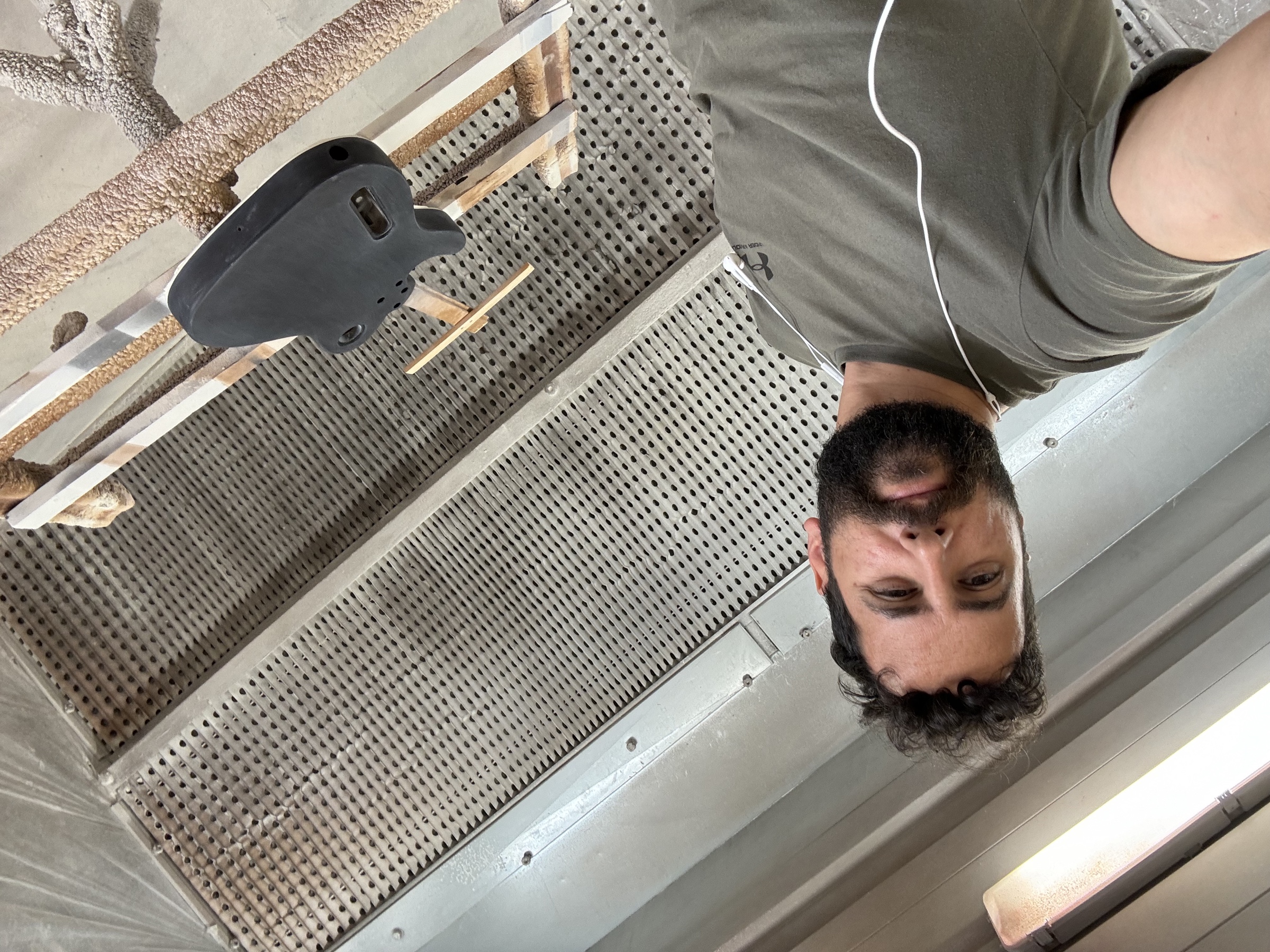
One person, from the drawing to the delivery.

Alberto De Gattis in the workshop's spray booth

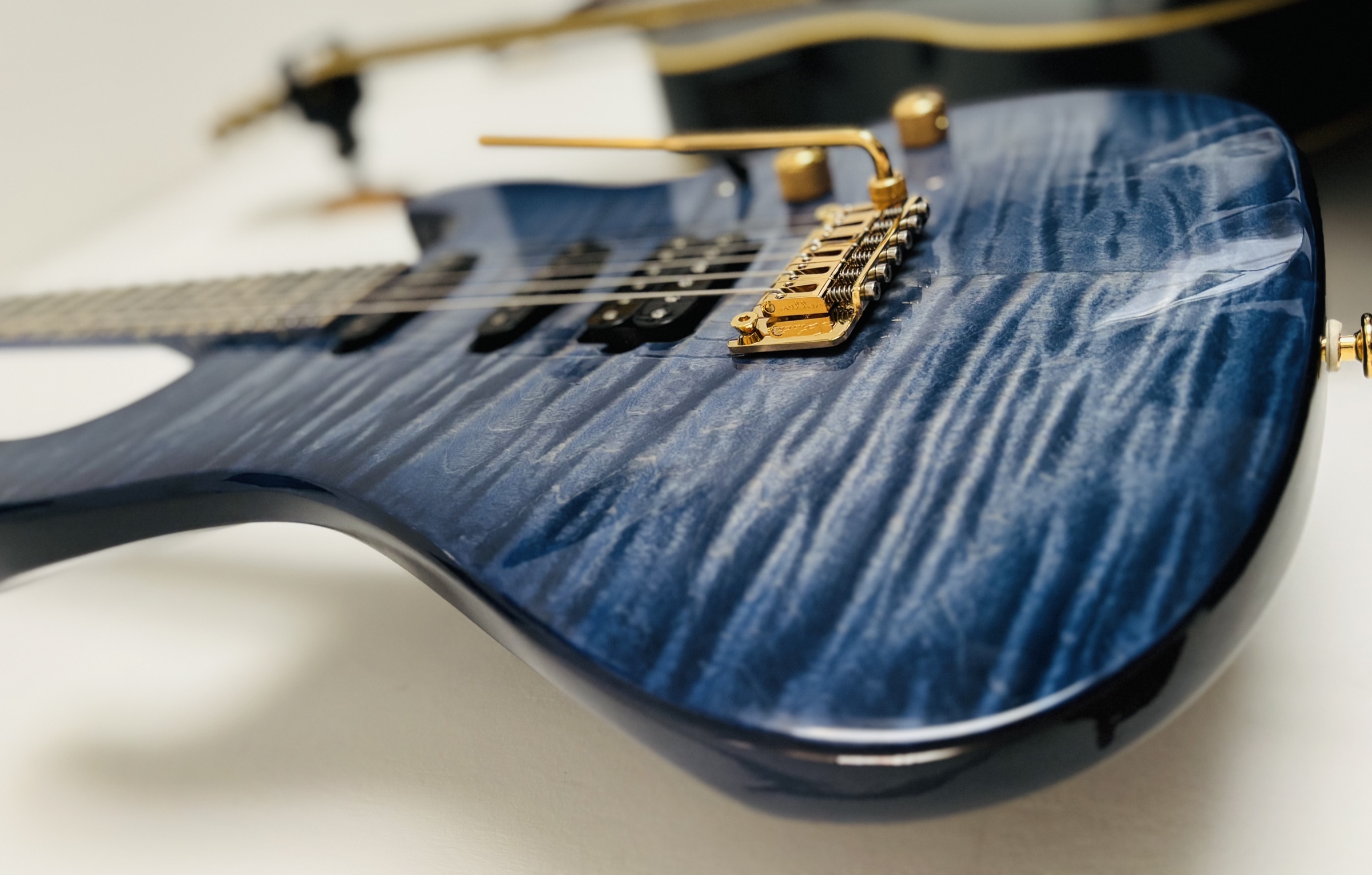
The bridge and the quilted maple top of a finished instrument, with gold hardware

The same work, on a finished instrument:

Strato Modern