Blackhole
Four or five strings · Headstock or headless · Standard or multiscale
Built with a headstock or headless, and that is the choice that changes the most: take the head off and the weight that pulls forward goes with it, so the balance shifts towards the body. Single scale or multiscale, with the low strings longer than the high ones.
- Ombra
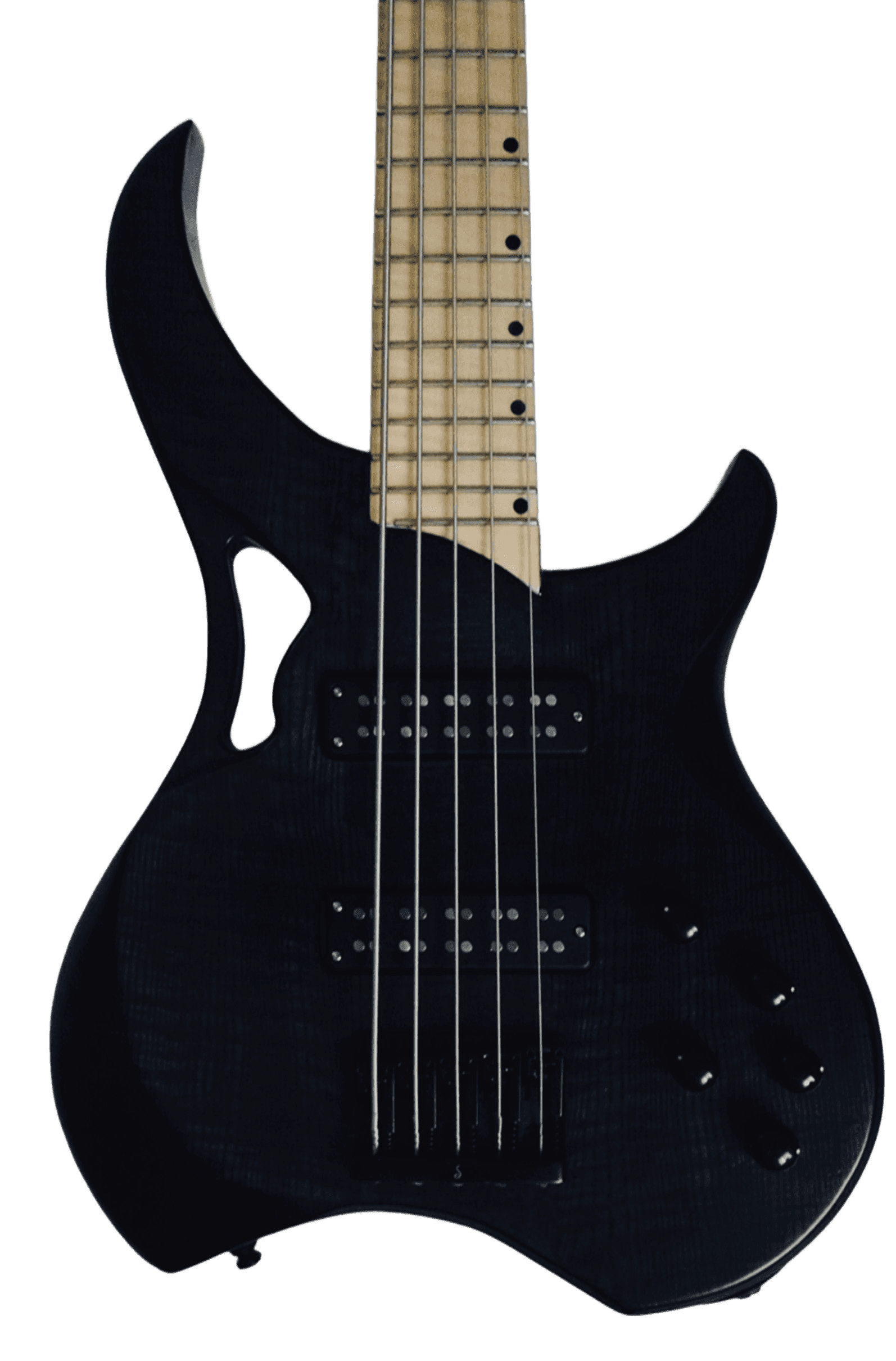
- Ossidiana
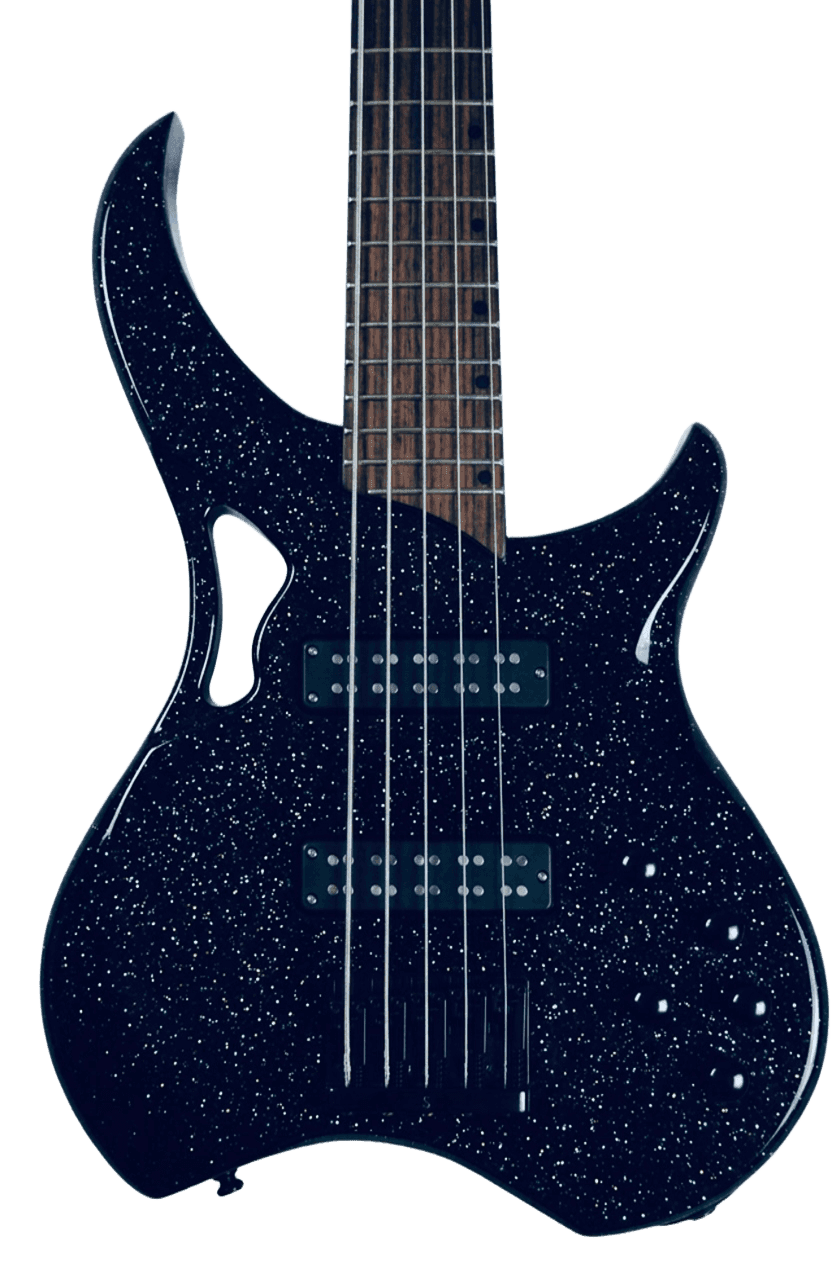
- Cenere
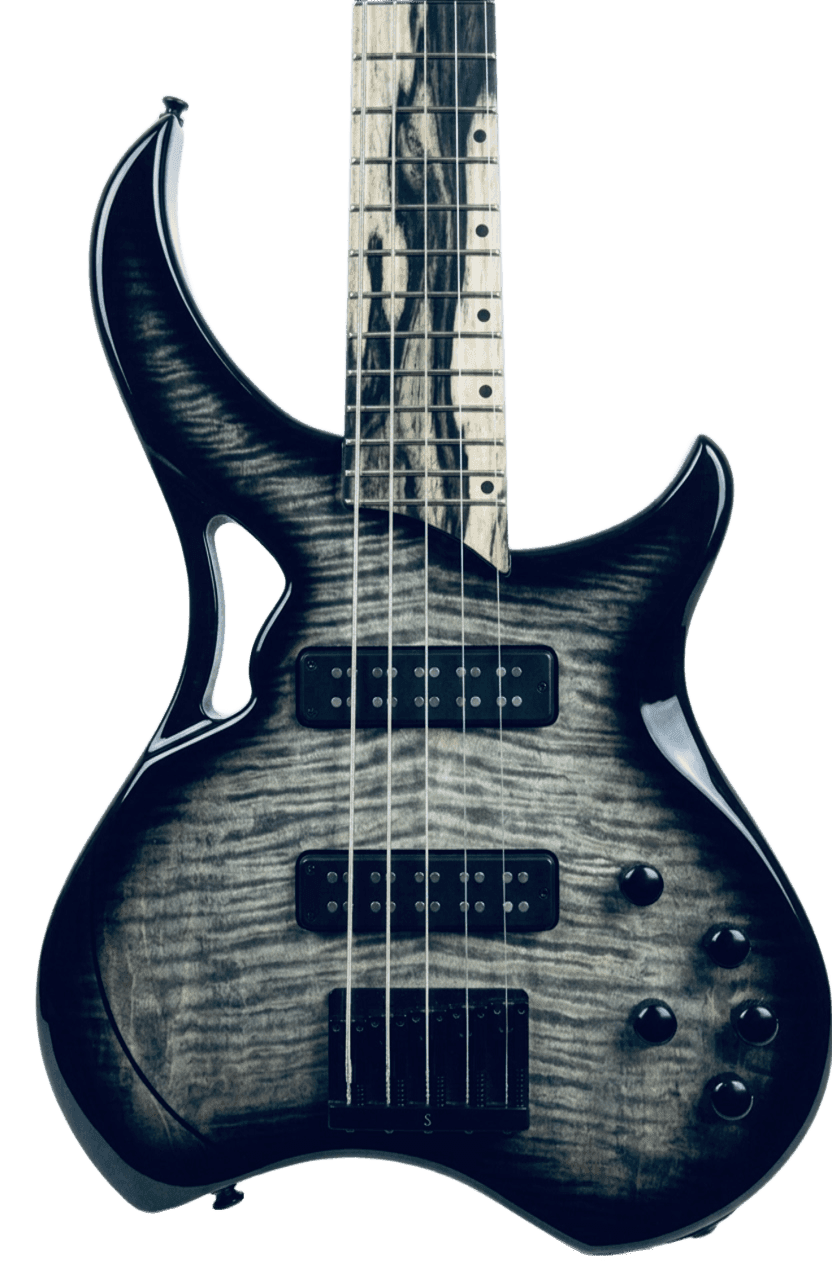
- Notturno
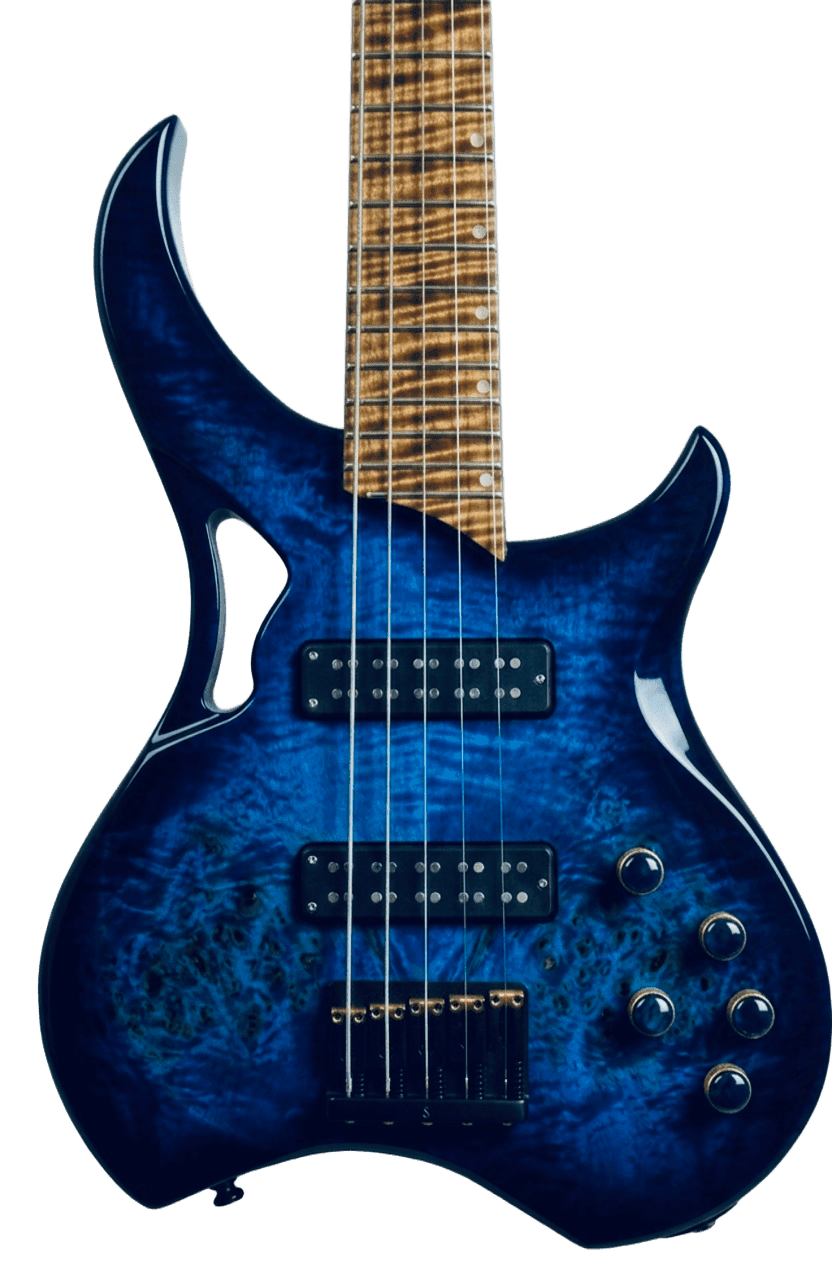
- Boreale
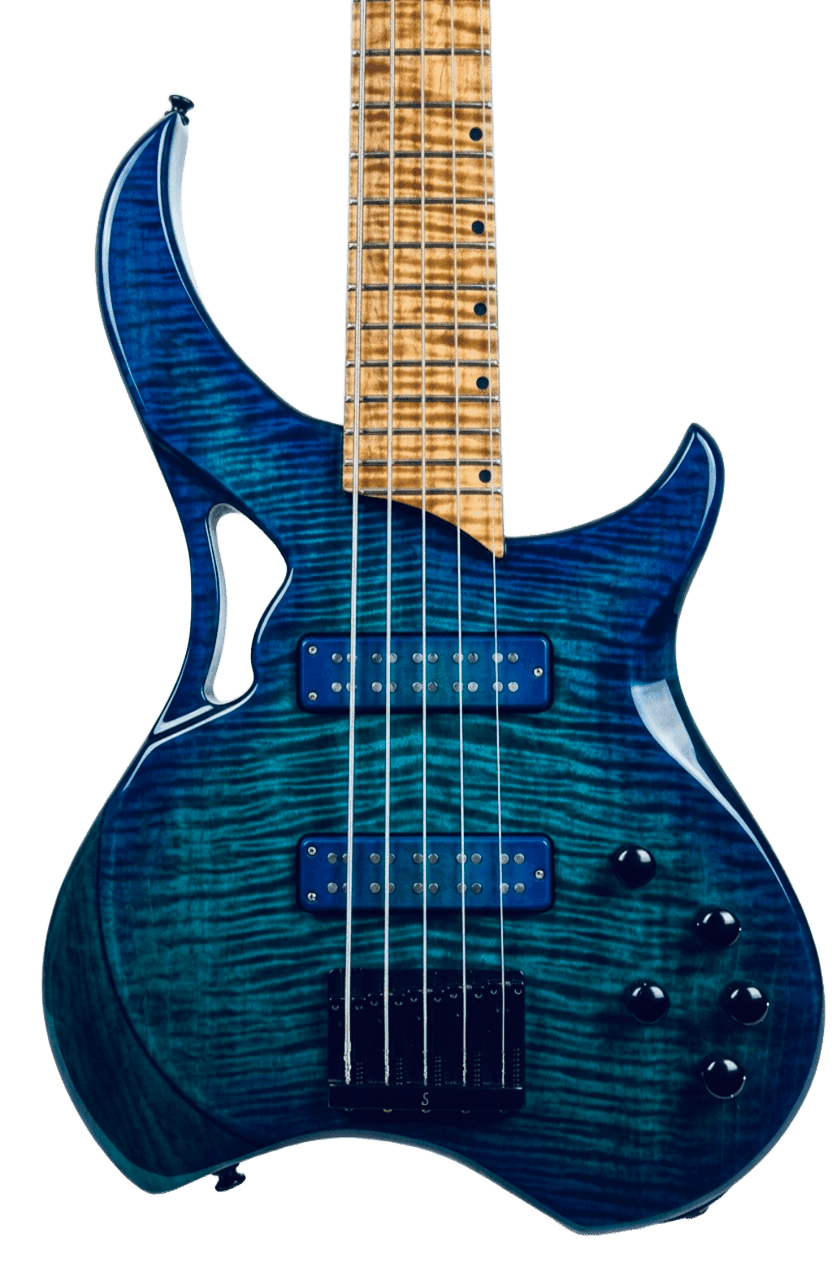
- Marea
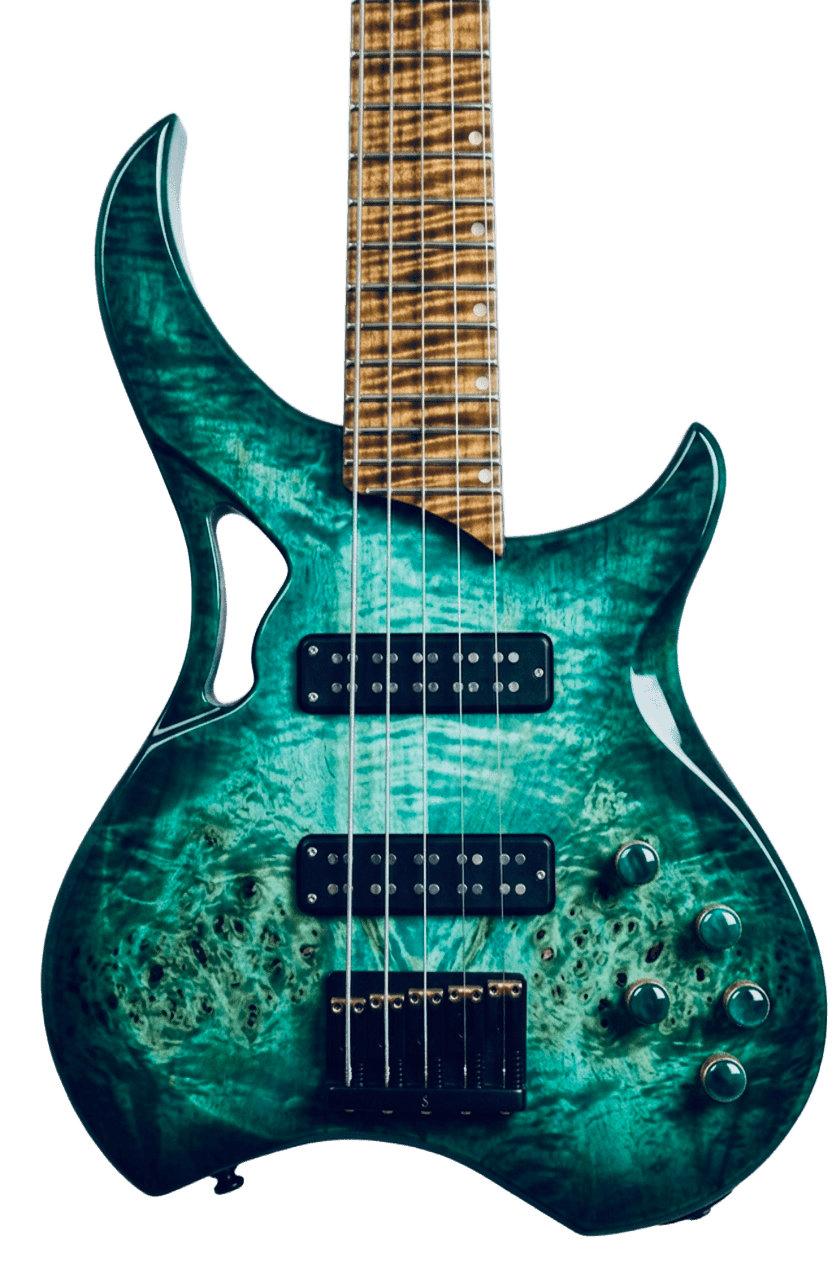
- Smeraldo
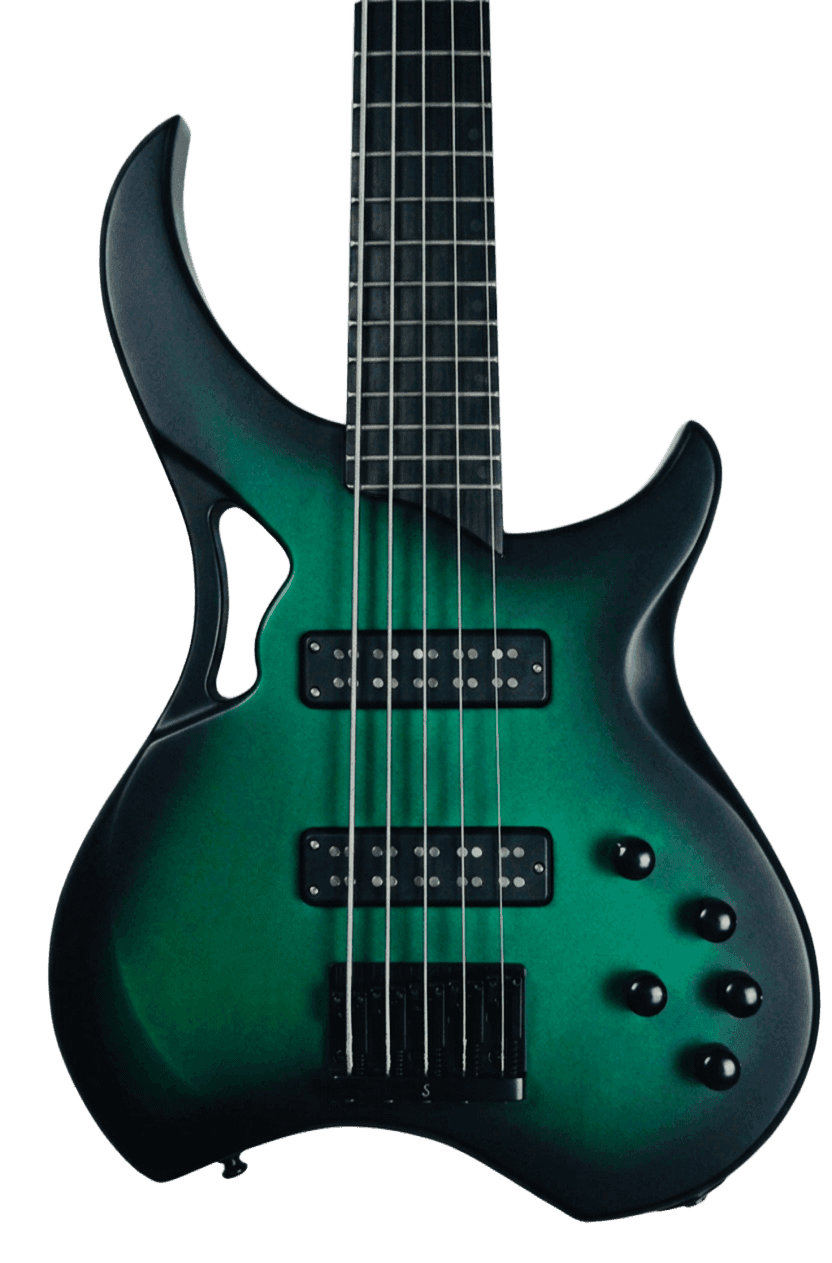
- Aurora
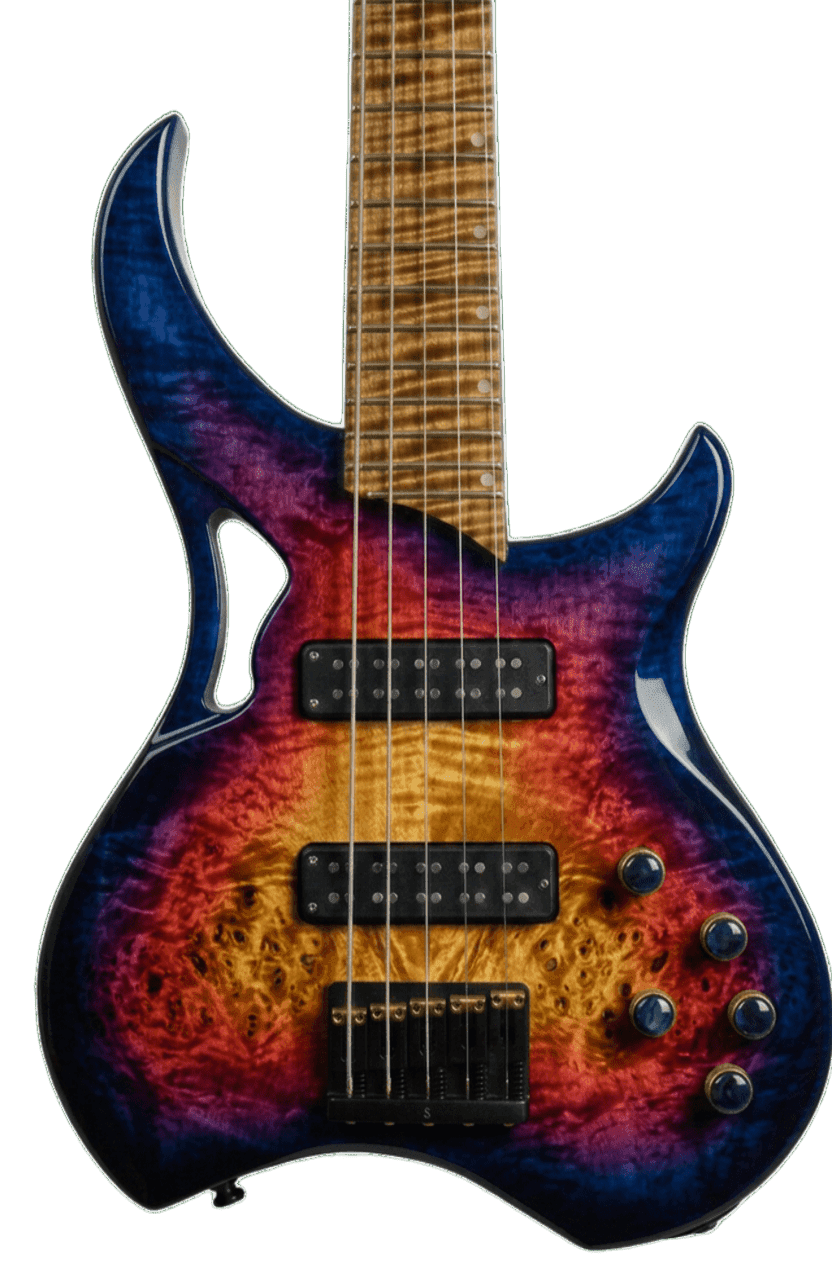
- Zafferano
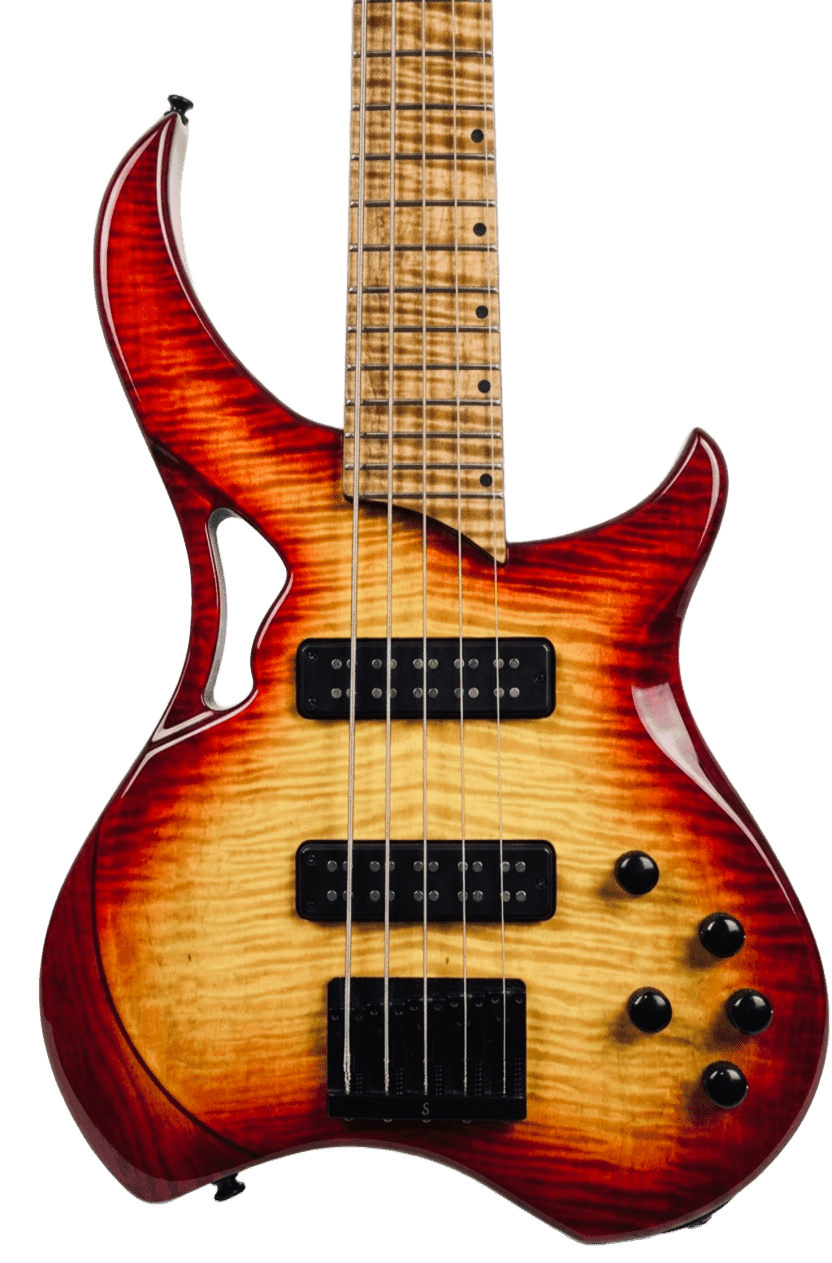
- Grafite
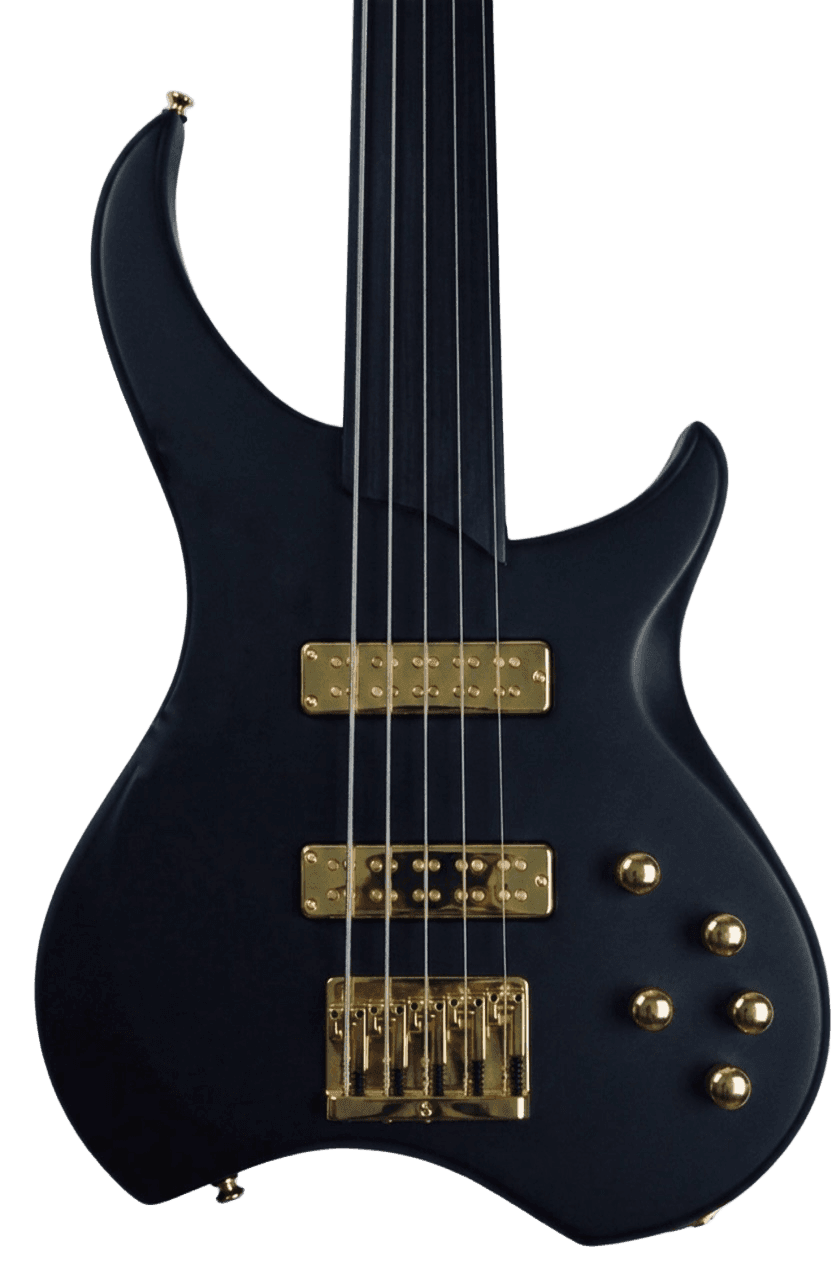
- Menta
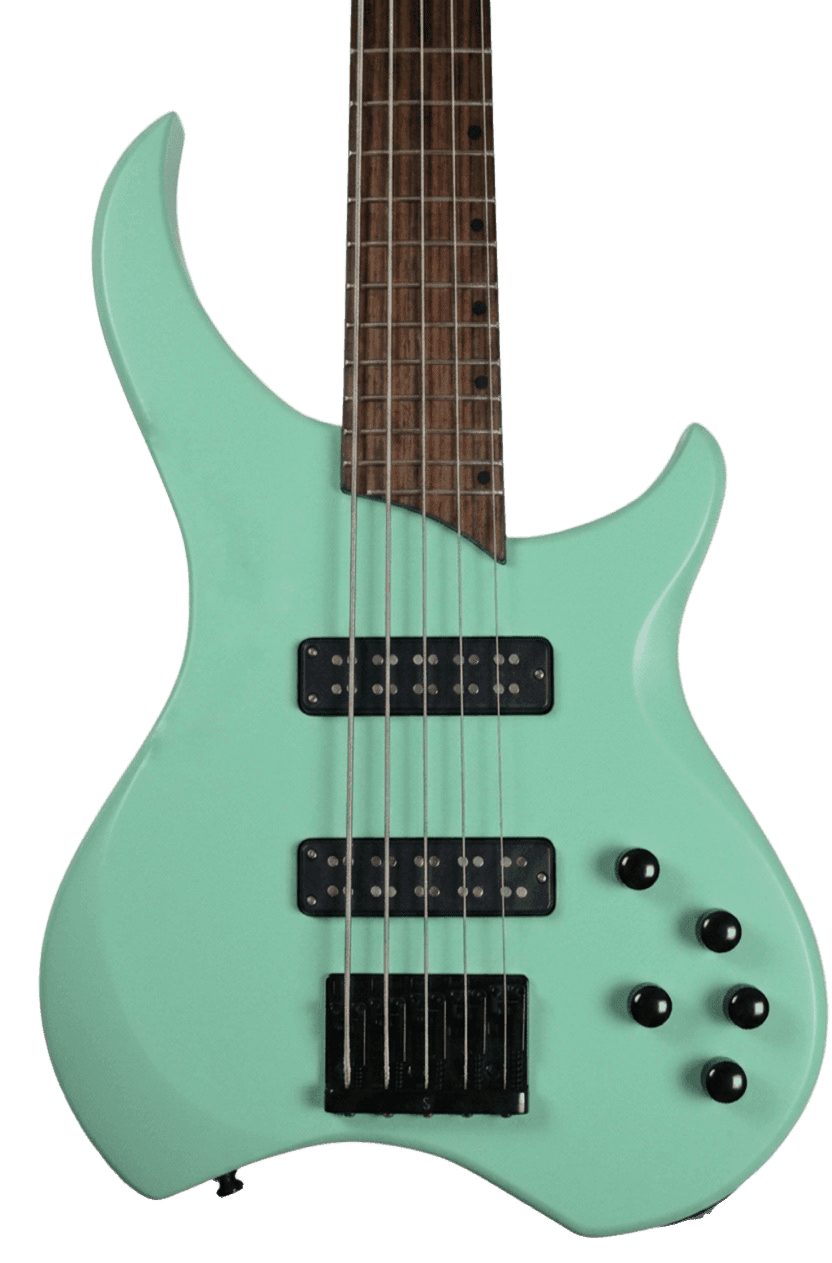
- Rosso corsa
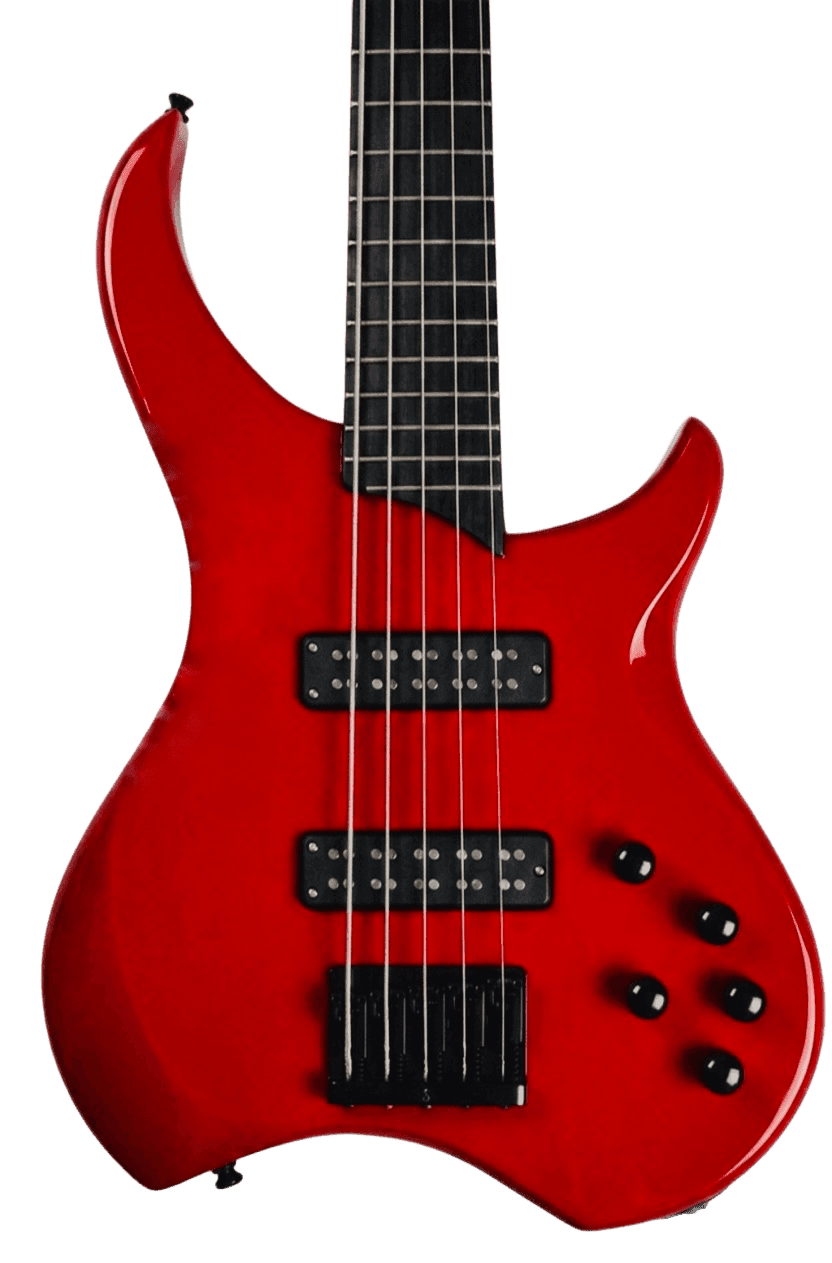
12 finishes available — and this is not a closed list
What sets it apart
With the head, or without
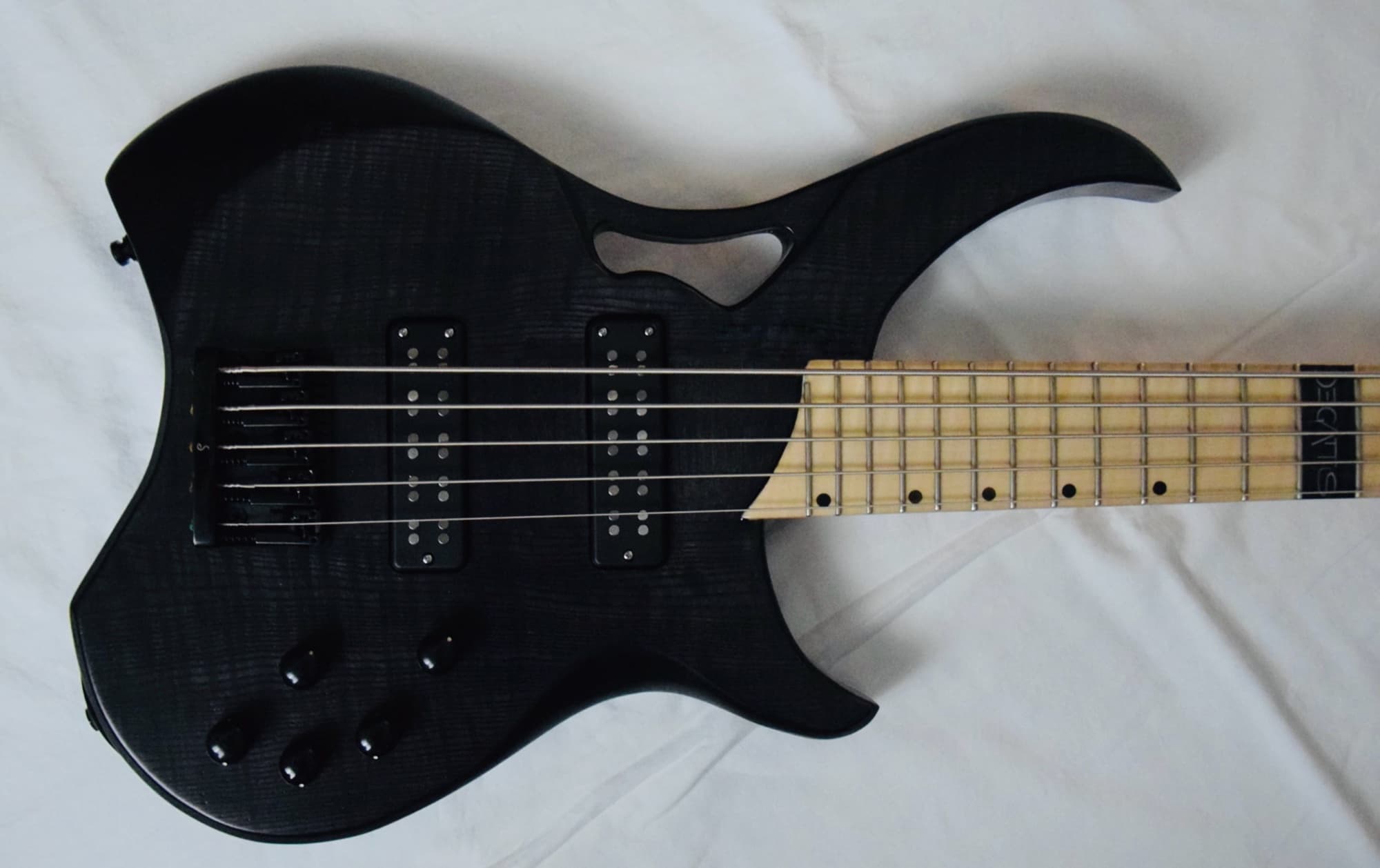
The photographs below are the version with a headstock. Ask for it headless and you lose the weight furthest from the body — the weight that drops the neck forward the moment you take your hand away: on a strap the instrument stays where you put it, and after two hours that is the difference you remember.
Eight hundred and eighty-nine millimetres
Thirty-five inches, longer than standard. It is the scale that keeps a low B under tension instead of leaving it slack: if you tune down, that is the difference between a note and a noise.
Active electronics
A Glockenklang preamp and Nordstrand pickups: you correct at the instrument instead of asking the engineer. It is the opposite of the Polare, and deliberately so — they are two different ways of standing on a stage.
Photographs
Photographs of Blackhole
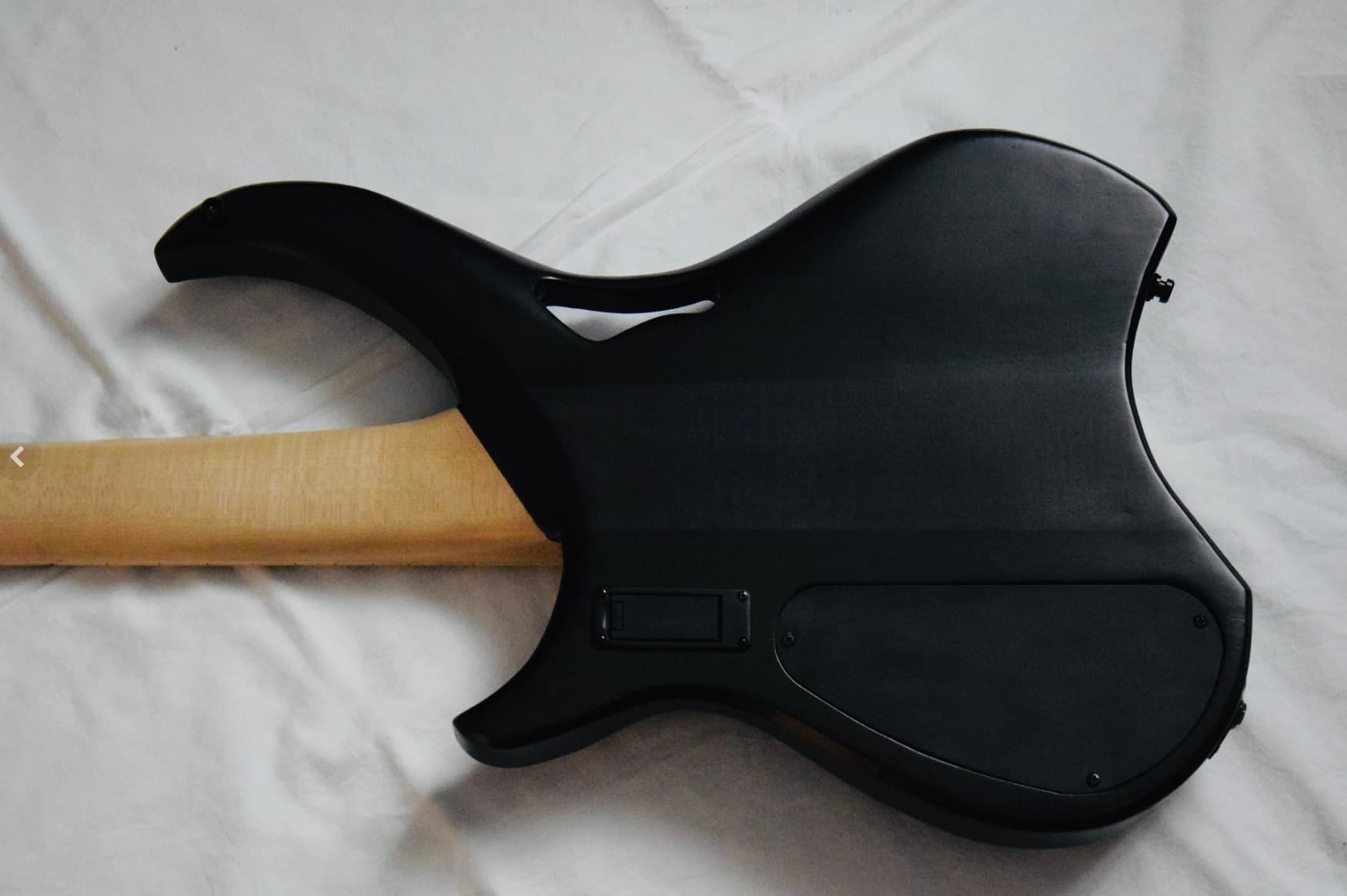
The back, where the strings anchor into the body
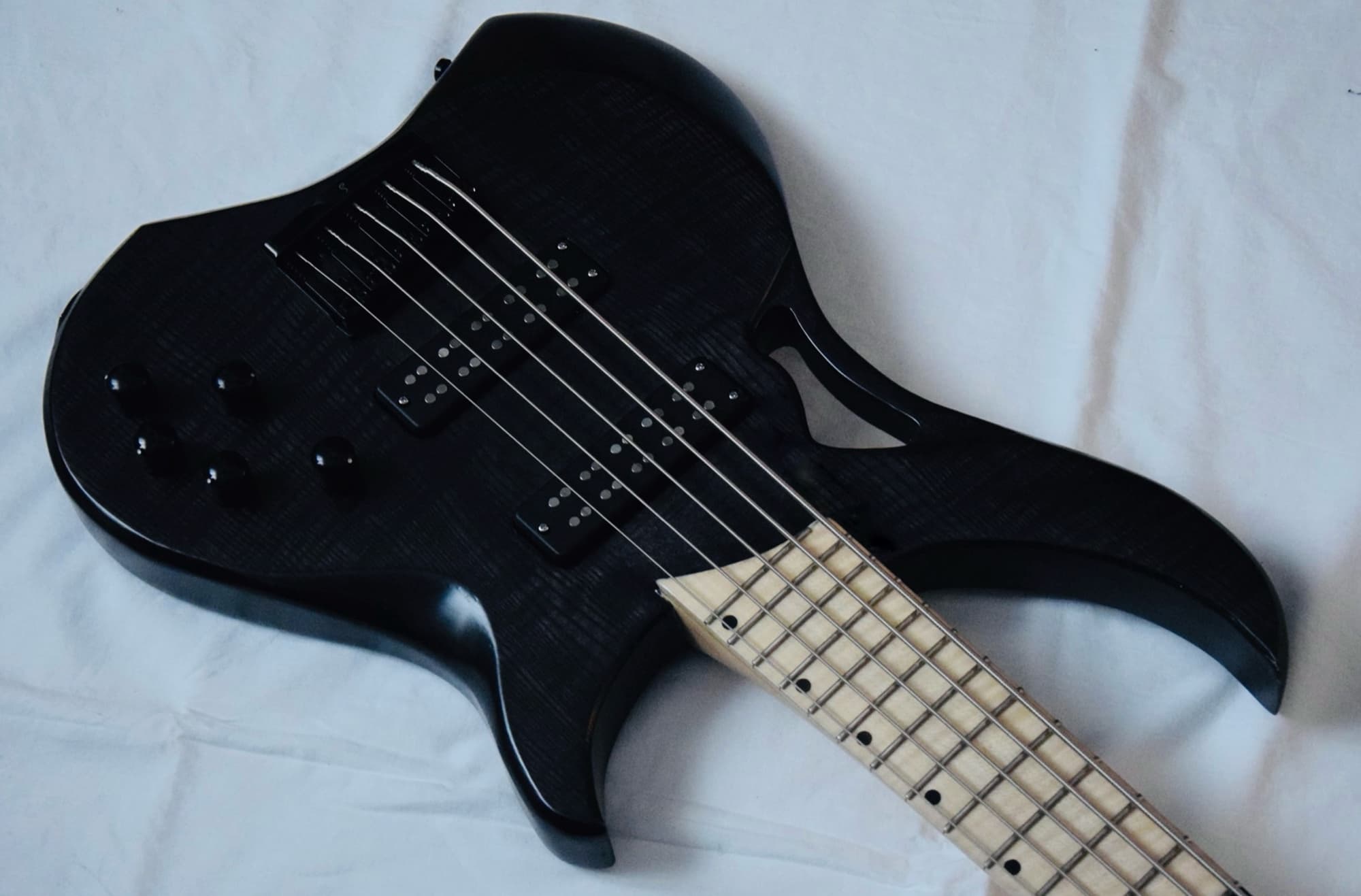
The body in three quarters, and the neck running through
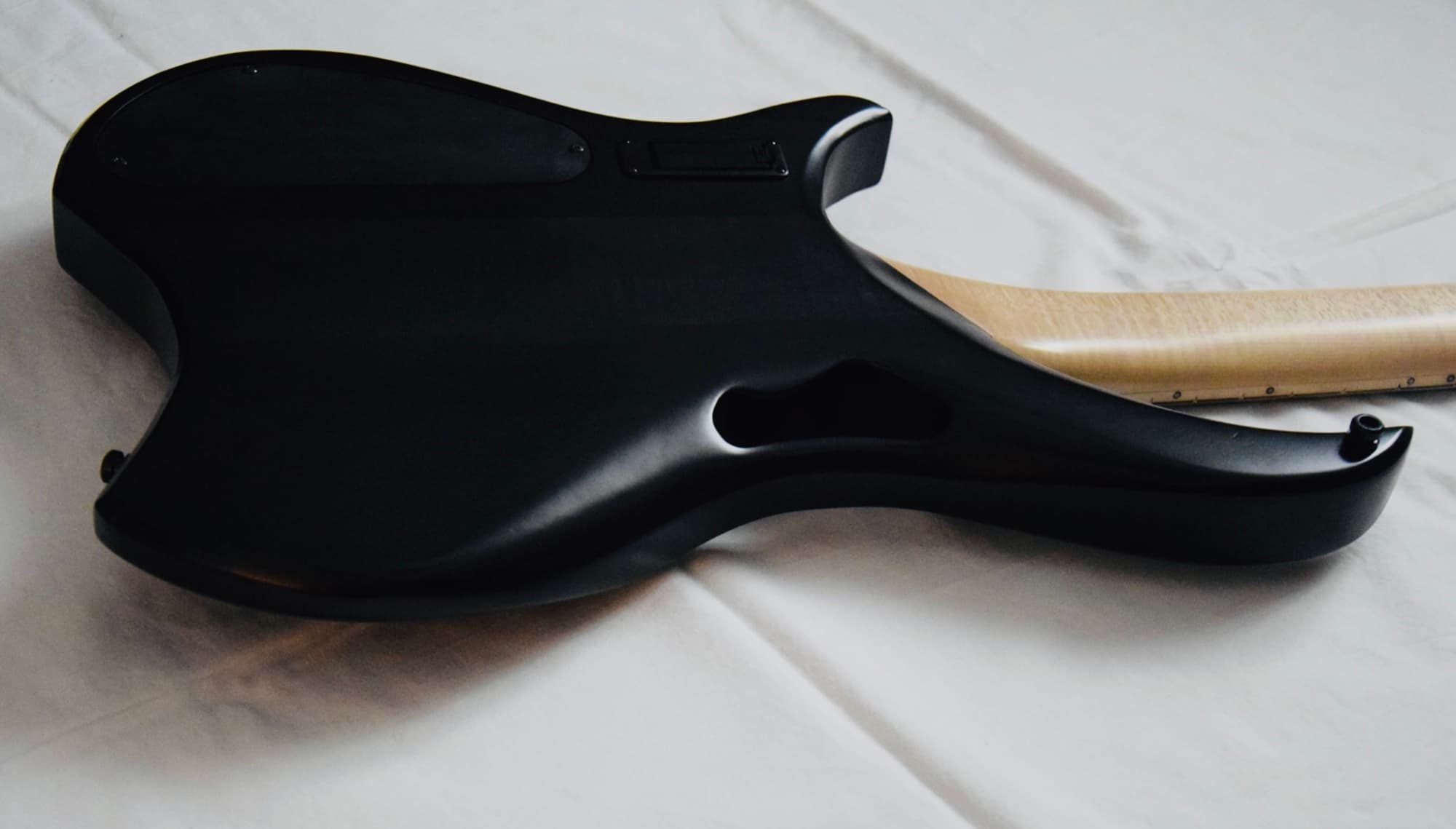
The profile: how little is left beyond the body
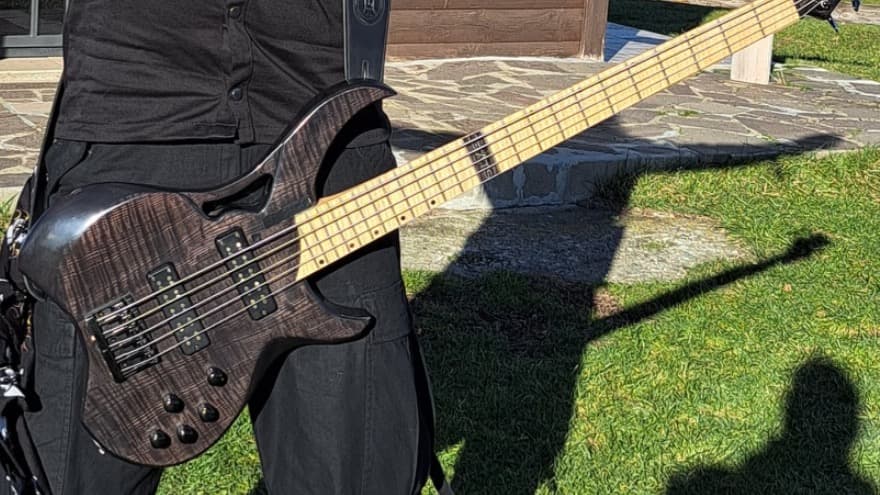
Worn
Weight is felt standing up.
The other photographs say how it is made. This one says how big it is and where it sits. A bass is judged after two hours on your feet, and those two hours start with how it hangs in the first minute.
Specifications
How it is made.
- Handle
- Optional, on request
- Scale length
- 889 mm · 35"
- Neck
- Balkan maple
- Fretboard
- Balkan maple
- Body
- Canadian alder
- Truss rod
- Double action, two rods
- Nut
- Bone
- Tuners
- Warwick
- Pickups
- Nordstrand humbucker
- Electronics
- Glockenklang, active
- Bridge
- Schaller 3D
- Frets
- Super jumbo
- Fretboard radius
- 20"
- Body finish
- Satin polyurethane
- Neck finish
- Satin polyurethane
- Fretboard finish
- Satin polyurethane
And now
Carry on building it.
In the Custom Shop the bass gets built one choice at a time — shape, scale, headstock, bridge, tuners — and at the end it is the luthier who writes back, not a form. What it does not ask you, a particular wood or a colour you have in mind, you say by writing.