Steve Vai · 2016
Modern Primitive
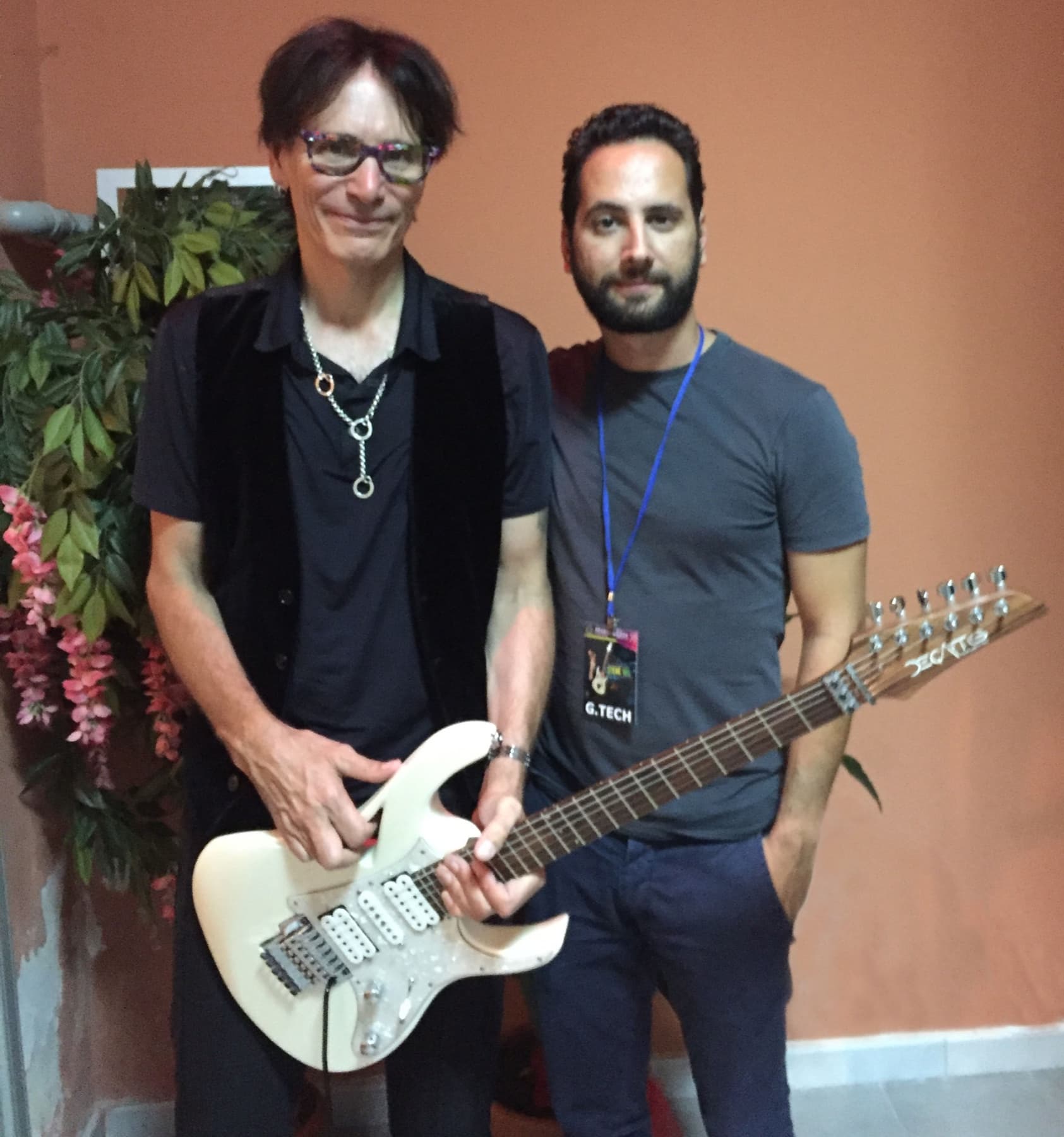
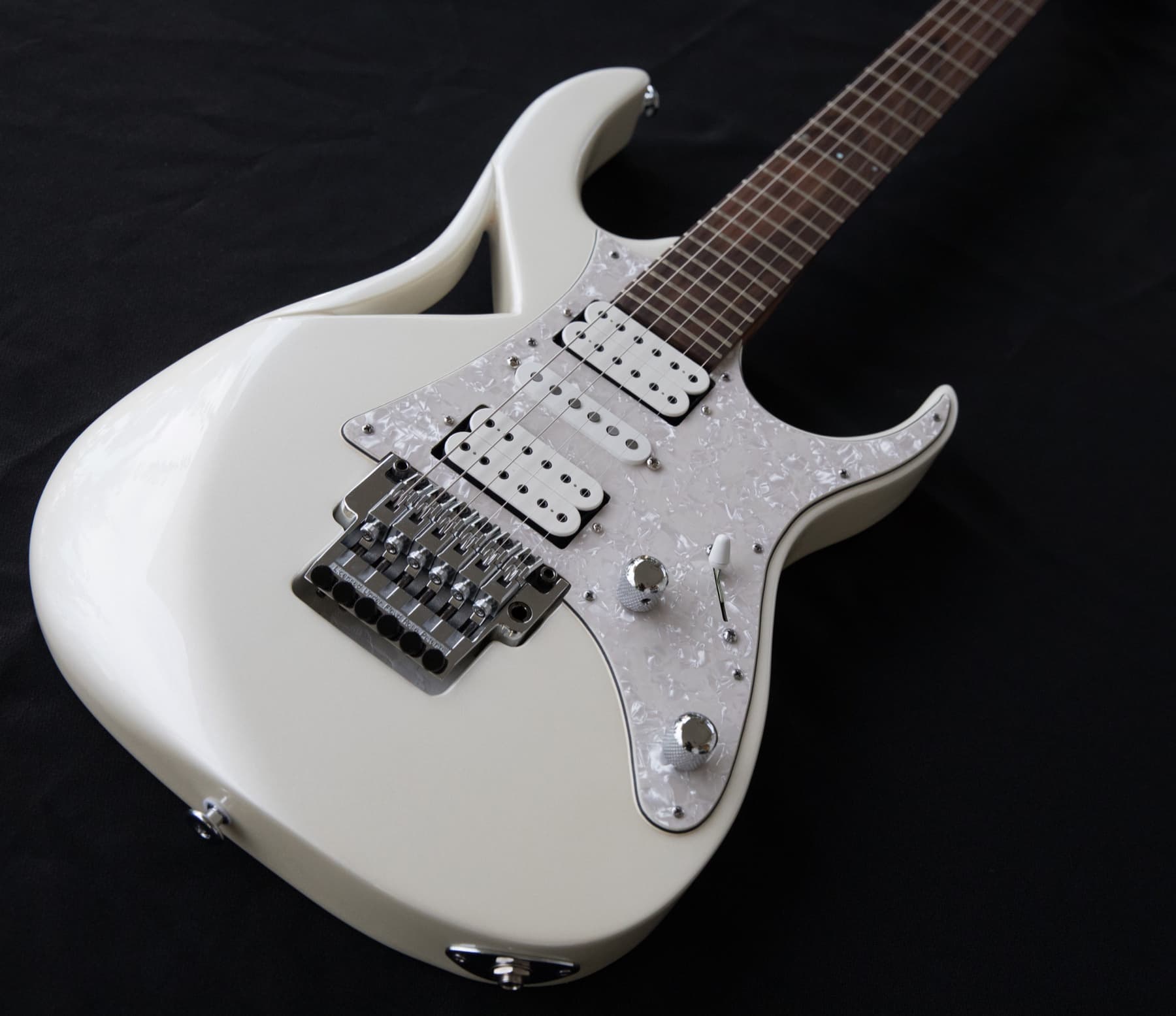
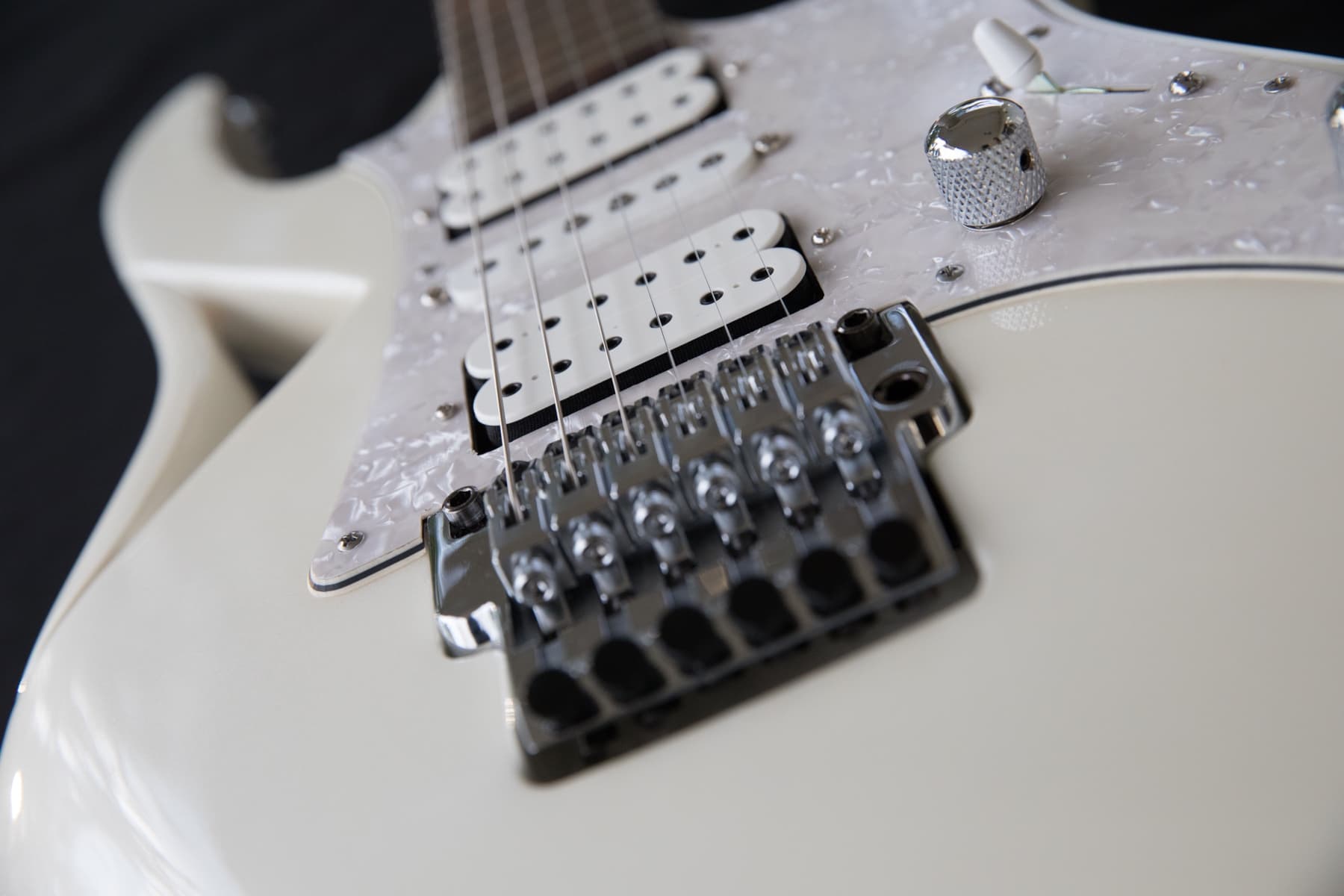
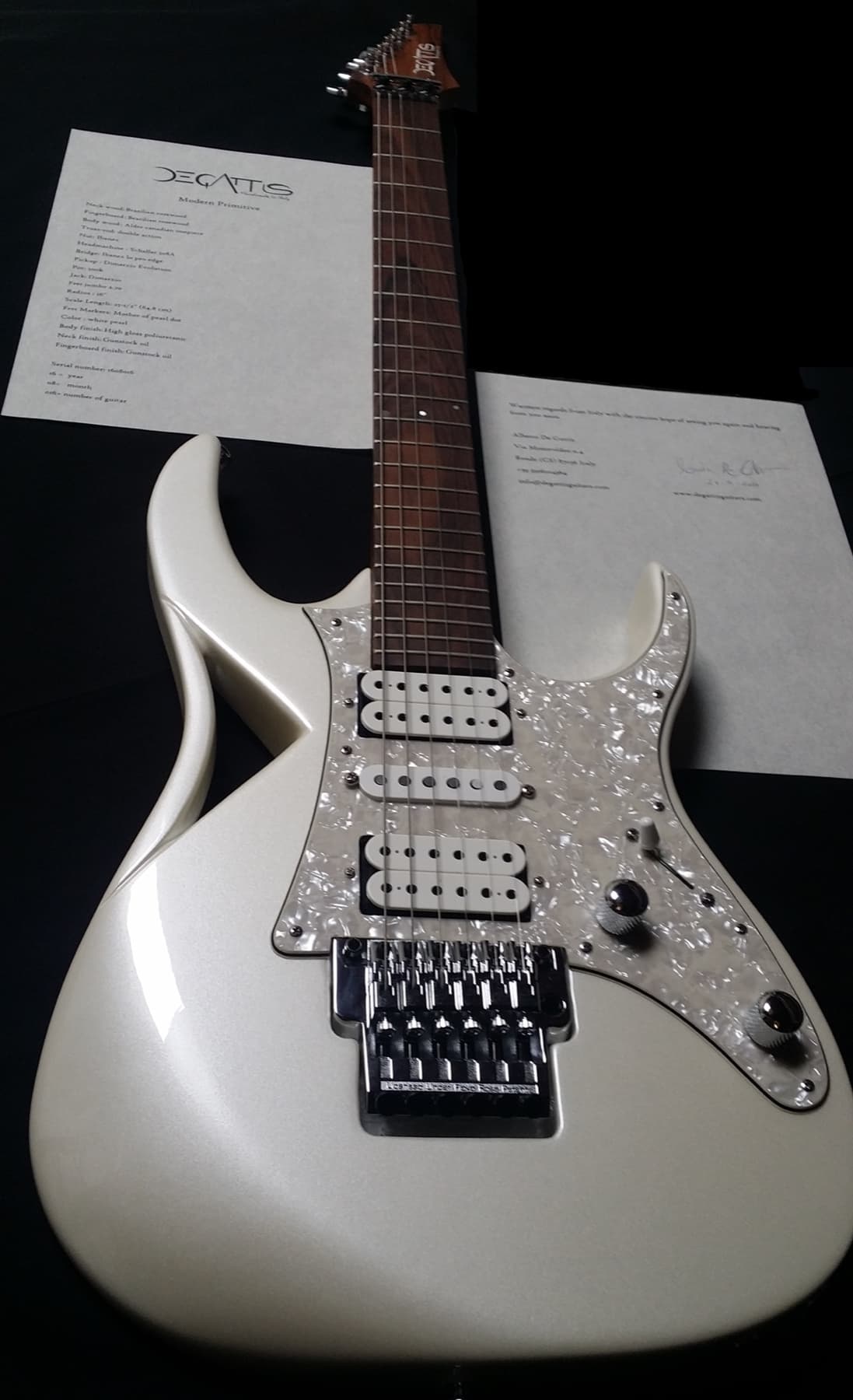
Built entirely by hand for Steve Vai and handed over at the Alien Guitar Secrets Master Class he was running in Calabria in September 2016. The name is that of his record from that year.
The Modern Primitive went into his private collection: on his official site it is catalogued as SV 362.
Alberto De Gattis was also his guitar tech in Italy: Steve Vai's instruments, on tour here, were prepared and looked after by him. This is not one more anecdote — it is the reason this guitar was accepted. Someone who has had another player's guitars in their hands knows exactly what to build for them.
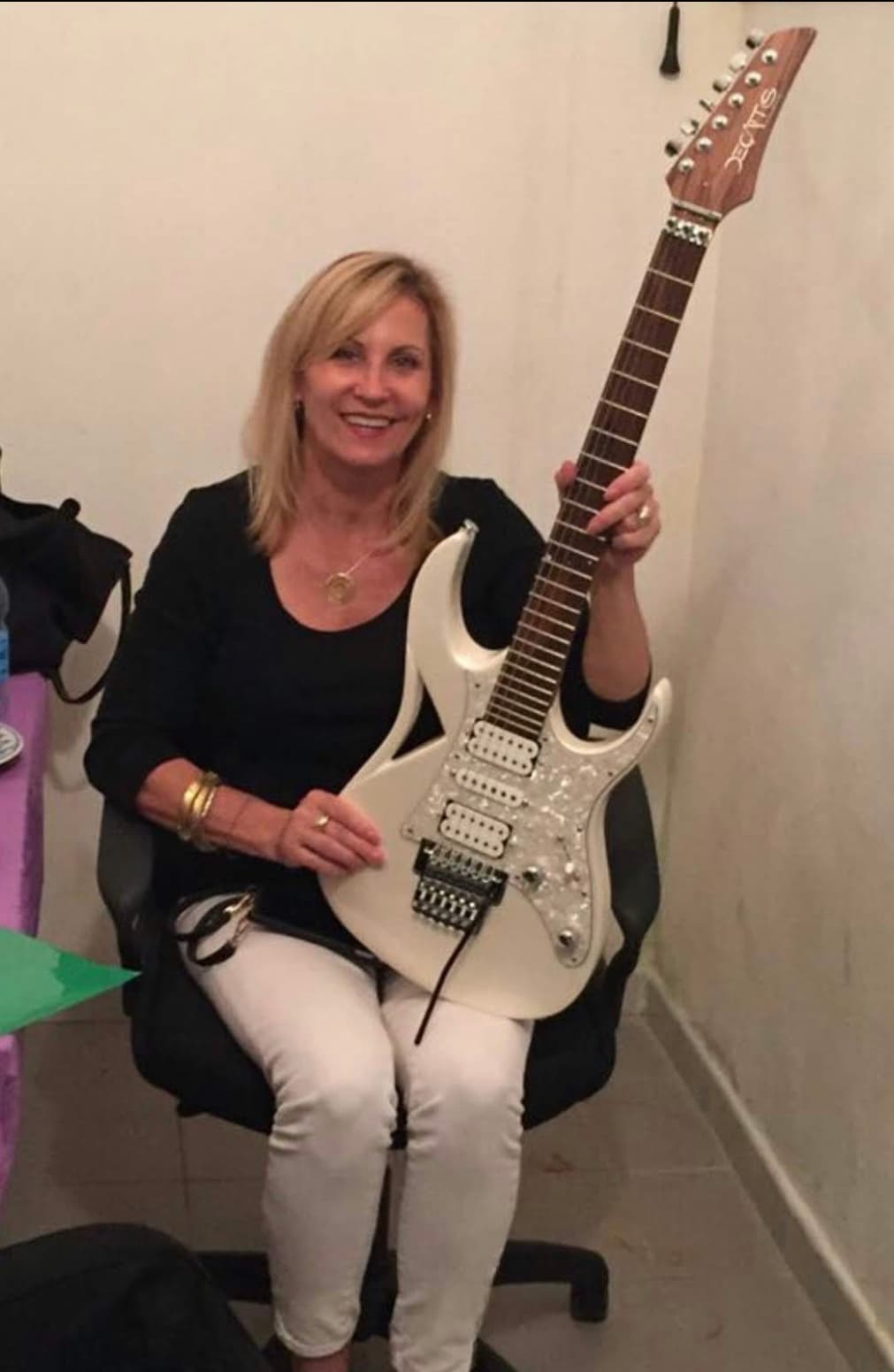
Pia, his wife, was there at the handover, and in one photograph from that day it is she who is holding the guitar. Steve liked it enough that it came up in conversation with Ibanez.
The entry on Steve Vai's official siteThe design
The things Steve liked.
The handle on his signature model had stayed the same for more than thirty years: it is the mark by which that guitar is recognised from across a room. On the model that came afterwards, the shape is different.
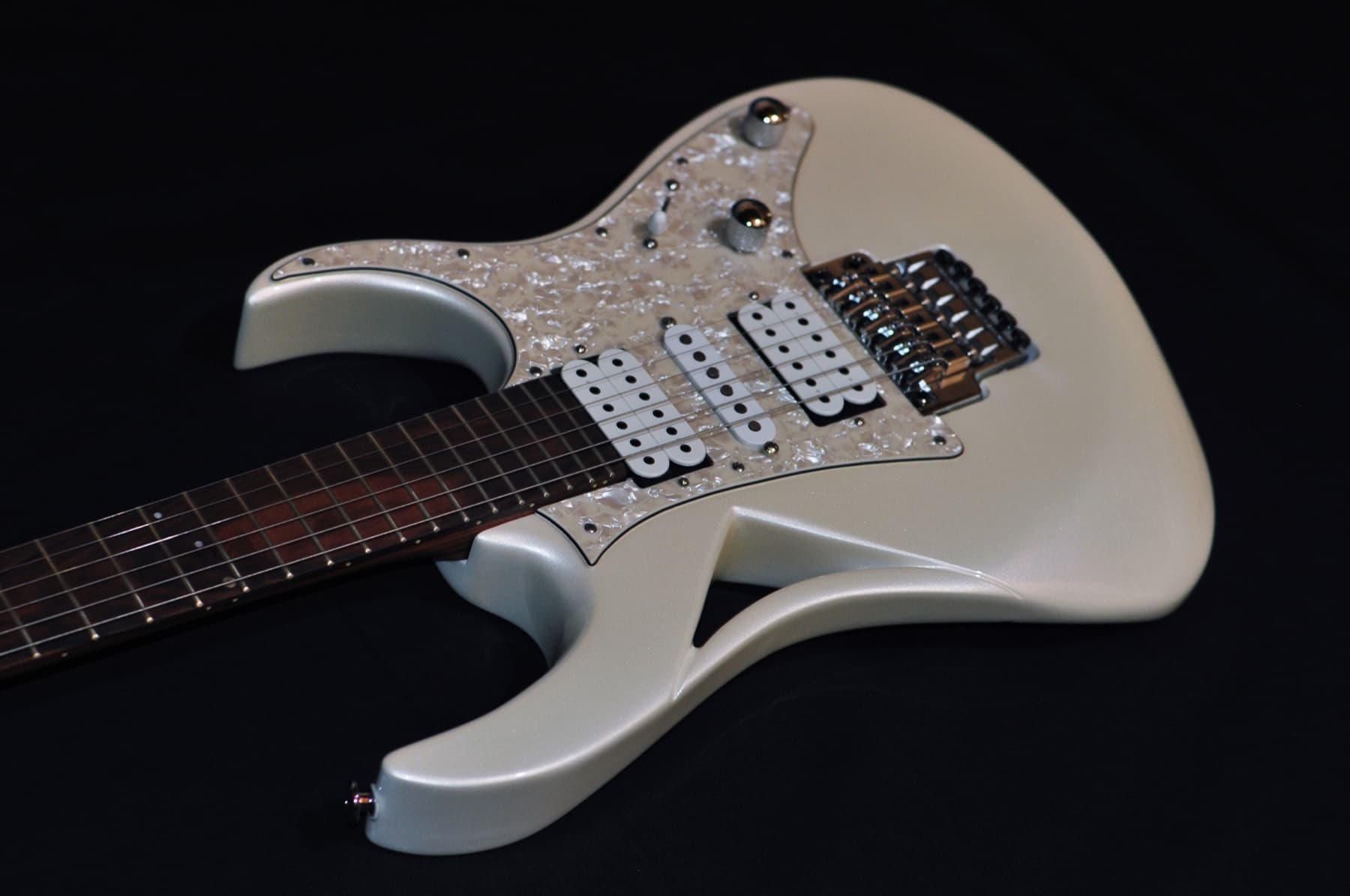
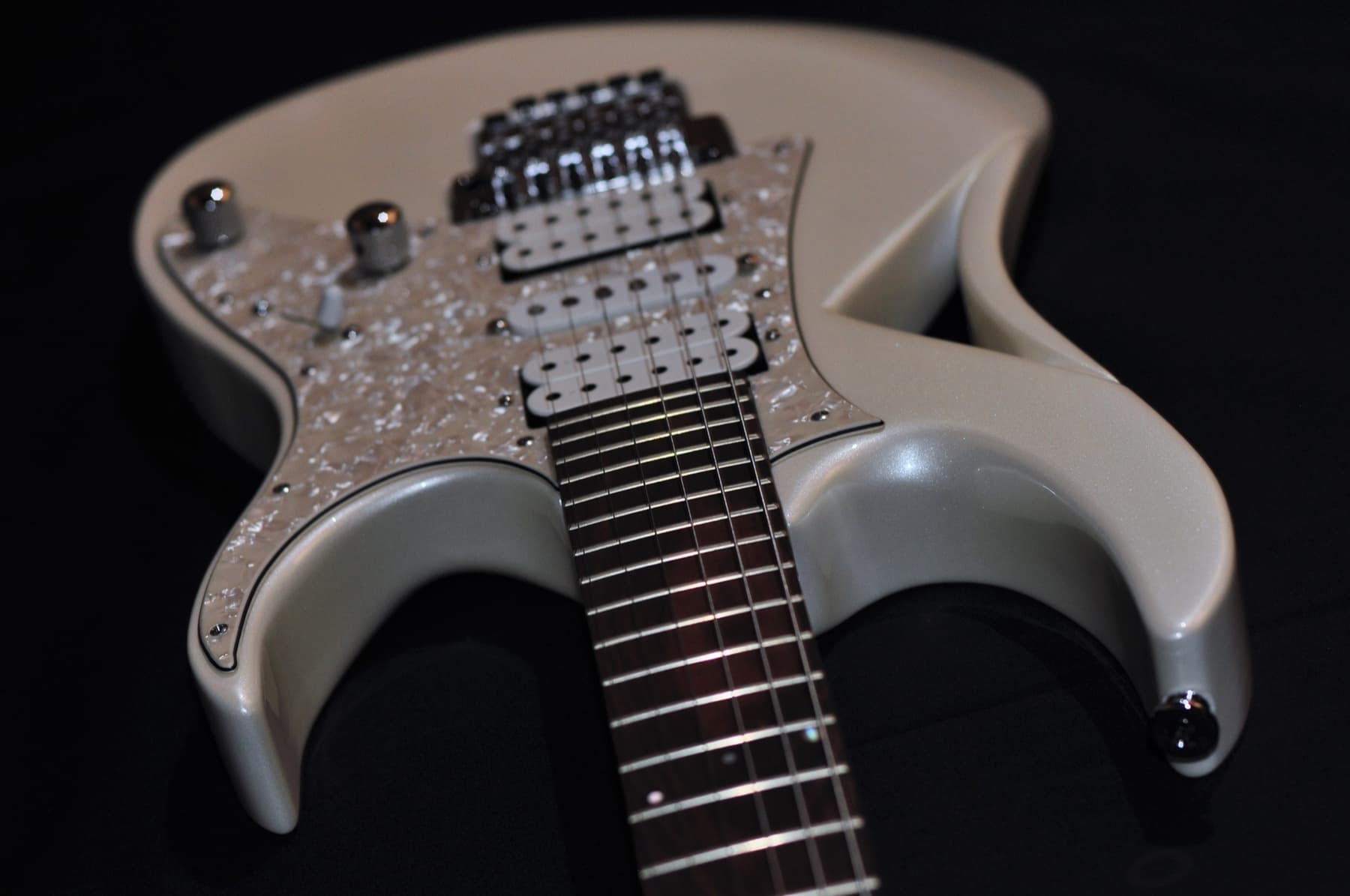
- The carving in the handle
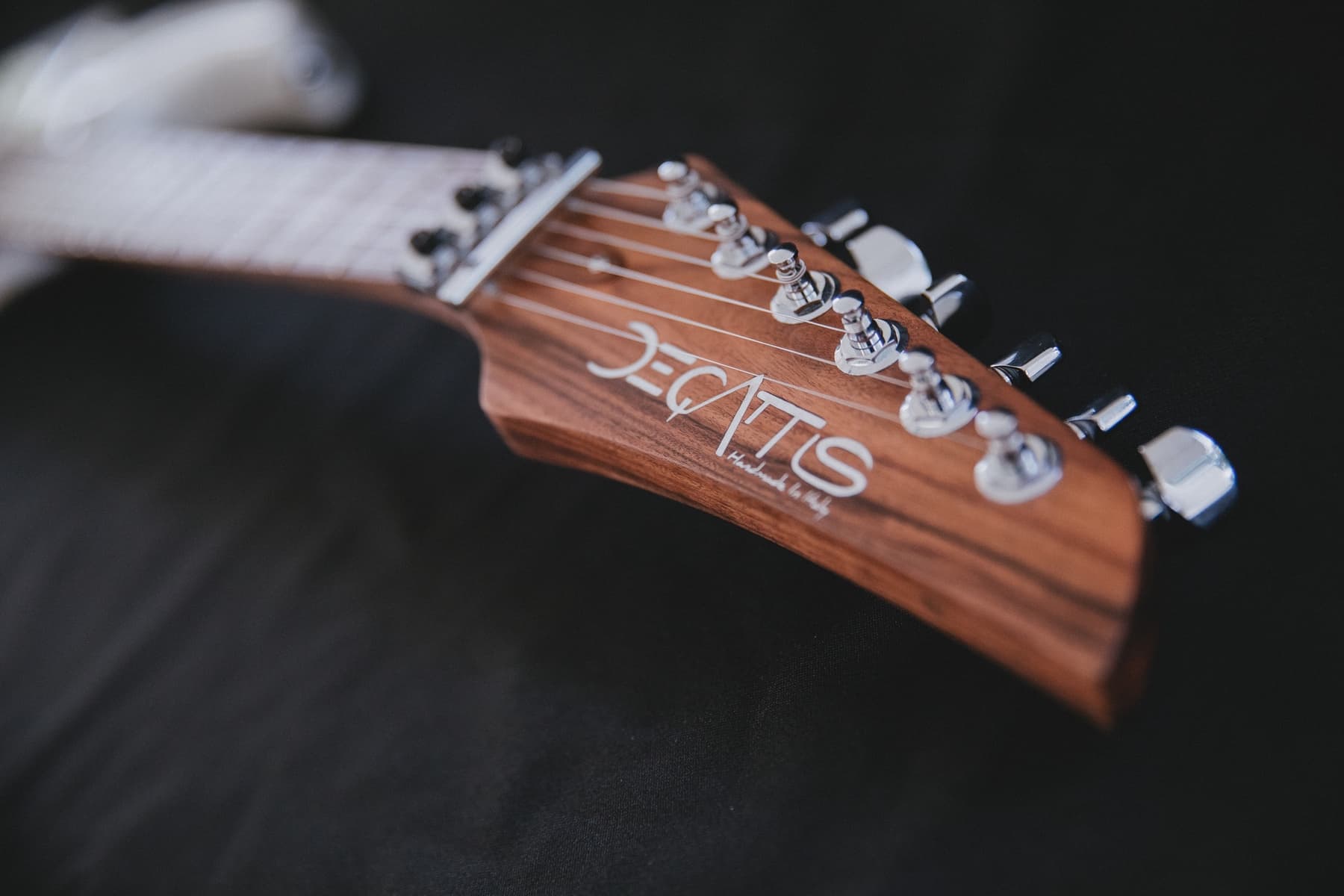
- The shape of the handle: a V like his signature, and a pyramid
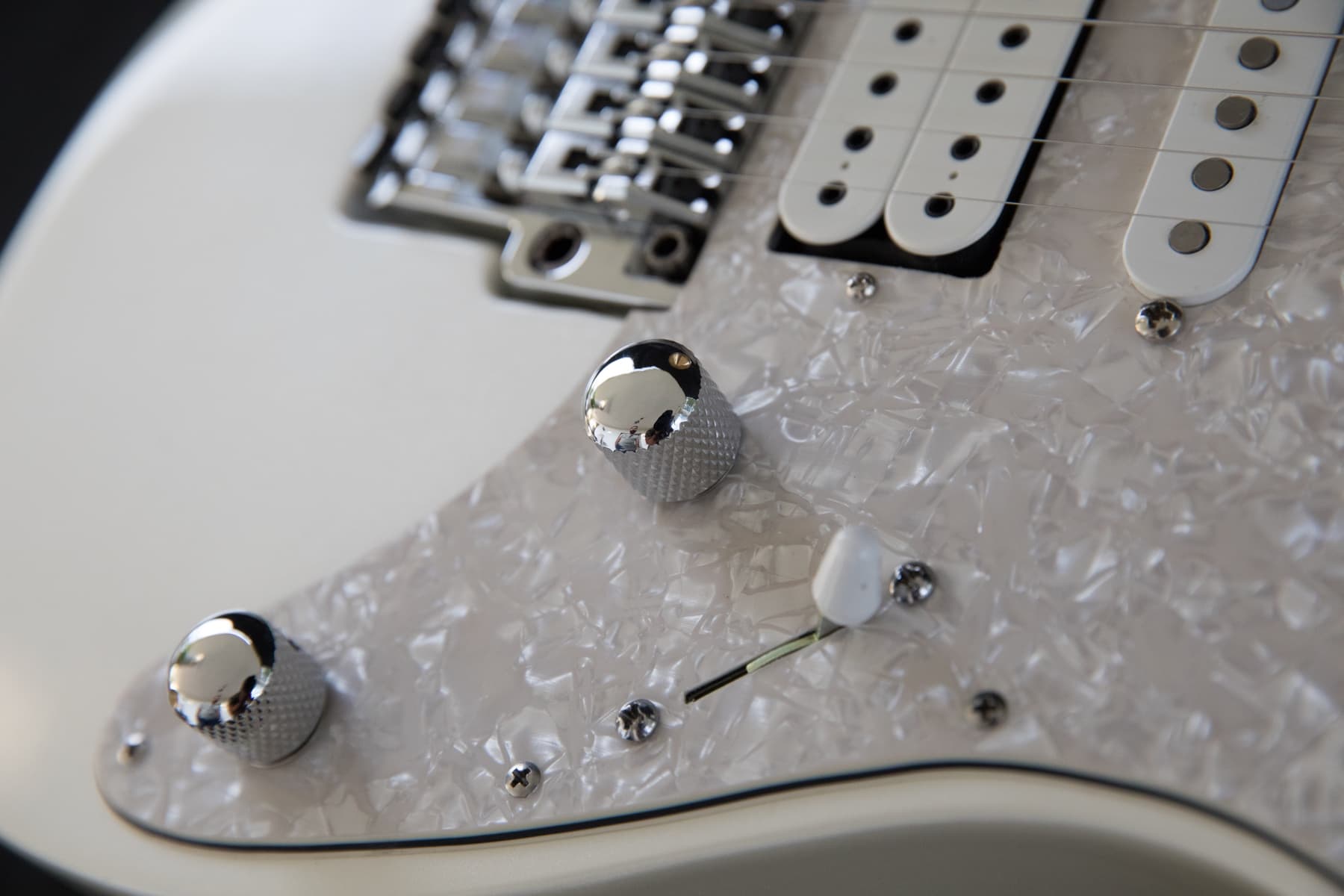
- The pearl finish
- The three dots at the twelfth fret, echoing Orion's belt
- The crescent contour at the forearm, carved into the body rather than rounded off at the edge
- Metal knobs in place of plastic ones
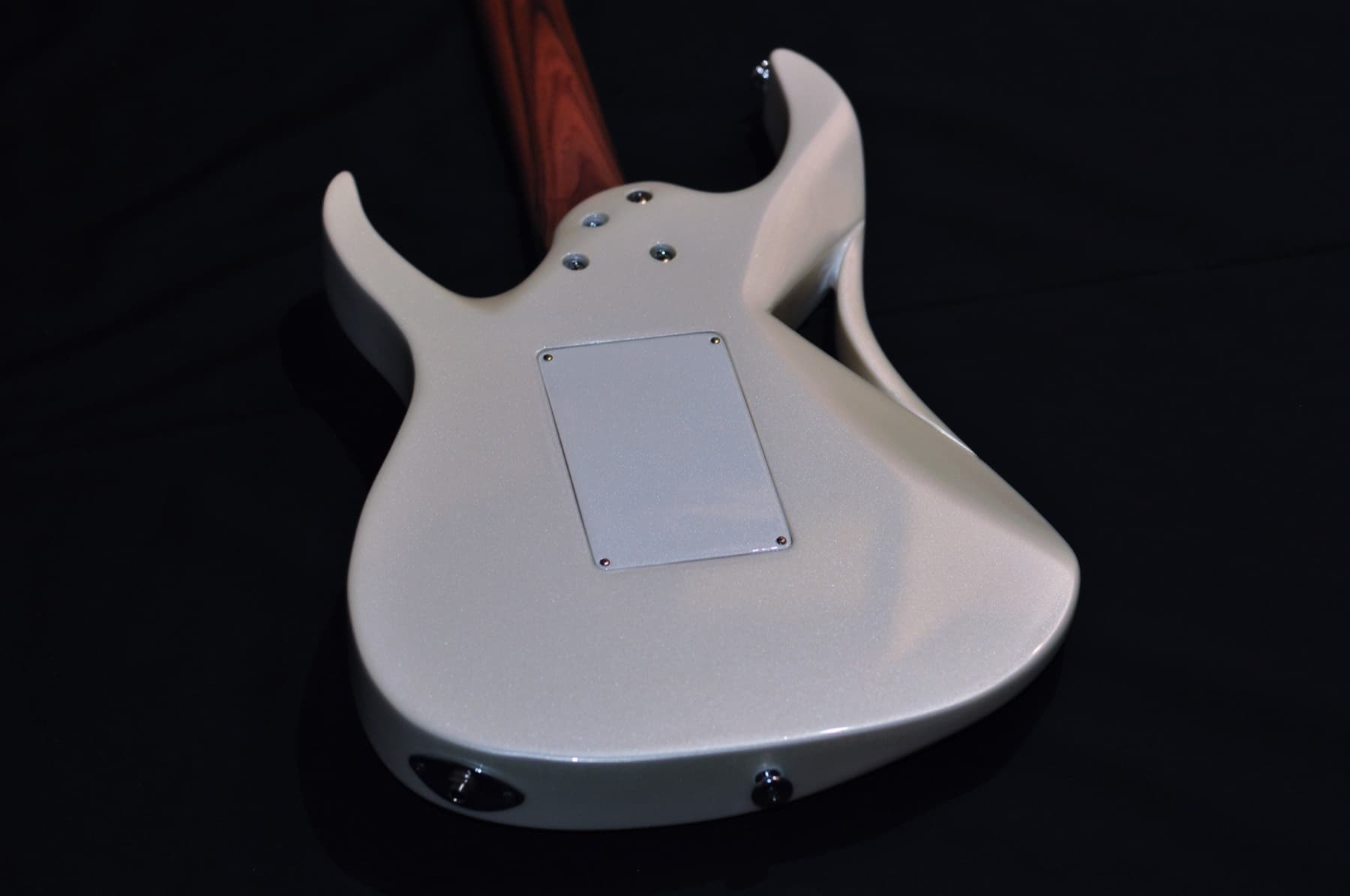
- The relief on the back where the body rests against you
- The relief behind the horn, which frees the left hand at the top frets
He called that handle a diamond, and the name was his choice: Jewel. It has been a model in production ever since.
Specifications
- Body
- Canadian alder, a single piece
- Neck
- Brazilian rosewood
- Fretboard
- Brazilian rosewood
- Truss rod
- Dual action
- Nut
- Ibanez
- Tuners
- Schaller 508A
- Bridge
- Ibanez Lo Pro Edge
- Pickups
- DiMarzio Evolution
- Pot
- 500k
- Frets
- Jumbo 2,70
- Raggio
- 16"
- Scale length
- 25.5" (64.8 cm)
- Fret markers
- Mother-of-pearl dots
- Colour
- White pearl
- Body finish
- Gloss polyurethane
- Neck and fretboard finish
- Tru-Oil
The film
The instrument room the Modern Primitive ended up in, filmed by Ernie Ball for the String Theory series.
Watch it on YouTubeEvery photograph
Modern Primitive
Modern Primitive
Where it ended up
These two photographs come from Steve Vai's studio. The arrow on the wall is mine: among thirty guitars on hooks, you would not otherwise find it.
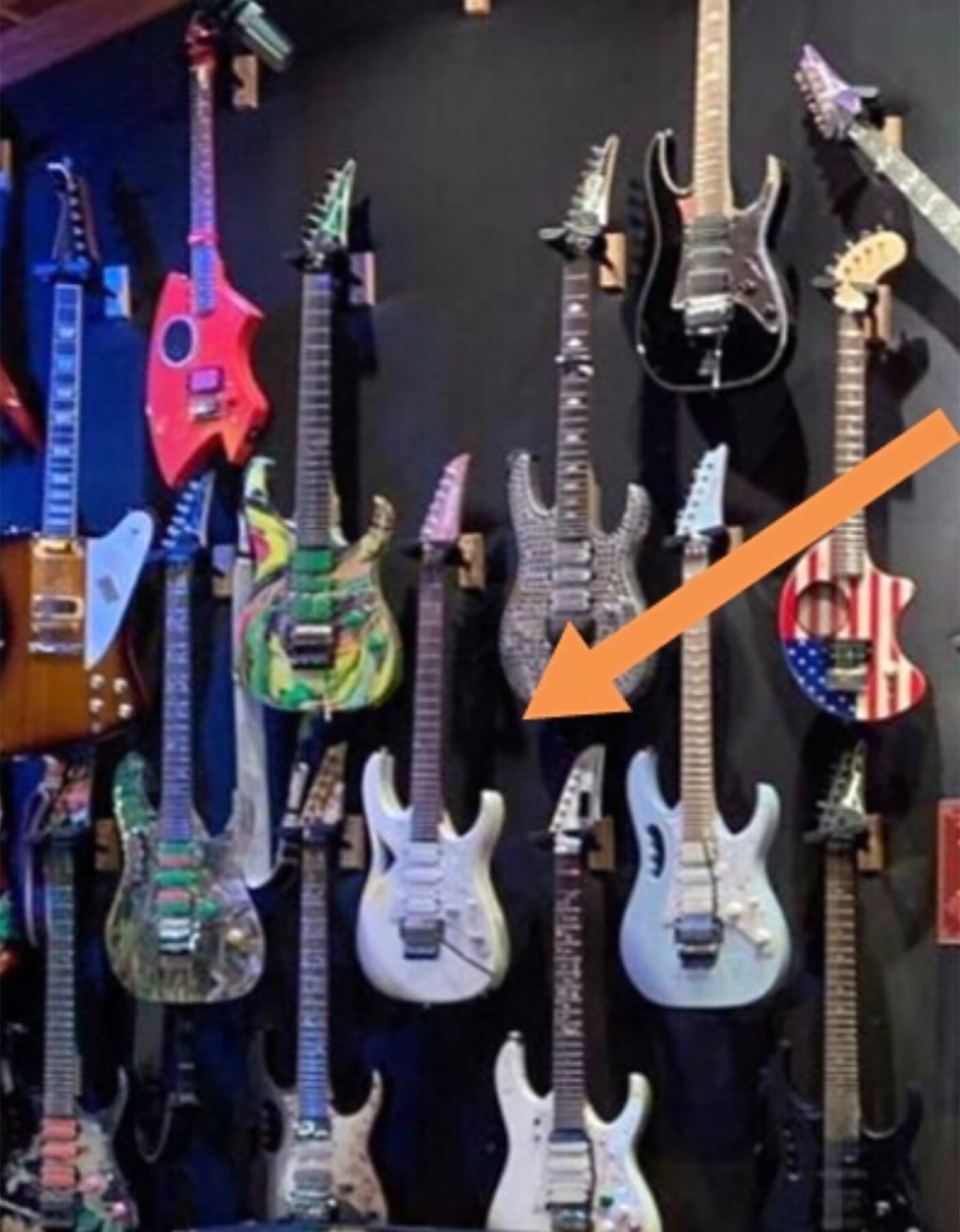
On the wall, among the others
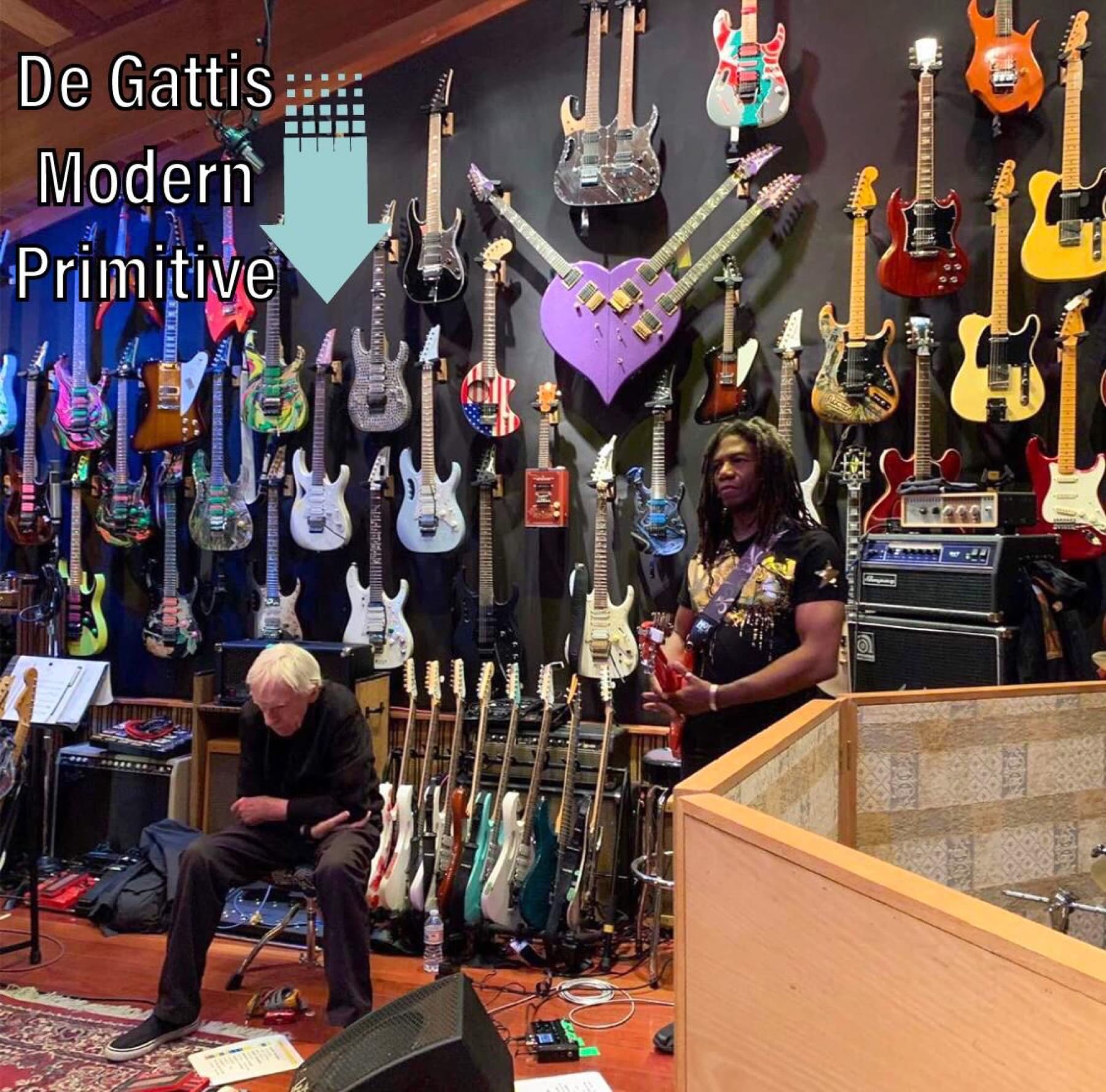
The instrument room