Atlas
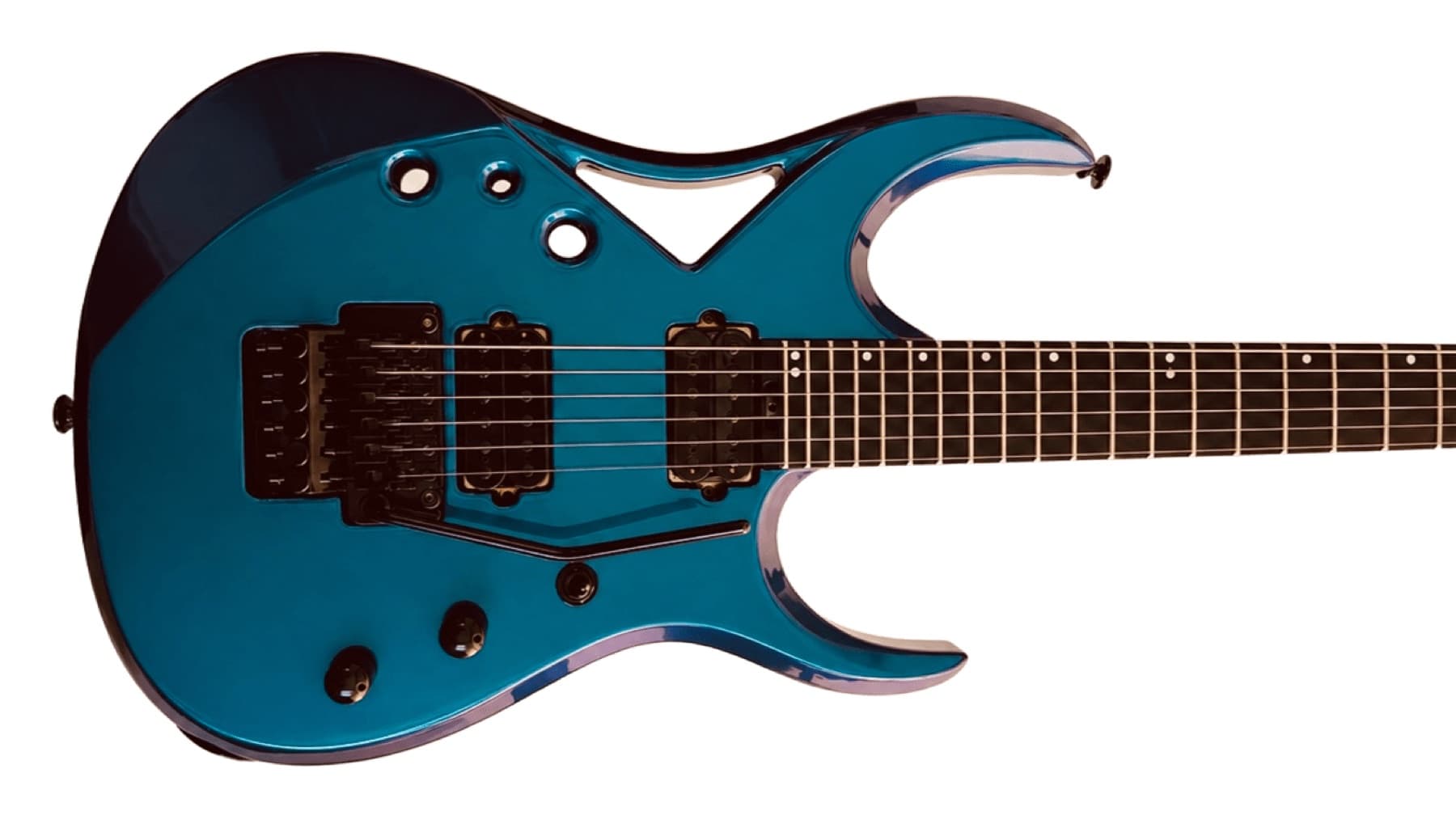
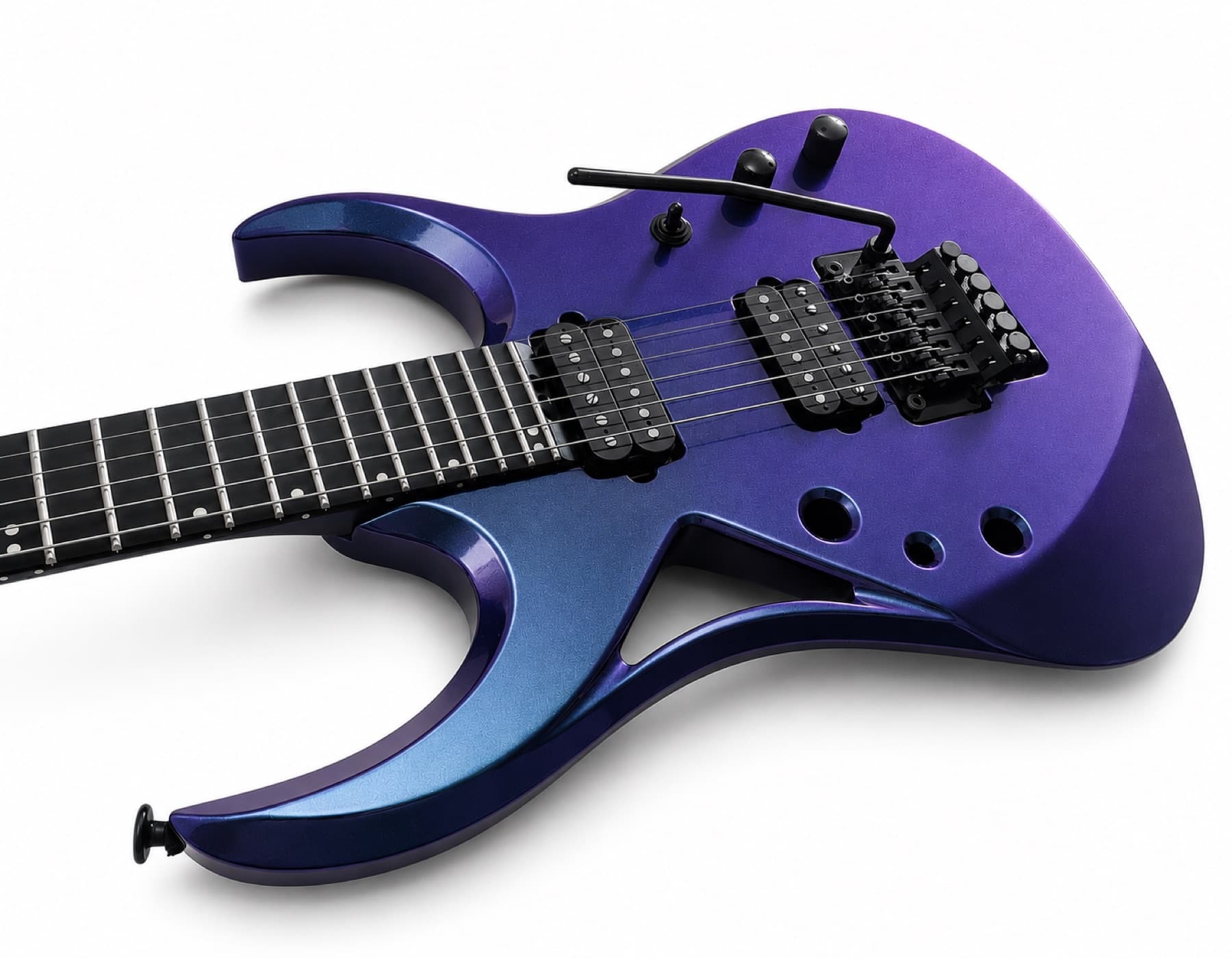
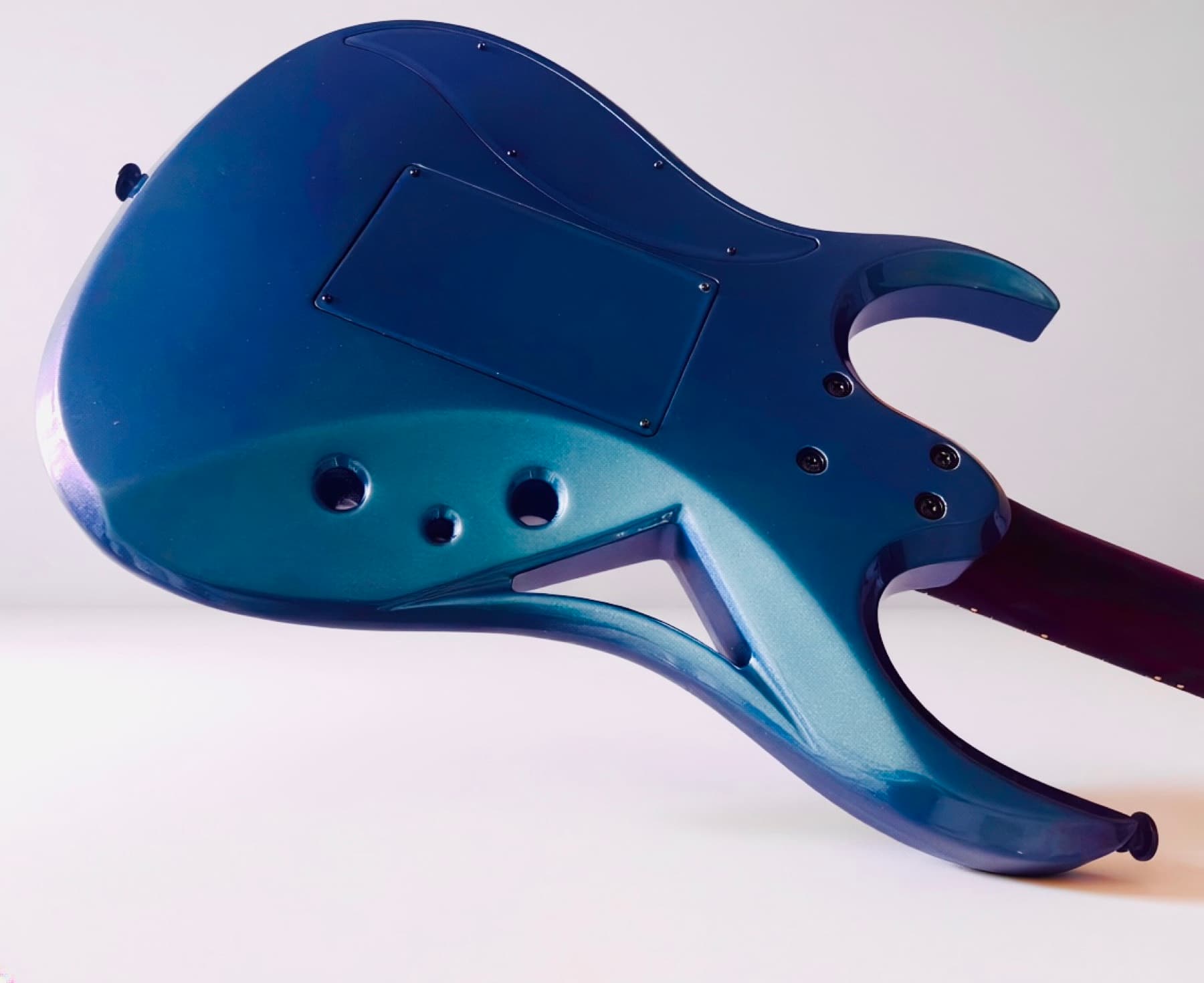
The carved body, the most recent design in the house. The same starting point as the Jewel, with every line removed that wasn’t helping it sit against you.
- Gesso
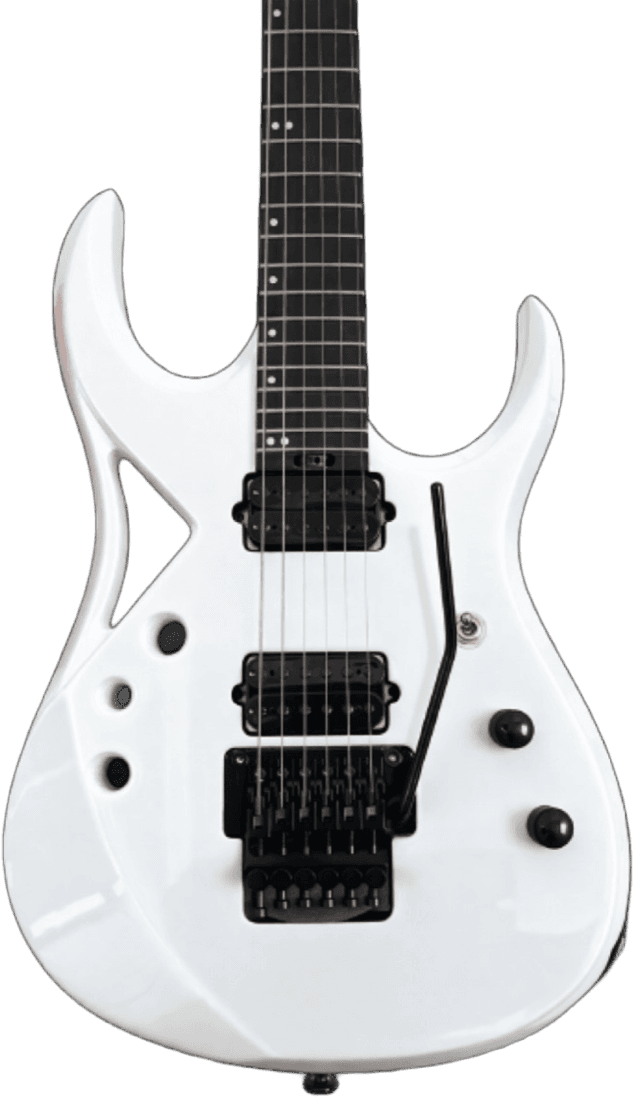
- Rosso corsa
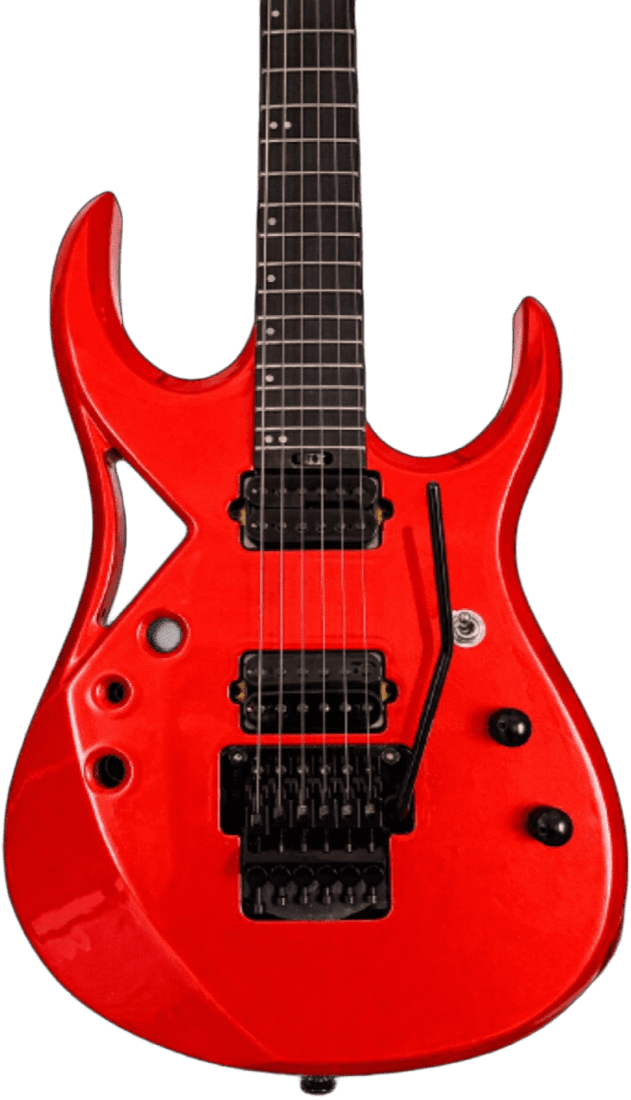
- Zafferano
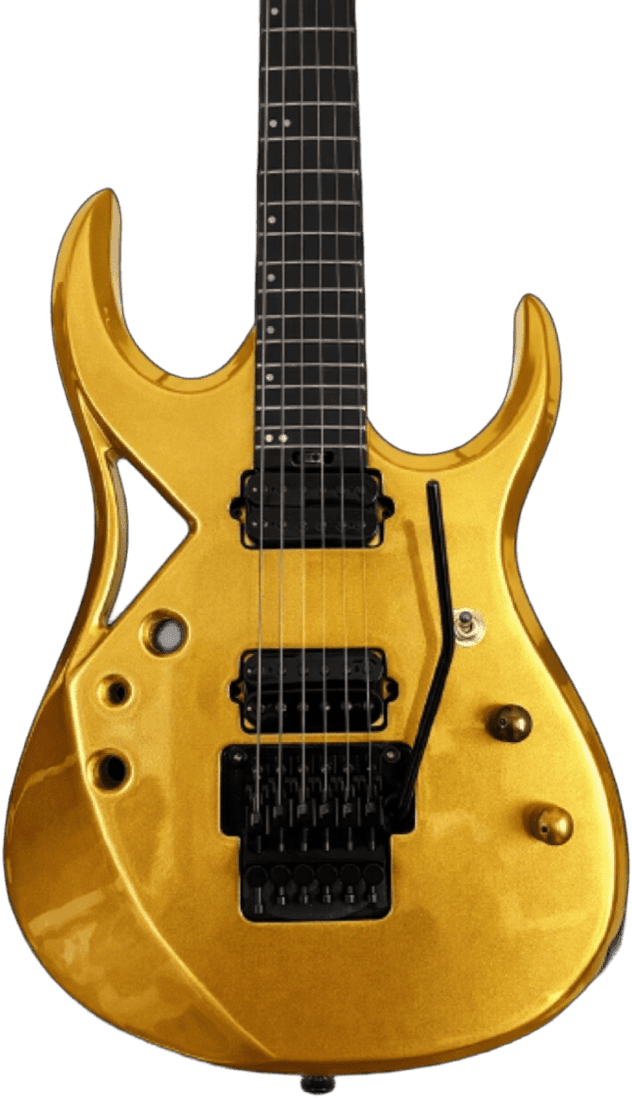
- Ginestra
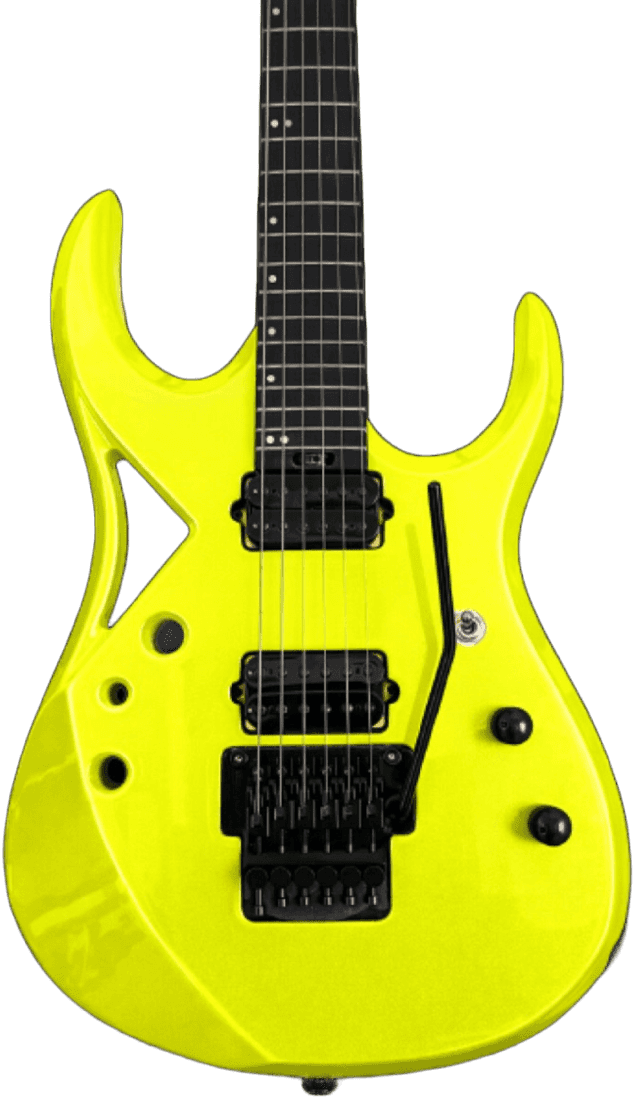
- Cedro
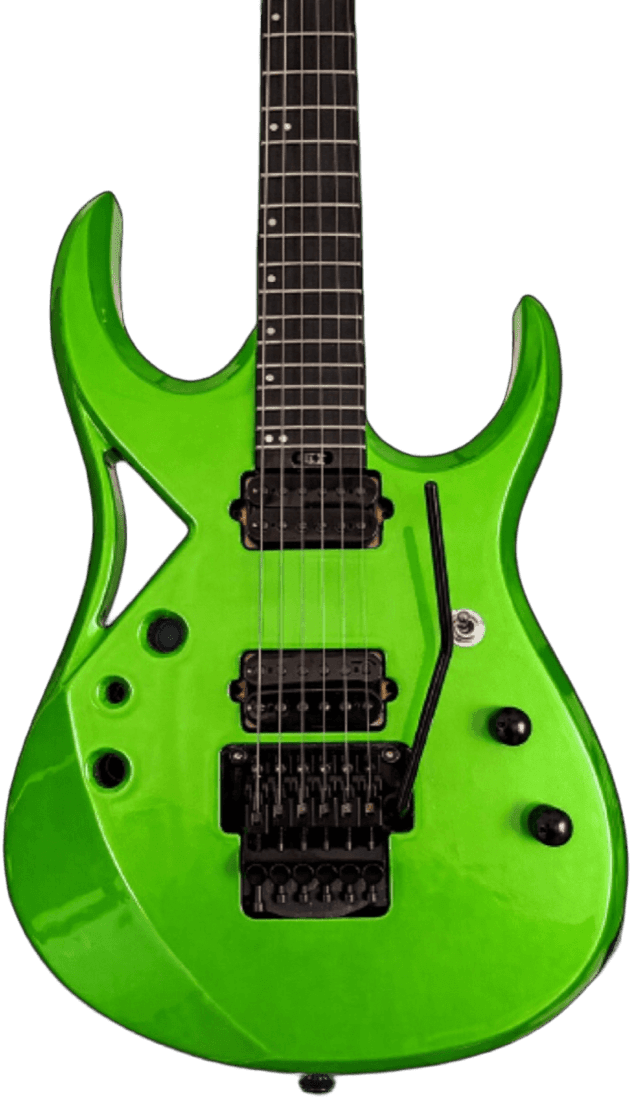
- Boreale
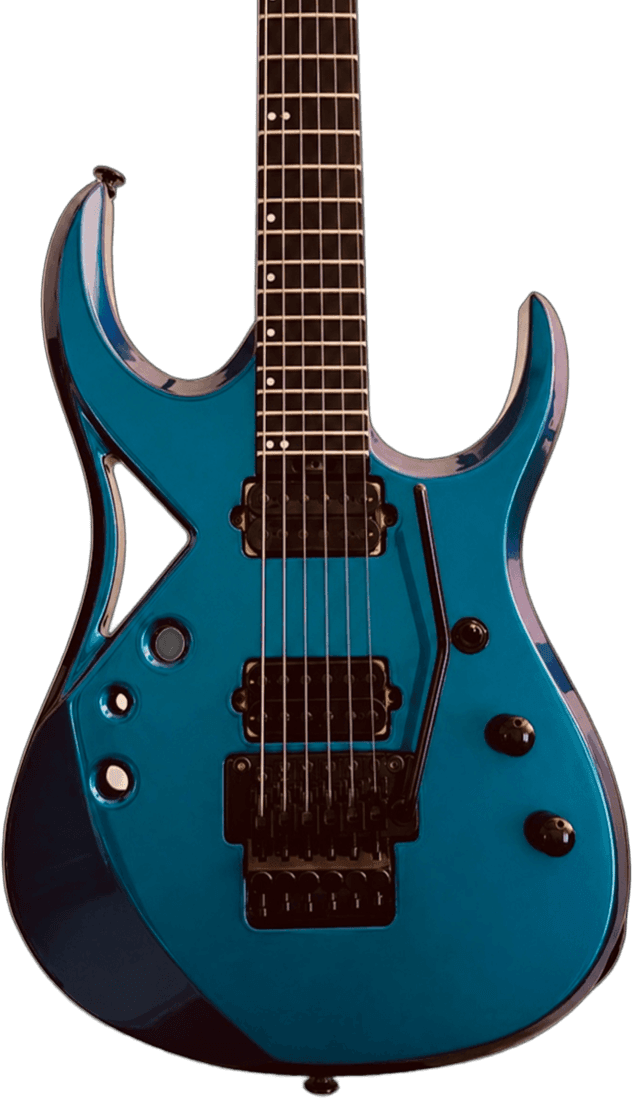
- Grafite
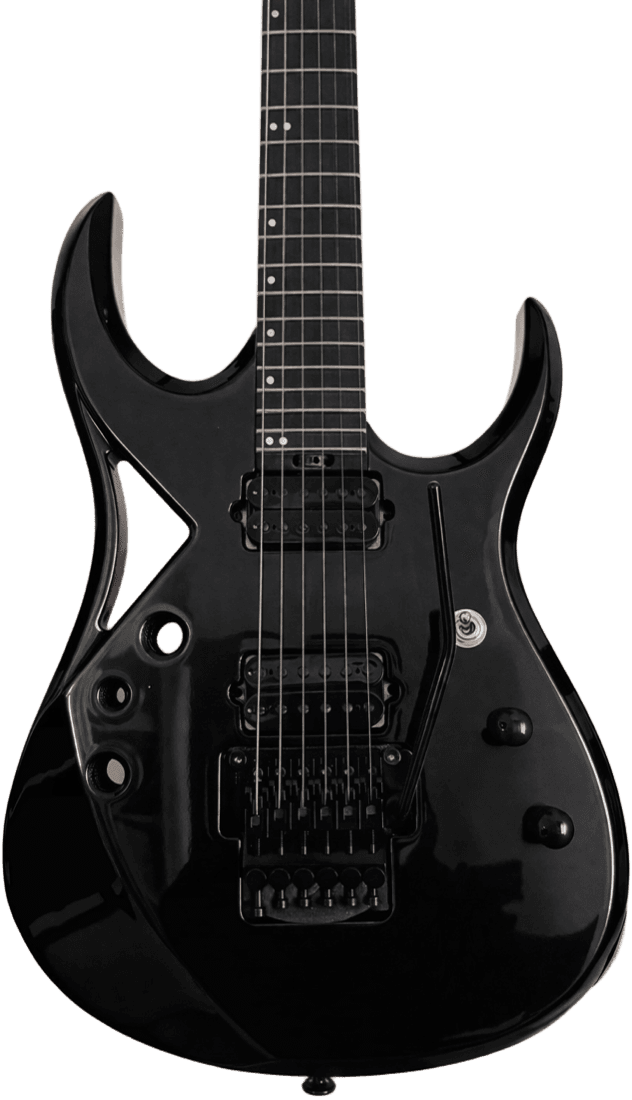
7 finishes available — and this is not a closed list
What sets it apart
The body is carved, not routed
The contours where the forearm and the ribs land are not one router radius for everybody: they follow the body of the person playing. It is work that never shows in a photograph and makes itself felt after the first hour on your feet.
Stainless steel frets, 2.80 mm
They do not wear, they do not dent under the strings, and bends glide instead of dragging. They cost more to fit and more to level, and they are the reason a fretboard like this never comes back to the workshop.
A neck made to measure from the wood up
Mahogany, curly maple or wenge: three densities, three responses. Wenge is the stiffest and the driest, mahogany the warmest. This is where it starts, not with the finish.
The whole of it
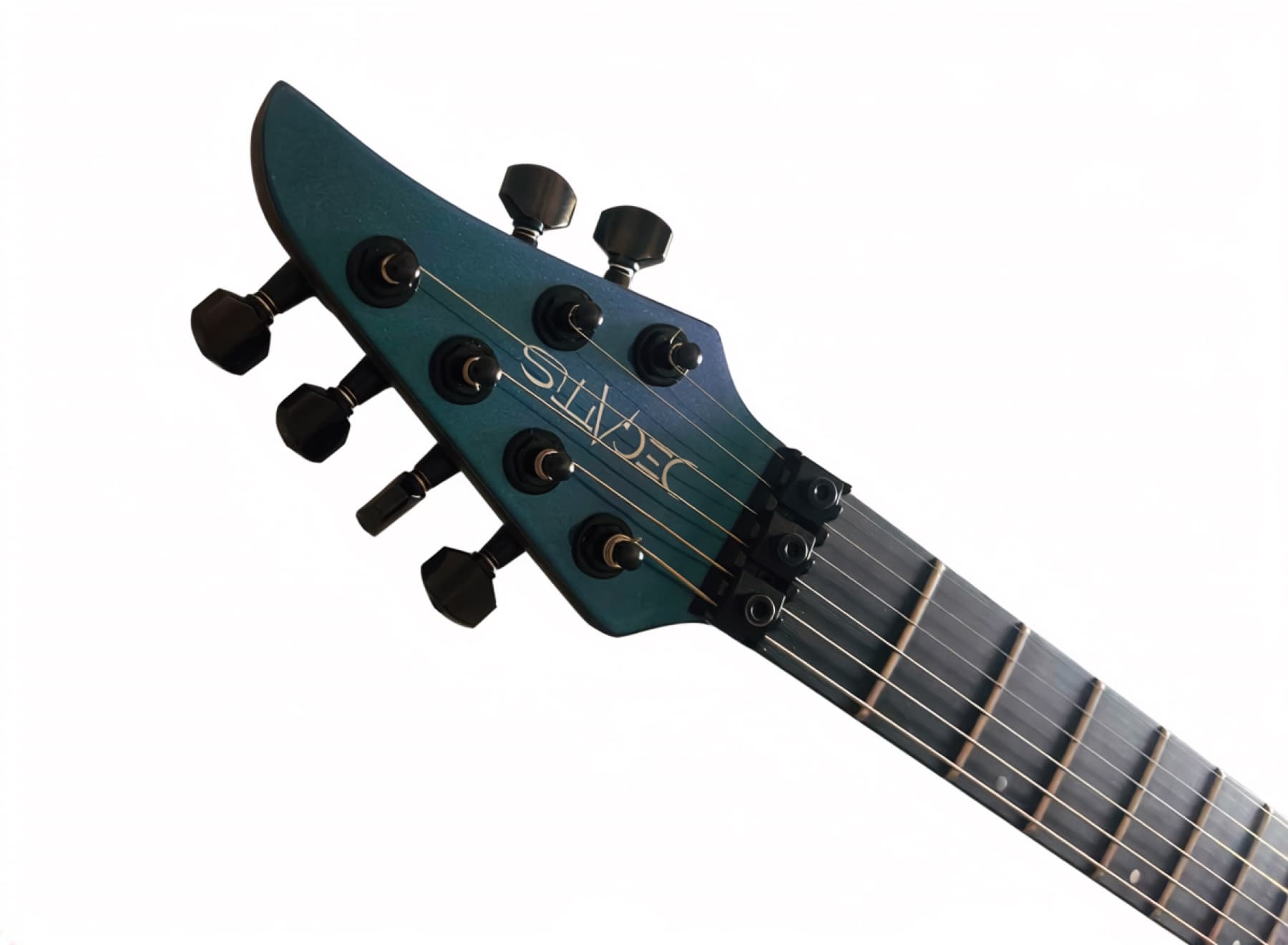
Atlas, headstock to bridge.
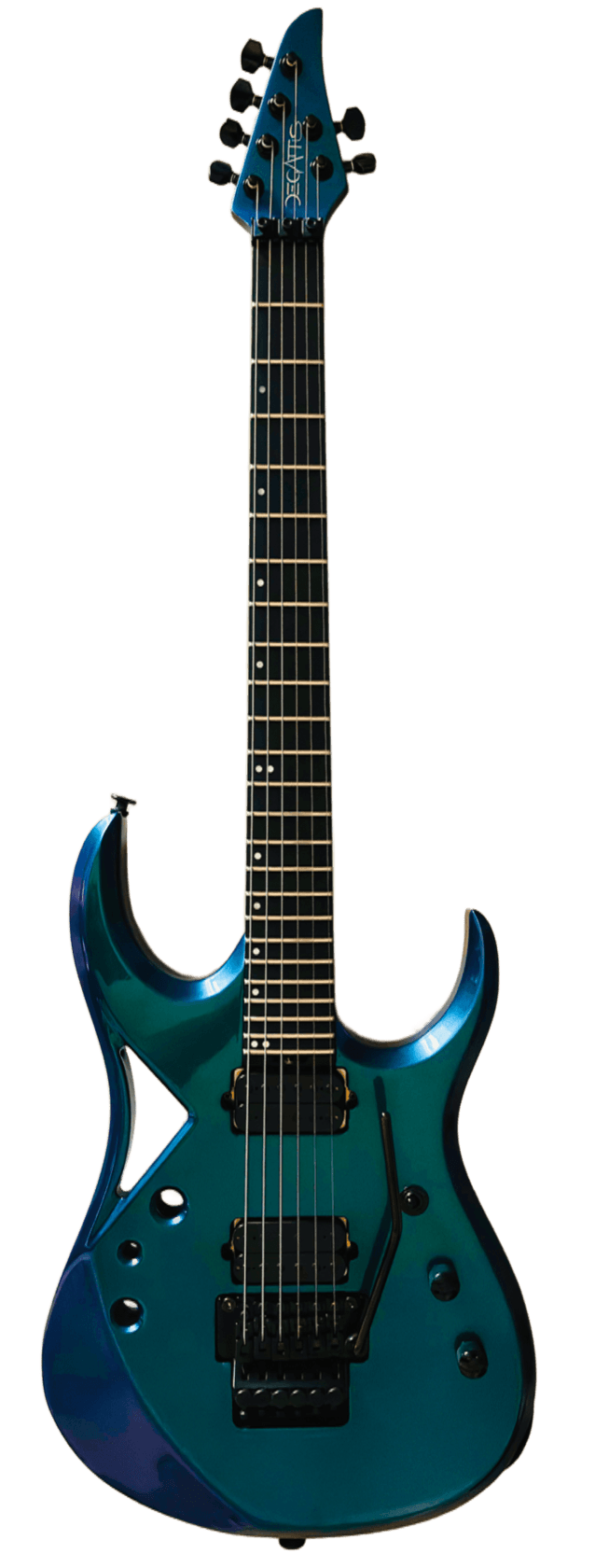
Photographs of Atlas
The finish
It changes colour as it turns.
Twelve seconds tracking along the body, no editing. The same finish shifts from green to blue depending on the angle you catch it from: it is the one thing about this guitar that a still photograph cannot say.
Specifications
What is settled, and what you settle.
It is the model
They do not change: they are what makes this a Atlas.
- Number of strings
- Six or seven strings
- Scale length
- 648 mm25.5 inches
- Fretboard radius
- 16″
- Neck width, six strings
- 43 mm at the nut · 57.2 mm at the last fret1.69 · 2.25 inches
- Neck width, seven strings
- 48 mm at the nut · 66 mm at the last fret1.89 · 2.60 inches
- Body
- One-piece select mahogany · Alder
- Frets
- 2.80 mm stainless steel jumbo
- Number of frets
- 24
- Pots
- 500 kΩ
- Truss rod
- Dual action, with two carbon fibre rodsThe rods can be left out on request
- Pickups
- De Gattis special edition
- Body finish
- Gloss polyurethane
- Fretboard finish
- Tru-Oil
- Case
- ABS hard caseIncluded
- Certificate of authenticity
- Numbered, dated and signed by handIncluded
You choose
Every line here is a conversation, not a drop-down.
- Neck
- Select mahogany · Curly maple · Wenge
- Fretboard
- Pau ferro · Ebony · Pale moon · Curly maple · Rosewood
- Nut
- Bone · Tusq
- Headstock
- 6 in line · 6 in line, reverse · 4 + 2 · 4 + 2, reverse · 3 + 3 · SlottedOn seven strings the shapes are 4 + 3 and 3 + 4 reverse
- Tuners
- Gotoh · Schaller
- Bridge
- Gotoh · Schaller
- Fret markers
- Mother of pearl · Abalone · Luminlay
- Neck joint
- Bolt-on · Set neck
- Neck finish
- Gloss · Satin · Tru-Oil
The switch
What it sounds like, in every position.
As standard
Neck
Neck + bridge
Bridge
Neck coil split
The first push-pull leaves the neck humbucker running on one coil: it brightens up without losing body, and in the middle position it moves close to the sound of two single-coils.
Neck
Neck + bridge
Bridge
Bridge coil split
The second push-pull does the same at the bridge, where it is needed more often: the attack stays, the humbucker’s compression does not.
Neck
Neck + bridge
Bridge
Both coils split
With both push-pulls up the instrument becomes a two single-coil guitar, and the middle position is the furthest it gets from where it started.
Neck
Neck + bridge
Bridge

The visitor from the stars.
What if ATLAS had already been here, thousands of years ago?
The legend tells of a ship that came from the stars to leave a message on Earth: the pyramids, turned towards Orion.
Today that ship comes back in a new shape. This guitar is ATLAS.
The pyramid handle and the three holes — like the three stars of Orion's Belt — keep the sign of it.
A legend.A geometry.A journey that began among the stars.
Built on Earth. Inspired by the stars.
And now
Carry on building it.
The green lines above are yours to decide. In the Custom Shop you pick them one by one, and at the end it is the luthier who writes back, not a form.